Crab Rangoon Recipe: Velvety Filling
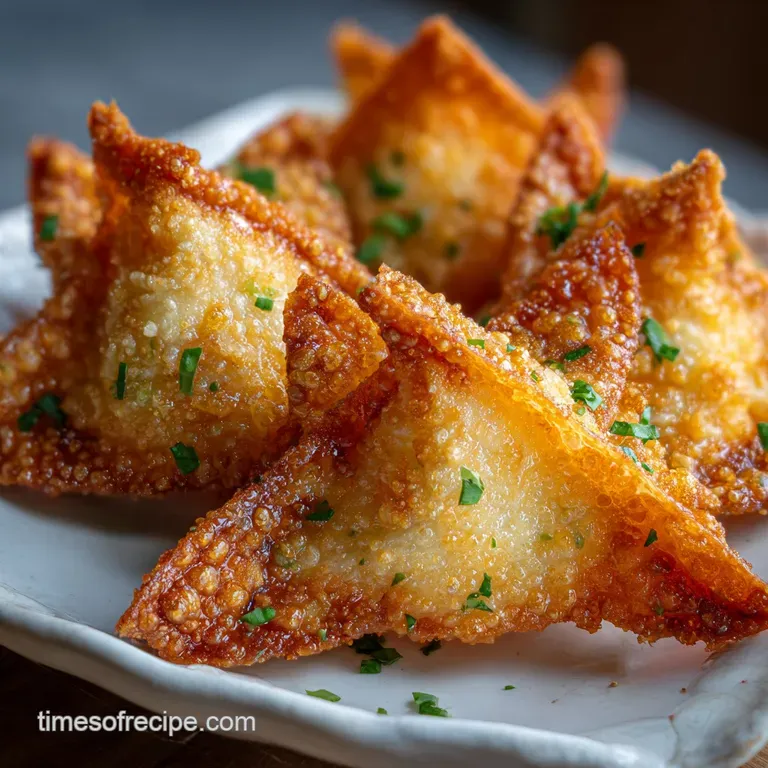
- Time: Active 20 minutes, Passive 10 minutes, Total 30 minutes
- Flavor/Texture Hook: Shatter crisp exterior with a rich, molten cream cheese filling
- Perfect for: Game day appetizers, family gatherings, or a comforting late night snack
- The Hearty Secrets to Crispy Crab Rangoon
- The Science of the Perfect Shatter
- The Components for Bold Filling and Crunch
- Cooking Times and Yield Guide
- Essential Tools for Home Frying
- Master the Fold and Fry
- Solving Common Frying Mistakes
- Flavor Swaps and Air Fryer Tweaks
- Debunking Common Fried Appetizer Myths
- Keeping Leftovers Crispy and Fresh
- Best Pairings for Dipping
- Recipe FAQs
- 📝 Recipe Card
The Hearty Secrets to Crispy Crab Rangoon
The first time I tried to make these at home, my kitchen smelled like a dream, but the results were a disaster. I remember the high pitched sizzle as I dropped the first batch into the oil, only to watch in horror as the cream cheese filling geysered out of the sides, turning my golden oil into a cloudy, popping mess.
I was using too much filling and not enough "glue," a mistake I’ve since corrected through dozens of trial batches. Now, when I pull a batch of these out of the fryer, they have that perfect, bubbly surface that practically shatters when you bite into it.
You aren't just looking for a snack; you’re looking for that specific, bold comfort that comes from the marriage of sweet imitation crab and tangy cream cheese. It’s about the contrast that bright hit of scallion cutting through the richness and the subtle hint of garlic powder that lingers.
We’ve all had those soggy, oil logged versions from the buffet line, but we’re going to do better than that today.
This recipe is a labor of love that rewards you with a satisfying crunch you can hear from across the room. We’ll focus on the structural integrity of the wonton and the temperature control of the oil to make sure every single one comes out perfect.
Trust me, once you master the star fold, you’ll never want the frozen box version again. We're going for big, bold flavors that bring the family together around the appetizer tray.
The Science of the Perfect Shatter
The Physics of Steam: As the wonton hits the hot oil, the small amount of moisture in the wrapper turns to steam, pushing the dough outward and creating those signature bubbles that eventually crisp into a brittle shell.
Thermal Lag: By using room temperature cream cheese but keeping the assembled wontons cool before frying, we create a delay that allows the outside to brown before the inside expands enough to cause a "blowout."
Protein Gelation: The egg wash acts as a heat set protein glue, creating a permanent bond between the layers of dough that can withstand the internal pressure of the heating filling.
| Method Feature | Fresh Crabmeat | Imitation Crab (Surimi) | Flavor & Texture Impact |
|---|---|---|---|
| Moisture Content | Higher, can cause sogginess | Lower, stays firm and meaty | Surimi provides a more consistent, "takeout" style bite |
| Sweetness Level | Naturally briny | Artificially sweetened | Surimi mirrors the classic sweet/savory contrast |
| Preparation | Needs picking for shells | Simply mince and go | Surimi saves 15 mins of prep and offers better structure |
Making choices about your ingredients early on helps define the final texture of your dish. While fresh crab is a luxury, the hearty structure of surimi is actually what gives this specific appetizer its iconic identity. It holds up beautifully against the thick cream cheese without getting lost in the mix.
The Components for Bold Filling and Crunch
The magic of this recipe lies in the "secret" ingredients that most people skip. Adding a touch of powdered sugar might seem strange for a savory dish, but it balances the tang of the cream cheese perfectly, much like the technique used in my favorite Crab Shrimp Bisque recipe.
Component Analysis Table
| Ingredient | Science Role | Pro Secret |
|---|---|---|
| Full Fat Cream Cheese | Provides the lipid base for a velvety mouthfeel | Always use the block, never the whipped tub variety |
| Wonton Wrappers | Acts as the structural starch barrier | Keep covered with a damp cloth to prevent gluten brittleness |
| Powdered Sugar | Counteracts the lactic acid in the cheese | Dissolves instantly to prevent a grainy texture |
| Worcestershire Sauce | Adds fermented umami and acidity | A little goes a long way; it provides the "hidden" depth |
- 8 oz cream cheese: Full fat, softened to room temperature. Why this? Lower fat versions contain more water and will cause the wontons to explode.
- 4 oz imitation crab: Finely minced. Why this? Provides the classic texture and sweetness found in authentic style appetizers.
- 2 stalks scallions: Whites and greens, sliced paper thin. Why this? Adds a bright, aromatic bite to cut the fat.
- 1 tsp Worcestershire sauce: For depth.
- 0.5 tsp garlic powder: Provides a consistent savory background.
- 0.5 tsp powdered sugar: The key to the sweet savory balance.
- 0.25 tsp kosher salt: Enhances the surimi's natural flavors.
- 24 square wonton wrappers: Look for the "thin" variety in the refrigerated aisle.
- 1 large egg: Beaten with 1 tbsp water for the egg wash.
- 1 quart neutral frying oil: Canola or peanut oil works best for over high heat stability.
Cooking Times and Yield Guide
Before we get our hands messy, let's look at the logistics. This recipe is designed to be efficient, but don't rush the oil heating process. If the oil isn't at the right temperature, the wrappers will soak up grease instead of crisping up.
| Servings | Filling Per Wonton | Oil Temperature | Fry Time |
|---|---|---|---|
| 24 Wontons | 1 rounded teaspoon | 350°F (180°C) | 2-3 minutes |
| 48 Wontons | 1 rounded teaspoon | 350°F (180°C) | 2-3 minutes (work in batches) |
| 12 Wontons | 1 rounded teaspoon | 350°F (180°C) | 2-3 minutes |
Consistency is everything here. If you try to overstuff these, you're asking for trouble. I always tell my friends that a "modest" wonton is a successful wonton. If you have extra filling, it actually makes an incredible base for a Crab Dip Recipe.
Essential Tools for Home Frying
You don't need a commercial kitchen to get professional results, but a few specific tools make the process much safer and more satisfying. A heavy bottomed pot, like a Dutch oven, is non negotiable for maintaining steady heat.
- Deep fry thermometer: Critical for monitoring the 350°F sweet spot.
- Small cookie scoop: To ensure exactly 1 teaspoon of filling per wonton.
- Spider strainer or slotted spoon: For safely lifting the crispy treats out of the oil.
- Baking sheet with wire rack: To let the wontons drain without getting soggy on the bottom.
- Small pastry brush: For applying the egg wash precisely.
Master the Fold and Fry
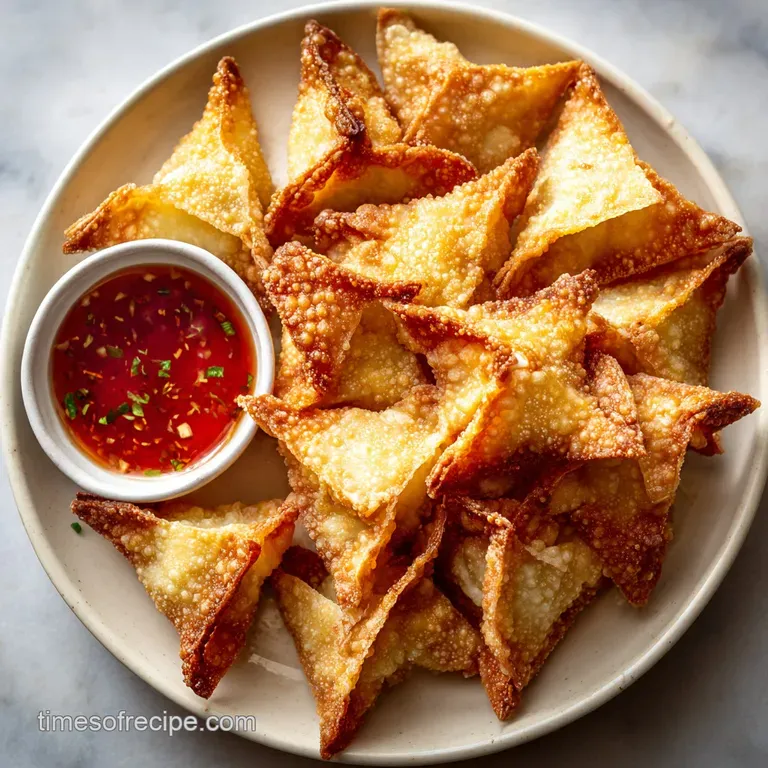
Let's get into the heart of the process. This is where the magic happens, and where a little patience goes a long way. Make sure your workspace is clear and your wonton wrappers are staying moist under a damp paper towel.
- Prepare the filling. Mix the 8 oz cream cheese, 4 oz minced crab, scallions, Worcestershire, garlic powder, powdered sugar, and salt in a bowl until perfectly smooth. Note: Using a fork helps break up the cream cheese without adding too much air.
- Make the egg wash. Whisk the egg and 1 tbsp water in a small ramekin. Note: This is your "glue" that prevents the wonton from opening in the oil.
- Lay out the wrappers. Place 6 wrappers at a time on a clean surface.
- Portion the center. Drop exactly 1 rounded teaspoon of filling into the center of each square. Note: Resist the urge to add more; it will expand as it heats.
- Apply the sealant. Brush the egg wash along all four edges of the wonton wrapper.
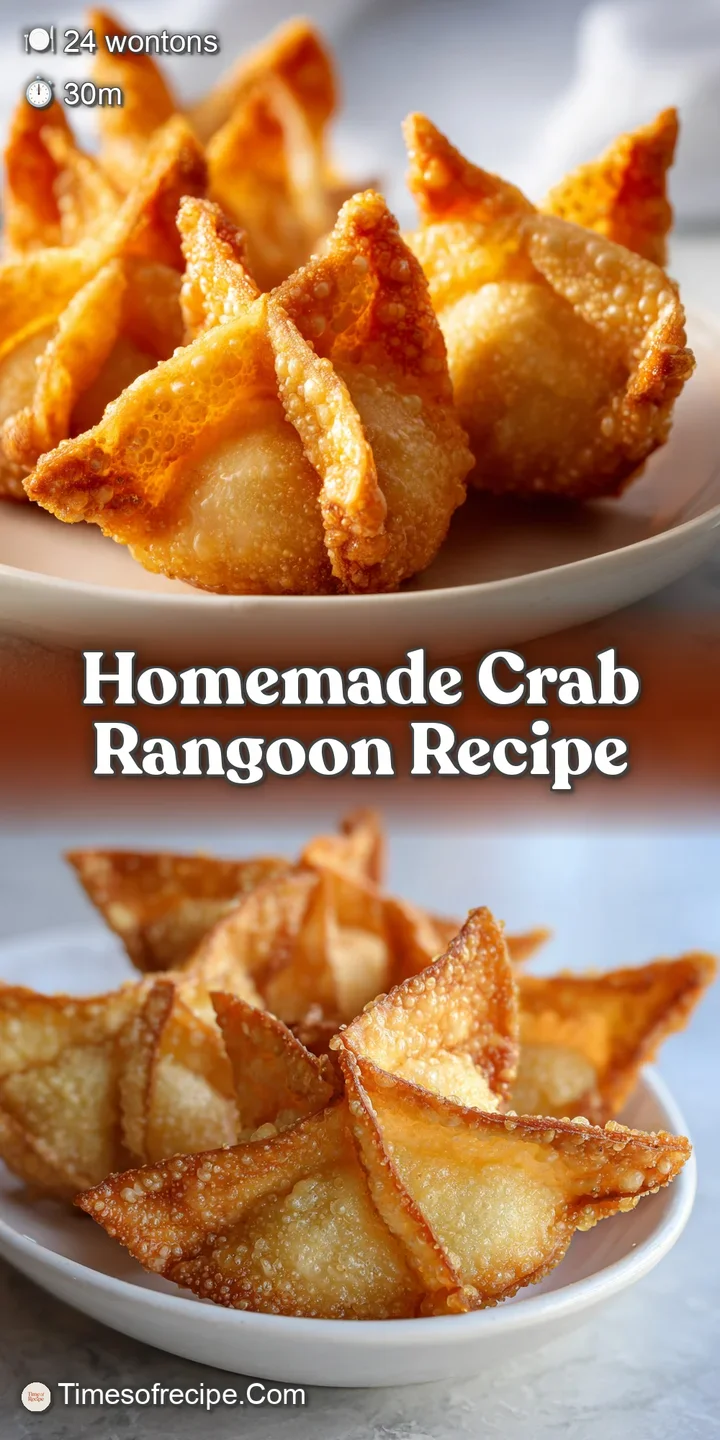
- Execute the star fold. Bring the four corners together at the top and pinch the seams tightly down to the base, ensuring no air pockets remain. Watch for the seal to be airtight.
- Heat the oil. Pour 1 quart of oil into a heavy pot and bring it to 350°F (180°C).
- Fry in batches. Carefully drop 4-6 wontons into the oil. Cook 2-3 minutes until deep golden and bubbling.
- Drain and rest. Remove with a spider and place on a wire rack. Note: Resting on a rack allows air to circulate, keeping the bottom crisp.
- Monitor the temp. Allow the oil to return to 350°F before starting the next batch.
Chef's Note: If your wontons are browning too fast (under 60 seconds), your oil is too hot. The filling won't have time to melt, and you'll end up with a cold center and a burnt shell.
Solving Common Frying Mistakes
Even the best cooks run into hiccups with deep frying. The most common issue is the "explosion," which usually happens because of trapped air. When that air heats up, it expands, and if the seal isn't strong enough, it rips the wrapper open.
Preventing Wonton Bursts
If you notice filling leaking into the oil, your seams aren't tight enough. Make sure you are pressing the air out as you seal the edges. Another culprit is moisture; if the filling is too wet (like from using "light" cream cheese), the steam pressure becomes too great for the wrapper to contain.
Fixing Soggy Wrappers
Soggy wontons are almost always the result of low oil temperature or improper draining. If the oil drops below 325°F, the dough will absorb the oil rather than searing. Also, never drain them on a flat paper towel on a plate; the steam gets trapped underneath and softens the bottom.
| Problem | Root Cause | Solution |
|---|---|---|
| Filling is leaking out | Air pockets or weak seals | Press firmly from the filling outward to remove air |
| Wrapper is oily/greasy | Oil temperature too low | Wait for oil to hit 350°F before adding the next batch |
| Filling is still cold | Oil too hot or frozen filling | Fry at 350°F for a full 2-3 minutes; thaw filling completely |
Common Mistakes Checklist
- ✓ Never use "tub" or whipped cream cheese (it's too airy and unstable).
- ✓ Don't overcrowd the pot; this drops the oil temperature too rapidly.
- ✓ Ensure the scallions are minced very finely so they don't poke holes in the wrapper.
- ✓ Always use a wire rack for draining to maintain the 360 degree crunch.
- ✓ Check your oil temperature between every single batch.
Flavor Swaps and Air Fryer Tweaks
If you aren't a fan of deep frying, you can still get a satisfying result in the air fryer, though the texture will be more "leathery" than "shattery." To do this, spray the assembled wontons liberally with oil and cook at 375°F for 6-8 minutes, flipping halfway through.
It's a great shortcut for a weeknight.
Decision Shortcut
- If you want a smokier flavor, add a drop of liquid smoke or use smoked salt in the filling.
- If you want more heat, mix in 1 teaspoon of Sriracha or chili garlic sauce to the cream cheese.
- If you want a crunchier shell, double wrap the wontons (though this requires more frying time).
| Original Ingredient | Substitute | Why It Works |
|---|---|---|
| Wonton Wrappers | Egg roll wrappers | Same dough, just cut them into quarters first. |
| Imitation Crab | Cooked tiny shrimp | Similar protein density. Note: Chop finely to match the texture. |
| Garlic Powder | Fresh minced garlic | Provides a sharper, more pungent flavor profile. |
If you're looking for a completely different vibe, you might enjoy trying a Fried Fresh Anchovies recipe, which uses a similar over high heat frying technique to achieve a bold, salty crunch that pairs perfectly with cold drinks.
Debunking Common Fried Appetizer Myths
Myth 1: You must use real crab for the "best" flavor. Actually, real crabmeat is very delicate and its subtle sweetness often gets completely overwhelmed by the cream cheese and garlic.
Imitation crab was specifically designed to hold its flavor and structural integrity during over high heat processing, making it the superior choice for this specific hearty appetizer.
Myth 2: Frying at a higher temperature makes things "less greasy." While it sounds logical, frying at 400°F will simply burn the outside of the wonton before the moisture has a chance to escape from the dough. This results in a "raw" tasting wrapper that feels heavy on the palate.
The 350°F mark is the sweet spot for the Maillard reaction and moisture evaporation.
Keeping Leftovers Crispy and Fresh
Storing fried foods is always a challenge, but it's not impossible. Store your leftover wontons in an airtight container in the fridge for up to 3 days. To reheat, avoid the microwave at all costs it will turn your beautiful wontons into rubbery triangles.
Instead, pop them in a 375°F oven or air fryer for 4-5 minutes until the oil starts to sizzle again.
Zero Waste Tip: If you have leftover wonton wrappers, don't toss them! Slice them into strips, fry them until golden, and toss them with cinnamon sugar for a quick dessert, or use them as a crunchy topping for a salad.
If you have extra filling, it can be folded into an omelet the next morning for a decadent, bold breakfast.
Best Pairings for Dipping
A hearty Crab Rangoon needs a bright companion to cut through the richness. The classic choice is a red sweet and sour sauce, but I personally love a spicy hot mustard or a soy ginger dipping sauce.
The acidity in these sauces balances the heavy fats of the cream cheese, making you want to go back for "just one more" until the whole plate is gone.
For a full meal experience, serve these alongside a steaming bowl of Bun Rieu recipe, where the tomato based crab broth provides a beautiful acidic contrast to the fried wontons. The combination of the crispy appetizer and the silky noodle soup creates a satisfying texture journey that feels like a true home cooked feast.
- 1. Filling Weight
- Each wonton should hold exactly 5-7 grams of filling to prevent blowouts.
- 2. Oil Recovery
- Wait at least 90 seconds between batches for the oil to return to 350°F.
- 3. Cooling Time
- Let the wontons rest for exactly 2 minutes before eating; this allows the filling to set so it doesn't burn your mouth.
Recipe FAQs
What is crab rangoon filling made of?
Primarily cream cheese, imitation crab, and seasonings. The base is softened full fat block cream cheese mixed with finely minced imitation crab (surimi). We add Worcestershire, garlic powder, and a pinch of powdered sugar to balance the tang.
Is crab rangoon real Chinese food?
No, it is a Chinese American creation. While it uses wonton wrappers found in Chinese cuisine, the concept of cream cheese filling fried in this style originated in Americanized Polynesian restaurants in the mid-20th century.
What's the secret to flavorful crab rangoon?
Balancing the tang with a touch of sweetness. The secret ingredient is a small amount of powdered sugar mixed into the filling; this cuts the lactic acid in the cream cheese beautifully. If you enjoyed mastering that flavor balance here, see how we apply similar sweet tart principles in our Creamy Tomato Tortellini recipe.
What sauce is used with crab rangoon?
Sweet and sour sauce is the classic pairing. Alternatively, many people enjoy dipping them into spicy hot mustard or a simple soy-ginger reduction. The acidity of the sauce is key to cutting through the richness of the fried cheese.
How do I prevent my crab rangoon from leaking while frying?
Press the air out thoroughly when sealing the wrappers. Use a beaten egg wash on all edges and press firmly, ensuring there are no air bubbles trapped inside the fold. A weak seal allows internal steam pressure to blow the wrapper open.
What oil temperature is necessary for maximum crispness?
Maintain the oil at exactly 350°F (180°C). Frying too cold results in a greasy product, while frying too hot burns the wrapper before the filling melts. If you're interested in maintaining precise heat control across different cooking techniques, review the same temperature stability methods used in our Leftover Fried Rice recipe.
Can I use fresh lump crabmeat instead of imitation crab?
No, imitation crab is generally recommended for this specific dish. Fresh lump crab has a higher moisture content and a more delicate flavor that gets lost or breaks down under frying. Surimi offers a firmer texture and sweeter profile that matches the expected takeout flavor profile.
Best Crab Rangoon Recipe
Ingredients:
Instructions:
Nutrition Facts:
| Calories | 86 kcal |
|---|---|
| Protein | 2.1 g |
| Fat | 6.2 g |
| Carbs | 5.4 g |
| Fiber | 0.2 g |
| Sugar | 0.7 g |
| Sodium | 165 mg |
