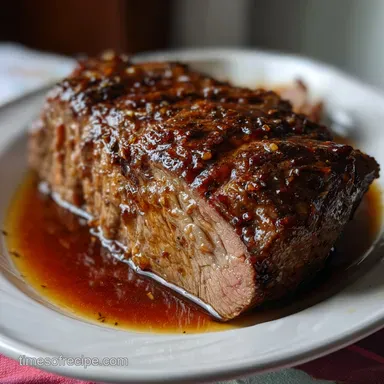
Rich and Savory Roast Beef Au Jus

- Total20 Mins
- Servings6
- Calories138 kcal
- Time: 5 min active + 15 min cook
- Skill level: Easy, needs basic pan-scraping skills
- Great for: Sunday family dinners and holiday feasts
The tradition of serving meat "au jus," or "with juice," comes from French cuisine. It's a way to honor the natural flavors of the roast by using the very liquids that escape during cooking. For generations, this has been the standard for a comforting, satisfying meal that celebrates the richness of the beef.
Making roast beef au jus is about balance. You want that deep, savory intensity from the pan, but you also need a hit of acidity to stop the fat from feeling too heavy. It's a contrast between the dark, roasted notes of the meat and the bright tang of vinegar.
This sauce is a velvety addition to any sliced beef. It transforms the meat from a simple protein into a lush experience. You'll find it works best when the sauce is shimmering and glossy, ready to be dipped into with a crusty piece of bread.
Roast Beef Au Jus
Capturing the Fond: The browned bits at the bottom of the pan provide the most concentrated beef flavor. Deglazing releases these particles into the sauce.
Brightening the Fat: A splash of vinegar cuts through the heavy beef drippings. This can keep the sauce from tasting one-dimensional.
Simmering for Gloss: Reducing the liquid slightly concentrates the umami. It creates a shimmering texture that clings to the meat.
Gathering Your Essentials
The success of this sauce depends on the quality of your base. Using real beef drippings instead of just oil makes a huge difference in the final depth.
Why These Ingredients Work
| Component | Purpose | Substitute Notes |
|---|---|---|
| Beef Drippings | Deep savory base | Beef tallow or butter |
| Apple Cider Vinegar | Cuts richness | White wine vinegar (slightly sharper) |
| Worcestershire Sauce | Umami boost | Soy sauce (approximate, use less) |
| Fresh Thyme | Earthy aroma | Dried thyme (use 1/3 amount) |
The Grocery List
- 1/4 cup beef drippings Why this? Concentrated flavor from the roast
- 2 tbsp unsalted butter
- 1 small shallot, finely minced
- 2 cloves garlic, minced
- 2 cups low-sodium beef broth Why this? Prevents the sauce from becoming too salty
- 1 tbsp apple cider vinegar
- 1 tbsp Worcestershire sauce
- 1/2 tsp cracked black pepper
- 1/4 tsp salt
- 1 sprig fresh thyme
Bringing It Together
Prepare your saucepan. We will be building depth by layering flavors, starting with the fats and concluding with a polished reduction.
Sautéing the Aromatics
Set a medium saucepan over medium heat. Combine the 1/4 cup beef drippings and 2 tbsp unsalted butter, stirring until the butter melts and bubbles. Stir in the minced shallot and minced garlic. Sauté for 2 to 3 minutes until they are fragrant and translucent, but not browned.

Deglazing for Depth
Increase the heat to medium-high. Pour in 1 tbsp apple cider vinegar and 1/4 cup of the beef broth. Use a whisk to vigorously stir the pan's base, incorporating all the caramelized brown bits. Note: This is where the deep color comes from.

Simmering the Reduction
Add the rest of the beef broth, 1 tbsp Worcestershire sauce, 1/2 tsp cracked black pepper, 1/4 tsp salt, and the thyme sprig. Allow the liquid to reach a gentle boil, then turn the heat to low. Simmer uncovered for 8 to 10 minutes until the liquid reduces slightly and becomes glossy.

Refining the Texture
Move the pan off the heat and remove the thyme sprig. Pass the sauce through a fine-mesh strainer into a warm bowl or serving boat. This removes any remaining pieces of shallot or garlic for a perfectly smooth consistency.
Avoiding Kitchen Disasters
Most issues with this sauce come down to salt or thickness. Because you're using drippings and broth, the sodium can sneak up on you quickly.
Too Salty
If the sauce tastes too sharp or salty, you can balance it with a tiny bit of sweetness. A pinch of brown sugar or a tablespoon of water helps mellow the salt.
Too Thin
If the liquid looks like tea and doesn't have a shimmer, it needs more time. Simmer it for another 5 minutes to let the water evaporate.
Greasy Surface
Sometimes fat separates and floats on top. Use a spoon to skim the oil off the surface before serving.
| Problem | Fix |
|---|---|
| Over-salted | Add 1 tbsp water or a pinch of brown sugar |
| Too thin | Simmer 5 minutes longer |
| Too greasy | Skim fat from the surface with a spoon |
Meat Searing Myths

Searing meat does not "seal in juices." It's a common belief, but the meat loses moisture regardless of how you start. The sear is actually for flavor, creating a brown crust; this recipe builds its sauce from beef drippings.
Storing Your Sauce
This sauce keeps well and is actually quite handy for other dishes.
Keep the sauce in a sealed jar in the refrigerator for 3 to 4 days, as per USDA food storage guidelines. If you have extra, it freezes beautifully. Store it in freezer-safe containers for up to 3 months.
To reheat, warm it gently in a small saucepan over low heat. If it has thickened into a gel in the fridge, whisk in a teaspoon of water to loosen it. For the safest results, reheat leftovers to 165°F (74°C) according to USDA FSIS.
When reheating cooked leftovers, check with a food thermometer that the center reaches 165°F (74°C); the appliance temperature and time alone do not confirm this.
Creative Twists and Swaps
You can adapt this liquid gold for different meal formats. For a hearty lunch, this is the heart of a roast beef au jus Recipe.
If you're hosting a crowd, try this for roast beef au jus Sliders on Hawaiian rolls. To make it even more indulgent, serve the meat with a side of creamed horseradish. It provides a spicy contrast to the savory sauce.
For a classic dinner, this is the perfect pairing for a roast beef au jus Sandwich on toasted sourdough. You can also serve it alongside some homemade dinner rolls to soak up every last drop.
| Original Ingredient | Substitute | Why It Works |
|---|---|---|
| Apple Cider Vinegar | Lemon Juice | Similar acidity, but adds a citrusy note |
| Beef Broth | Mushroom Broth | Earthy depth, good for a lighter version |
| Fresh Thyme | Fresh Rosemary | More piney and bold, fits well with beef |
Frequently Asked Questions
Is broth the same as au jus?
Au jus is the natural juice released from cooked meat, whereas broth is a liquid made by simmering bones and aromatics.
Tip: Use the beef drippings from your roast pan to get the most concentrated flavor.
Can this be made in a slow cooker?
You can adapt this by simmering the ingredients on low for several hours.
Tip: Use slightly less beef broth since there is less evaporation in a slow cooker.
How to store the remaining sauce?
Store the sauce in a sealed jar; it will last 3 to 4 days when refrigerated.
Tip: If the sauce has turned into a gel, whisk in a teaspoon of water during reheating.
Why should the sauce be strained?
Straining removes the shallots and thyme to ensure a smooth, glossy texture.
Tip: Pour the liquid through a fine-mesh strainer into a warm serving boat for the best results.
Beef Au Jus
Ingredients:
Instructions:
Try These Next

How to Roast Hazelnuts: Golden and Crisp
Master how to roast hazelnuts with our step-by-step guide. Learn how to peel hazelnuts and toast…

Homemade Beef Chow Mein Better Than Takeout with Garlic
Master Homemade Beef Chow Mein Better Than Takeout with Garlic and Ginger using the classic…

Homemade Dinner Rolls
Create the best soft fluffy dinner rolls with this proven Homemade Dinner Rolls recipe.
