The Perfect 1:1 Ratio Mimosa Recipe
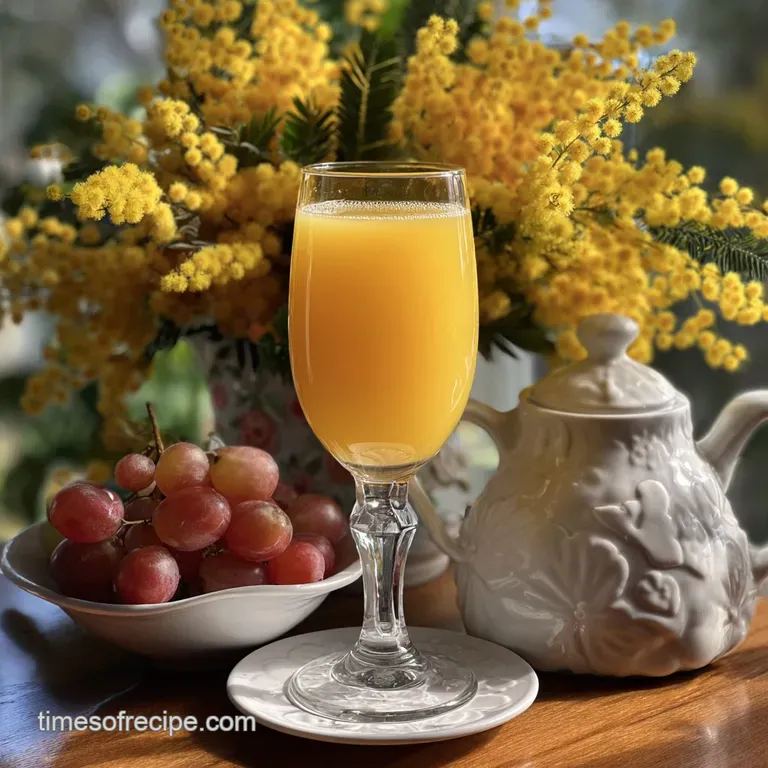
- Effort/Time: 5 minutes total prep.
- Flavor Hook: Bright, zesty citrus meets crisp, carbonated stone fruit.
- Perfect For: Sunday brunch, celebratory breakfasts, or a grab-and-go morning toast.
The Ultimate Classic Mimosa Recipe: Everything You Need to Know
The sharp hiss of a chilled bottle of Prosecco opening is the universal signal that brunch has officially begun. But let's be honest: we’ve all been served those lukewarm, overly sweet, or tragically flat drinks that masquerade as a proper cocktail.
I once ruined a whole bridal shower spread by pouring room temperature juice into expensive Champagne, effectively killing the bubbles instantly.
Creating a professional grade mimosa recipe isn't just about mixing two liquids; it’s about managing gas solubility and thermal energy. When you master the physics of the pour, you get that vibrant, dancing effervescence that cleanses the palate between bites of rich eggs benedict.
This guide breaks down the technical precision needed to ensure every sip is as crisp as the first.
The Science of Flavor: Why This 2 Ingredient Cocktail Works
- Carbon Dioxide Solubility: Keeping liquids near 34°F (1°C) maximizes CO2 retention, preventing the "flat" sensation caused by gas escaping too quickly at higher temperatures.
- Acid Sugar Balance: The citric acid in orange juice acts as a structural backbone, cutting through the residual sugar in sparkling wine to prevent a cloying mouthfeel.
- Nucleation Points: Tiny imperfections in glassware or pulp in juice create sites for bubbles to form and escape; using pulp free juice preserves the bead longer.
The History of the Iconic Ritz Paris Mimosa
The mimosa recipe allegedly surfaced around 1925 at the Hôtel Ritz Paris, credited to bartender Frank Meier. Named after the yellow Acacia dealbata flower, the drink was designed as a lighter, more refreshing alternative to the Buck’s Fizz, which uses a higher ratio of orange juice.
Meier's genius was the 50/50 split, which allowed the nuances of the French sparkling wine to shine through rather than being buried by fruit.
Balancing Sparkling Wine Acidity with Citrus
Achieving the right profile depends on the "dosage" (sugar level) of your wine. Since orange juice sits at a pH of about 3.5, you need a wine with enough structural acidity to match it.
A mimosa recipe with champagne labeled "Brut" provides the necessary dryness to offset the 8.4 g of sugar found in the juice. If the wine is too sweet (Doux or Demi Sec), the drink becomes syrupy and loses its refreshing edge.
Why Temperature Control is Vital for Effervescence
As temperature rises, the kinetic energy of the liquid increases, allowing CO2 molecules to break free from the "cages" formed by water molecules. If your ingredients are even 10 degrees too warm, you'll lose 20% of your carbonation within seconds of pouring.
This is why chilling both the 3 oz chilled sparkling wine and the 3 oz freshly squeezed orange juice is non-negotiable for a successful mimosa recipe.
Essential Ingredients and Smart Substitutions
The quality of your mimosa recipe is entirely dependent on the purity of your two main components. Pair this cocktail with a hearty meal like Hoppin John: Traditional Southern Recipe for Good Fortune for a balanced, festive brunch experience.
Choosing the Best Sparkling Wine: Prosecco vs. Cava
While a mimosa recipe with champagne is the gold standard, high-quality alternatives offer different flavor profiles. Prosecco (Glera Grape): Offers fruity notes of green apple and honeydew; best for those who prefer a softer, floral mimosa recipe easy to drink.
Cava (Macabeo/Xarel-lo): Produced via the traditional method, it brings earthy, mineral notes that mimic expensive Champagne at a fraction of the cost.
Fresh Squeezed vs. store-bought Orange Juice
Freshly squeezed juice contains volatile aromatic compounds that dissipate within hours. If using store-bought, ensure it is "Not From Concentrate" and strictly "Pulp Free." Pulp provides thousands of nucleation sites that cause the wine to foam over and go flat. For a decadent morning spread, serve your drink alongside Homemade Granola Clusters Granola Recipe Perfect C: Ultimate Crunch.
Fruit Juice Alternatives for a Custom Mimosa Recipe
| Original Ingredient | Substitute | Why It Works |
|---|---|---|
| 3 oz Orange Juice | 3 oz Pomegranate Juice | Higher tannin content; creates a tart, "Poinsettia" variation. |
| 3 oz Orange Juice | 3 oz Peach Purée | Higher viscosity; technically a Bellini, but same ratio logic. |
| 3 oz Sparkling Wine | 3 oz Sparkling Apple Cider | Note: Creates a mimosa recipe non alcoholic if using zero proof cider. |
Optional Add-ins: Liqueurs and Fresh Herbs
To add depth to your mimosa recipe ideas, many bartenders suggest a "rinse." A 0.25 oz pour of Grand Marnier Cordon Rouge or a mimosa recipe with triple sec boosts the orange essence without diluting the bubbles.
A sprig of fresh mint or rosemary can also add an olfactory layer that complements the citrus notes.
step-by-step Instructions for the Perfect Pour
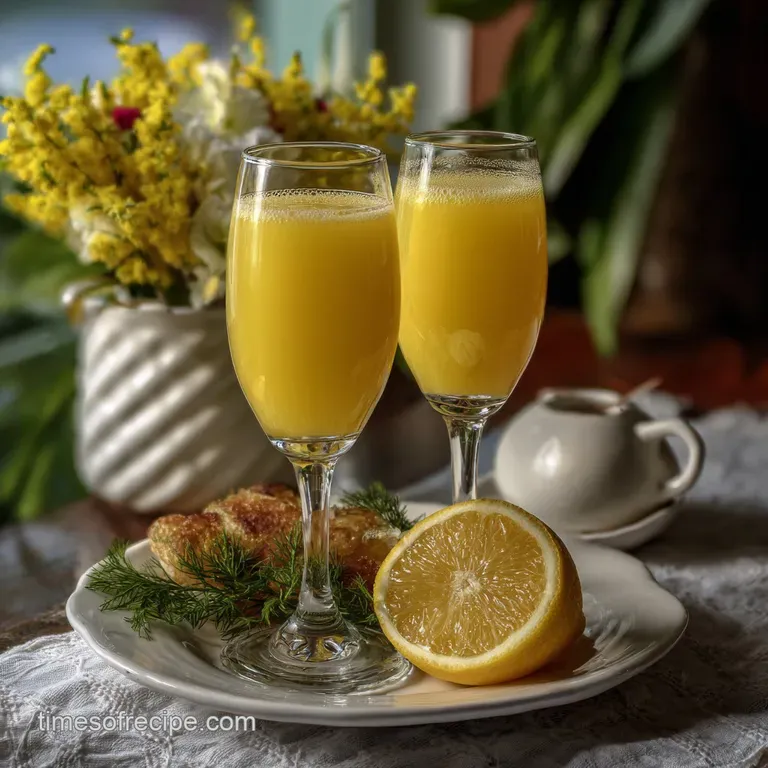
Preparing and Chilling Your Glassware
Place your Riedel Champagne Flutes in the freezer for 10 minutes prior to serving. A chilled glass prevents thermal shock when the cold wine hits the surface, preserving the delicate mousse of the sparkling wine.
Mastering the 1:1 Ratio Technique
- Pour 3 oz chilled sparkling wine into the tilted flute. Note: Tilting the glass minimizes the impact force of the liquid, reducing CO2 loss.
- Wait 10 seconds for the initial foam (the "mousse") to subside. Note: This allows the gas to stabilize before adding the denser juice.
- Slowly add 3 oz freshly squeezed orange juice. Note: The juice is denser than the wine and will naturally sink, aiding in self mixing without the need for a spoon.
- Avoid stirring with a spoon. Note: Agitation is the enemy of carbonation; the pouring action provides enough emulsification.
Adding the Finishing Touches and Garnishes
- Garnish with 1 thin orange slice. Note: The oils in the zest provide an immediate aromatic hit upon the first sip.
- Drop in 1 fresh raspberry. Note: The berry acts as a visual focal point and a sweet treat at the bottom of the glass.
Pro Tips and Common Mistakes to Avoid
- Freeze the Juice: If you're worried about dilution, freeze some orange juice in a King Cube Silicone Tray and use it as an "ice" cube.
- The "Double Chilled" Method: Chill the juice and the wine, but also chill the orange itself before slicing the garnish.
- Pre-Pour Wine: For large groups, pour all the wine first, let them settle, then top with juice to avoid overflow.
| Problem | Why It Happens | The Fix | Pro Protocol |
|---|---|---|---|
| Instant Overflow | Pouring juice before wine | Reverse the order; wine first. | Use a Barfly Japanese Jigger for exact 3 oz measurements. |
| Flat Bubbles | Warm ingredients or dirty glass | Chill everything to 34°F. | Use a Microfiber Polishing Cloth to remove lint from glasses. |
| Too Sweet | Using "Extra Dry" or "Sweet" wine | Switch to a "Brut" or "Extra Brut". | Check labels for "Metodo Classico" for higher acidity. |
Common Myths
Myth: You must stir a mimosa to mix the flavors. Truth: The density difference between the orange juice and the wine causes natural convection. Stirring with a metal spoon creates "boiling stones" effects that strip the drink of its bubbles.
Myth: Expensive Champagne is a waste in a mimosa recipe. Truth: While you shouldn't use a $300 bottle, a mid-range Veuve Clicquot or Moët & Chandon offers a "biscuity" yeast profile that cheaper Cavas lack, significantly changing the flavor complexity.
Storage, Freezing, and Serving Suggestions
How to Keep Your Bubbles Alive Longer
Once opened, sparkling wine loses its carbonation rapidly due to the pressure differential. Use a Le Creuset Champagne Stopper to maintain an airtight seal. This can preserve the "sparkle" for up to 24 hours in the refrigerator.
Can You Make a Mimosa Recipe in Advance?
No. A mimosa recipe is a "build-in-glass" cocktail that relies on immediate consumption. If you mix it in a pitcher an hour early, the surface area exposure will result in a flat, uninspiring drink. However, you can prep the garnishes and squeeze the juice up to 4 hours in advance.
How to Properly Store Leftover Sparkling Wine
- Fridge: 1 3 days with a high-quality pressure stopper.
- Freezer: Not recommended for the wine itself, but leftover mimosa mix can be frozen into "mimosa popsicles."
- Cooking: If the wine goes flat, use it as a base for a mimosa recipe inspired Bourbon Glaze: Classic Sticky Glaze Recipe for Ham Salmon by replacing some of the liquid with the wine.
Setting Up a DIY Mimosa Bar for Brunch Guests
For a successful DIY station, keep the bottles in a Bolle Ice Bucket filled with a 50/50 mix of ice and water (water transfers cold faster than air). Provide carafes of different juices and labels for the mimosa recipes with prosecco or champagne options.
If you’re looking for a heavier, creamier holiday alternative to this mimosa recipe, don't forget to try my Eggnog Recipe: Rich Creamy Homemade Holiday Delight. For a sophisticated evening alternative, the Hanky Panky Cocktail: Herbaceous Gin Classic Recipe provides that same classic elegance. Whether it’s a quiet morning or a festive party, this mimosa recipe remains the undisputed king of the brunch table.

Recipe FAQs
What is the ideal champagne-to-juice ratio for a Mimosa?
1:1 ratio. This ensures the delicate carbonation of the sparkling wine is not overwhelmed by the juice. Too much juice results in a heavy, syrupy mouthfeel.
Must the champagne be chilled before mixing?
Yes, extremely cold. Warm champagne rapidly releases dissolved CO2 upon agitation, leading to rapid flattening of the drink. This is crucial for maintaining effervescence.
Can I use Prosecco instead of traditional Champagne?
Prosecco is an acceptable substitute. Champagne uses the traditional method (Méthode Champenoise) creating finer, longer lasting bubbles, while Prosecco uses the Charmat method, resulting in bolder, quicker dissipating carbonation. Both work well for brunch service.
Why is my Mimosa cloudy instead of clear?
Freshly squeezed juice retains pulp particles. The cloudiness indicates high levels of suspended fruit solids, which affect light refraction and visual clarity. For a clearer drink, use filtered juice or chill pulp settled juices overnight before using.
What temperature causes citrus juice to separate?
Serving juice above 45°F promotes separation. When warm juice meets cold wine, the rapid temperature differential causes the water content to interact poorly with the alcohol, leading to a visible layer at the bottom. Chill your juice to 35°F; this mirrors the science behind perfectly emulsified dressings, similar to what we achieve in our Amish Macaroni Salad: The Sweet Creamy Picnic Classic Recipe.
Is dry vermouth a necessary addition?
No, vermouth is entirely optional. Dry vermouth adds a subtle herbal complexity often found in slight variations, but it introduces bitterness that masks the bright citrus flavor intended for a standard Mimosa. If you prefer savory cocktails, perhaps explore recipes that lean on fortified wines, like our approach for Dandelion Wine Recipe: Traditional Homemade 1 Gallon English Brew.
Myth: Should I stir the Mimosa after pouring?
Myth: Stirring is counterproductive. Mechanical agitation forces the rapid exit of carbon dioxide (Henry’s Law), immediately flattening the drink. Instead, gently tilt the flute immediately after adding the final ingredient to encourage light mixing.
Easy Classic Mimosa Recipe
Ingredients:
Instructions:
Nutrition Facts:
| Calories | 121 kcal |
|---|---|
| Protein | 0.7 g |
| Fat | 0.2 g |
| Carbs | 11.5 g |
| Fiber | 0.3 g |
| Sugar | 8.4 g |
| Sodium | 5 mg |
