Persian Cuisine Recipes: Fesenjān Masterpiece
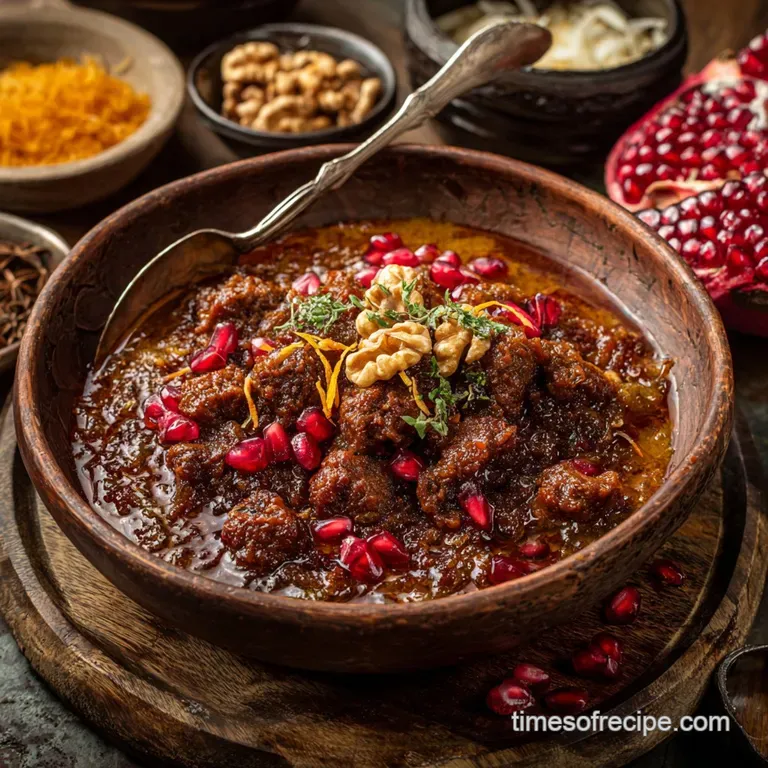
- The Velvet of Persia: Silky Pomegranate and Walnut Stew (Khoresht-e Fesenjān)
- The Poetic History of Khoresht-e Fesenjān: A Royal Persian Dish
- Regional Variations and the True Authenticity of this Persian Stew
- The Science of Silk: Achieving the Velvety Texture
- Essential Components for the Khoresht-e Fesenjān Flavor Base
- The Patient Art of Braising: Step-by-Step Khoresht Method
- Troubleshooting Fesenjān: Expert Tips from the Persian Kitchen
- Preparation and Preservation: Making Khoresht Ahead
- Serving the Stew: Traditional Pairings and Presentation
- Recipe FAQs
- 📝 Recipe Card
The Velvet of Persia: Silky Pomegranate and Walnut Stew (Khoresht-e Fesenjān)
That smell. It’s warm, tart, and deeply nutty all at once, totally unlike anything else you’ve cooked this week. When a pot of Khoresht-e Fesenjān is simmering, my whole kitchen smells like history and comfort mixed together.
That velvety, dark mahogany colour is just hypnotizing, promising a depth of flavor that few stews can match.
Look, this specific Iranian cuisine recipe isn't "fast," but it is absolutely hands off once the initial prep is done. It uses incredibly simple pantry staples, turning humble walnuts and intense pomegranate molasses into something utterly royal.
It’s the perfect, slow Sunday project that makes you look like a culinary genius with minimal stress. This patience is exactly why these Persian cuisine recipes stand the test of time.
Forget the overly sweet versions you might have tried at restaurants; we are going for that perfect, complex balance of sour and rich earthiness today. This is the Persian cuisine recipe you need to master, and I’m going to share every single trick I learned (mostly the hard way, obviously).
Trust me, this is the definitive guide to mastering this signature dish.
The Poetic History of Khoresht-e Fesenjān: A Royal Persian Dish
Fesenjān isn't just a meal; it’s a legend. We are talking about a dish whose origins might stretch back to the Sasanian Empire, making it profoundly ancient. It reflects the sophisticated flavors available to royalty rich walnuts for fat and energy, and the revered pomegranate, the fruit of heaven in Persian lore.
Whenever you cook Fesenjān, you are engaging in serious Persian cooking recipes lineage. It demands respect, mainly in the form of time. The reason this dish remains so popular is that it manages to be deeply rich yet simultaneously bright, a balancing act that defines the best of Iranian culinary art.
Regional Variations and the True Authenticity of this Persian Stew
Like all great dishes, Fesenjān changes slightly depending on where you are in Iran. In the North, especially near the Caspian Sea where sour fruits are abundant, the stew is often intentionally very tart. Down South, you might find versions that lean sweeter.
The biggest mistake I see Western recipes make is aiming for overly sweet territory right away. Authentic Fesenjān is complex, not syrupy. Our goal is to hit that perfect point of equilibrium that makes your mouth water but doesn't feel heavy or cloying.
Navigating the Sour and Sweet Balance in Persian Culinary Art
This balance is the entire soul of the dish. You need the acidic, tannic punch of the pomegranate molasses, but that tartness needs to be rounded out by the earthiness of the walnuts and a touch of sweetness. If you want a fun contrast, think of how this complexity differs from something purely sweet, like the syrupy goodness of Turkish Cuisine Desserts: Classic Şekerpare, The Sweet Semolina Dream . Fesenjān requires subtlety.
Fesenjān: The Signature Dish of Persian Feasts
When Iranians host a formal gathering, Fesenjān is frequently on the table. Why? Because it’s intensely luxurious, requires time, and uses expensive ingredients like walnuts and saffron. It’s a dish of hospitality and status, meant to impress.
The Culinary Meaning of 'Khoresht' (Stew) in Iran
In short, a khoresht is a stew, usually thickened, typically sour or sweet sour, and always served over fluffy steamed rice ( polow or chelow ). It’s the main course, the rich center of the Persian meal structure.
It’s basically the definition of comfort food perfection, provided you have the rice ready.
Is Fesenjān 'Garm' or 'Sard'? Understanding Persian Temperaments
Traditional Persian medicine categorizes foods as "Garm" (warm) or "Sard" (cold) in temperament. Walnuts are very garm . Pomegranates are often considered sard .
Fesenjān is celebrated because its main ingredients naturally achieve a perfect temperature balance, making it satisfying year round. It’s just clever food science, really!
A Note on Diaspora and Recipe Lineage (Addressing competitive context)
If you look up Persian food recipes easy versions online, you will find massive variations in ingredients some add weird spices, some skip the critical long simmer. My method is deeply traditional, focused on maximizing the walnut oil.
Don't worry about trying to track down some super secret family ingredient; mastery here comes from technique, not rarity.
Serving Rituals and When to Present This Khoresht
This stew is always served family style, spooned over white Basmati rice. It’s often reserved for special occasions like Nowruz (New Year) or Friday dinners. Whenever you serve it, make sure the stew is hot and the rice is perfectly fluffy.
The Science of Silk: Achieving the Velvety Texture
The key to great Fesenjān is achieving an incredible, silky mouthfeel, not a chunky, grainy texture. This happens when the finely ground walnuts release their oil into the acidic base. This fat separation, known as "oiling out," gives the stew its characteristic dark sheen and profound richness.
We force this emulsion by starting the walnuts in cold liquid and shocking them repeatedly. I know, it sounds mad, but adding ice cubes to a hot stew actually encourages the natural fat in the walnuts to separate and rise to the surface. This is the single most important trick you will learn today.
Essential Components for the Khoresht-e Fesenjān Flavor Base
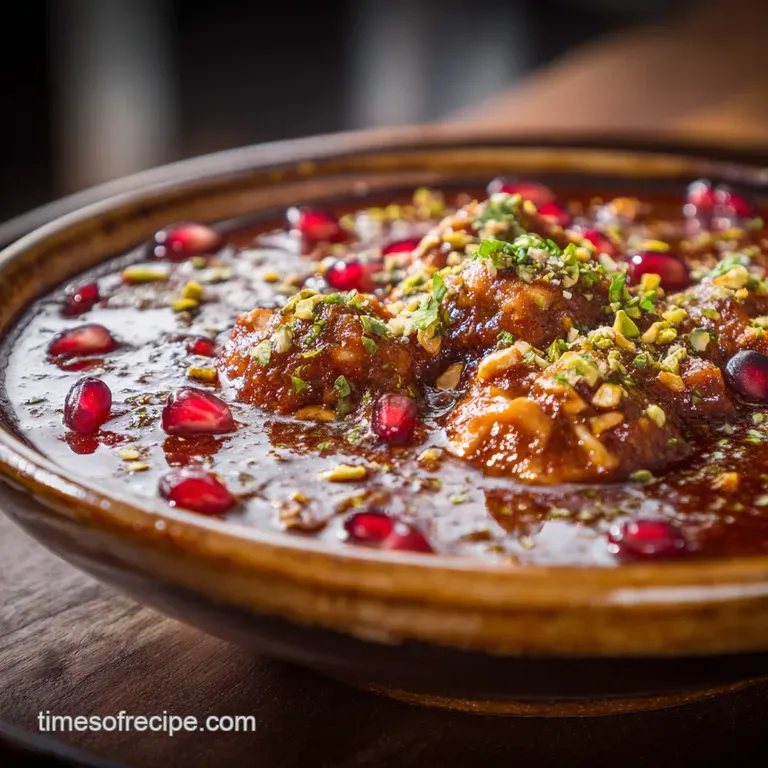
I've learned that quality ingredients here matter far more than complexity. When cooking persian food recipes in english , sometimes the translation loses the nuance of the ingredient, so let’s get specific.
| Ingredient | Measurement (US/Metric) | Substitution/Notes |
|---|---|---|
| Raw Walnuts | 3 cups (300g) | Pecans or Almonds (Only use if necessary; flavor will change drastically, but the fat structure is similar.) |
| Pomegranate Molasses | 1/2 cup (120ml) | Cranberry Juice Concentrate + Lemon Juice (See variation notes, but seriously, try to find the molasses.) |
| Sweetener (Sugar/Honey) | 2 Tbsp (30g) | Maple Syrup or Date Paste (Crucial for balancing tartness.) |
| Liquid (Stock/Water) | 4 cups (950ml) | Plain Water (If you want the purest walnut/pomegranate flavor, water works fine.) |
| Turmeric & Saffron | 1 tsp / Pinch | Omit Saffron (It’s mostly for color/luxury; Turmeric is required for earthy undertones.) |
Mastering the Walnut Emulsion for Maximum Richness
You must grind your walnuts extremely fine. If the chunks are too large, they won't release their oil quickly and the final product will be grainy. I aim for the texture of damp sand in the food processor just before it turns into actual butter.
Optimizing the Acidity: Pomegranate Molasses vs. Paste
We are definitely using molasses, which is a thick, highly concentrated syrup. Paste is typically used as a marinade or rub. Buy the highest quality molasses you can find. It should be dark, sticky, and intensely sour.
Selecting the Right Walnuts for Optimum Oil Release
Use raw, unsalted walnuts. Lighter halves are often fresher, meaning their oil content hasn't gone rancid. Toasting the walnuts briefly with the onions before adding liquid helps to wake up those oils and ensures a deeper flavor.
Quality and Brix Levels: Choosing the Best Molasses
Brix is just a measure of sugar concentration, but for molasses, pay attention to the color and thickness. If your molasses is runny and pale, it’s probably watered down and lacks the necessary punch. Go for the dark, syrupy stuff.
Saffron Infusion for Color and Aroma
Saffron is optional, but honestly, it’s worth the splurge if you can manage it. Bloom a pinch of threads in a few tablespoons of hot water for 10 minutes before adding it. This gives the sauce a beautiful, subtle golden red hue and an incredible aroma that signals quality.
Alternative Proteins and Vegetarian Adaptations for Fesenjān
While chicken or duck are traditional, Fesenjān is incredibly versatile. I often make a vegetarian version by replacing the poultry with chunks of butternut squash or small, lightly seared cauliflower florets .
Add these during the last hour of cooking so they don't disintegrate completely.
Chef’s Note: The liquid ratio is crucial for the emulsion. When you add the ground walnuts to the stock, they will immediately want to clump up and stick to the bottom. Use a heavy bottomed pot and stir diligently in the first 30 minutes.
The Patient Art of Braising: step-by-step Khoresht Method
This persian cooking recipe requires time and minimal intervention. Low and slow is the mantra.
Stage 1: Roasting and Grinding the Walnuts for the Base
- Prep the Walnuts: Place 3 cups of walnuts in a food processor. Pulse until they resemble fine, damp sand. Stop just before they turn into a paste. Set aside.
- Sauté the Aromatics: Heat 2 Tbsp neutral oil in your Dutch oven. Add one medium, finely minced onion and sauté gently for 7 minutes until translucent. Do not brown the onion; we want sweetness, not crunch.
- Toast the Walnuts: Add the ground walnuts and 1 tsp turmeric to the pot. Stir constantly and sauté for exactly 5 minutes. You will smell the rich, nutty aroma intensify dramatically.
Stage 2: Gentle Simmering for Flavor Depth and Emulsion Setting
- Add Liquid and Shock: Pour in 4 cups of cold stock or water and stir well until the mixture is uniform. Bring it just to a simmer, then immediately drop the heat to the absolute lowest setting. Add 6 ice cubes; the cold shock helps the walnut fat separate.
- Simmer: Cover the pot tightly and simmer for 90 minutes. Stir every 20 minutes to ensure the walnuts don't stick and burn. You should see a noticeable, oily sheen forming on the surface this is success!
- Add Protein: If using chicken, season 2.5 lbs of pieces with salt and pepper and sear them quickly in a separate pan until golden. Add the chicken pieces to the stew base.
Stage 3: Balancing the Flavor Profile (The crucial final adjustment)
- Add Flavor Agents: Stir in the 1/2 cup of pomegranate molasses and the bloomed saffron (if using). If the molasses is exceptionally thick, you might need a little extra liquid to incorporate it.
- Continue Braising: Cover and simmer for another 45 minutes, or until the chicken is cooked through and meltingly tender. The sauce should be rich, thick, and very dark.
- Balance: This is where you taste! Add 1 Tbsp of sugar or honey at a time, stirring and tasting after each addition, until the sharp tartness is perfectly countered. I usually use 2 3 tablespoons total, depending on the molasses. Season with salt and pepper if needed.
Stage 4: Achieving the Signature Oil Layer (The mark of success)
- Rest: Turn off the heat. Let the Fesenjān rest, covered, for 15 minutes before serving. This rest allows the final layer of beautiful walnut oil to separate fully on top, signaling a job well done.
Troubleshooting Fesenjān: Expert Tips from the Persian Kitchen
If you’re new to Persian food recipes , don't panic if things go sideways. Most problems are easily fixed.
Preventing a Grainy or Bitter Texture (Grinding troubleshooting)
The most common failure is a grainy texture, which happens when walnuts are not ground finely enough, or the stew is simmered too fast. Fix: If it’s too grainy, carefully transfer half the stew base to a blender and process until smooth, then return it to the pot.
If it’s bitter, you probably burned the base; try adding another half cup of stock and a touch more sweetener to mask it, but prevention (slow simmering) is best.
When the Stew is Too Sour: Easy Sweetness Adjustments
If you overshoot the molasses and the stew is too tart, don't just dump sugar in. Add 1 Tbsp of honey or date paste, wait 10 minutes while simmering, and taste again. The heat needs time to integrate the sweetness.
Ensuring Tahdig Synergy: Matching the Rice Crust to the Stew
Fesenjān is rich, so it needs a neutral base. Serve it with fluffy polow (Basmati rice). If you are attempting Tahdig (the crispy rice crust), keep it simple just rice and a little saffron or oil. The stew provides all the complex flavor; the rice should be clean and delicate. Rich stews like this are fantastic over simple bases, much like a good Crawfish Recipes: Classic Louisiana ÉtoufféeAuthentic and Rich requires perfect steamed rice.
Preparation and Preservation: Making Khoresht Ahead
Fesenjān is one of those dishes that tastes even better the next day. The flavors truly deepen overnight.
Safely Chilling and Refrigerating the Stew Base
Once cooled, Fesenjān can be stored in an airtight container in the refrigerator for up to 4 days. Note: The fat layer will solidify on top; this is normal. Just gently reheat to recombine.
Freezing Khoresht for Long Term Quality Retention
Does Fesenjān freeze well? You bet it does. It keeps beautifully for up to 3 months. Freeze the stew in single serving portions without the rice. The walnut emulsion holds up remarkably well to freezing and thawing.
Reheating Fesenjān without Breaking the Walnut Emulsion
Thaw overnight in the fridge. Reheat gently over very low heat on the stovetop. Do not microwave or boil rapidly. Stir slowly until the fat layer melts back into the stew, returning it to its signature velvet texture.
Serving the Stew: Traditional Pairings and Presentation
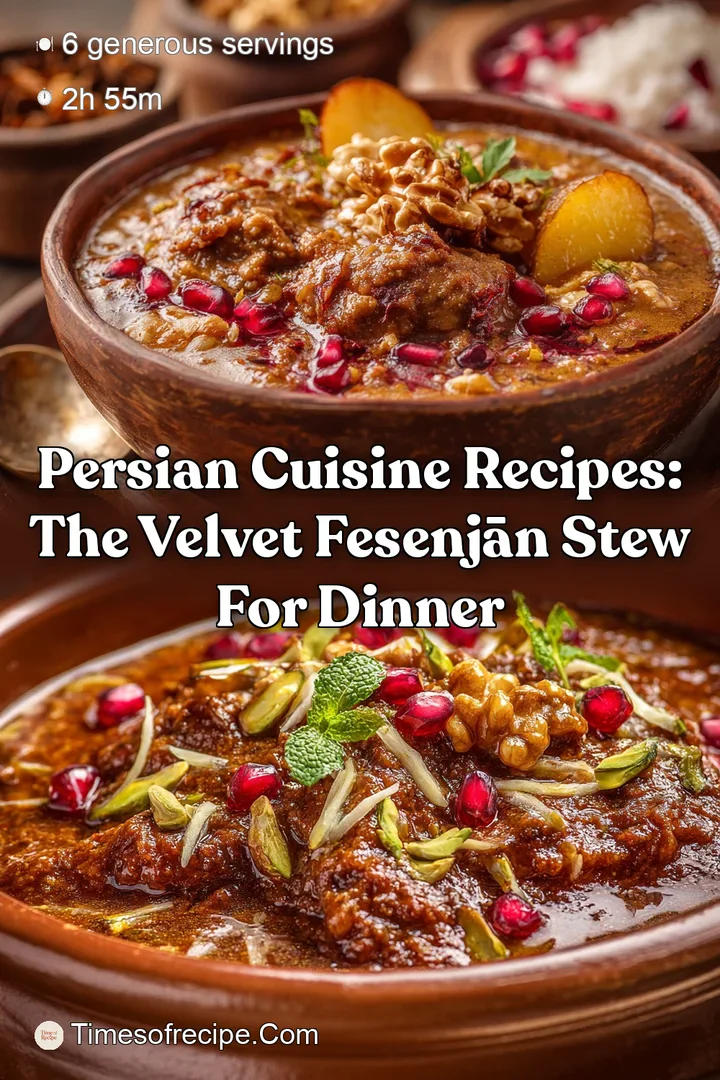
Fesenjān is traditionally served hot, spooned liberally over a plate of white Basmati rice. The garnish is simple: maybe a few toasted walnut halves or a sprinkle of dried mint, allowing the deep color of the stew to be the star. Always serve with cooling sides.
A simple, fresh Salad Shirazi (finely diced cucumber, tomato, and onion with lime juice) is essential to cut through the richness.
Recipe FAQs
Why is my Fesenjān oily, and should I try to skim the fat?
The layer of oil that rises to the surface is the natural fat released by the finely ground walnuts, which is highly desirable for richness and flavor. This natural oil is essential for the stew’s signature velvety mouthfeel, so please do not skim it off.
If the stew appears excessively separated, simmer uncovered for the last 30 minutes to slightly reduce moisture and gently encourage emulsification.
I can't find pomegranate molasses. What is the best substitute?
Pomegranate molasses is fundamental for achieving Fesenjān’s unique deep, tart, and slightly sweet flavor profile and its dark color. While there is no perfect substitute, you can combine concentrated sour cherry or tamarind paste with a small amount of sugar or honey to mimic the necessary tart sweet balance.
Use any substitute cautiously, tasting frequently to adjust the balance.
How long should I truly simmer this stew? Can I rush the process?
Fesenjān absolutely requires patience; rushing it will compromise the texture and depth of flavor. A minimum of 3 hours is necessary for the walnuts to soften completely and for the acids in the molasses to cook down and balance.
Slow cooking also allows the stew's color to transform from a reddish brown to a rich, glossy, dark mahogany.
Can I make Khoresht-e Fesenjān vegetarian or vegan?
Yes, Fesenjān adapts beautifully to vegetarian preparation; simply omit the chicken or meat stock and use water or vegetable broth. For the protein element, try substituting roasted butternut squash cubes or thickly sliced, seared eggplant, adding them in the last 45 minutes of cooking so they don't disintegrate.
Ensure the recipe uses maple syrup or date syrup instead of honey for strict vegan adherence.
My stew tastes too sour (or too sweet). How do I fix the balance?
Flavor correction is standard in this recipe: if it is too sour, stir in sugar, honey, or concentrated grape juice one teaspoon at a time until balanced. If it is too sweet, incorporate a splash of fresh lemon or lime juice, or a little extra pomegranate molasses, allowing 15 minutes of simmering time after each adjustment.
Can I prepare Fesenjān ahead of time or freeze the leftovers?
Fesenjān is an excellent make-ahead dish, as the complex flavors continue to develop and meld overnight in the refrigerator, often tasting even better the next day. You can store the stew in an airtight container for up to 4 days refrigerated, or freeze it for up to 3 months; always thaw slowly in the refrigerator before reheating gently on the stovetop.
Should I toast the walnuts before grinding them for the stew?
While some recipes call for toasting, it is generally recommended to use raw walnuts for Fesenjān. Raw walnuts release their natural oil more effectively during the long, slow cooking process, contributing to the essential smoothness and thickness of the khoresht.
Toasting can sometimes yield a slightly bitter flavor after three hours of simmering.
Fesenjan Persian Cuisine Recipes
Ingredients:
Instructions:
Nutrition Facts:
| Calories | 580 calories |
|---|---|
| Fat | 35 g |
| Fiber | 4 g |
