Gai Lan Chinese Broccoli with Classic Oyster Sauce (Restaurant Style)
- The Quintessential Side Dish: What is Gai Lan?
- Achieving Perfection: Why This Restaurant-Style Gai Lan Technique Works
- Essential Ingredients for Gai Lan Chinese Broccoli and Key Substitutions
- Step-by-Step: Blanching, Shocking, and Dressing the Gai Lan
- Troubleshooting Gai Lan: Common Mistakes and Chef’s Texture Tips
- Make Ahead and Storage Guide for Leftover Chinese Broccoli
- Perfect Pairings: What to Serve Alongside Classic Gai Lan
- Recipe FAQs
- 📝 Recipe Card
The Quintessential Side Dish: What is Gai Lan?
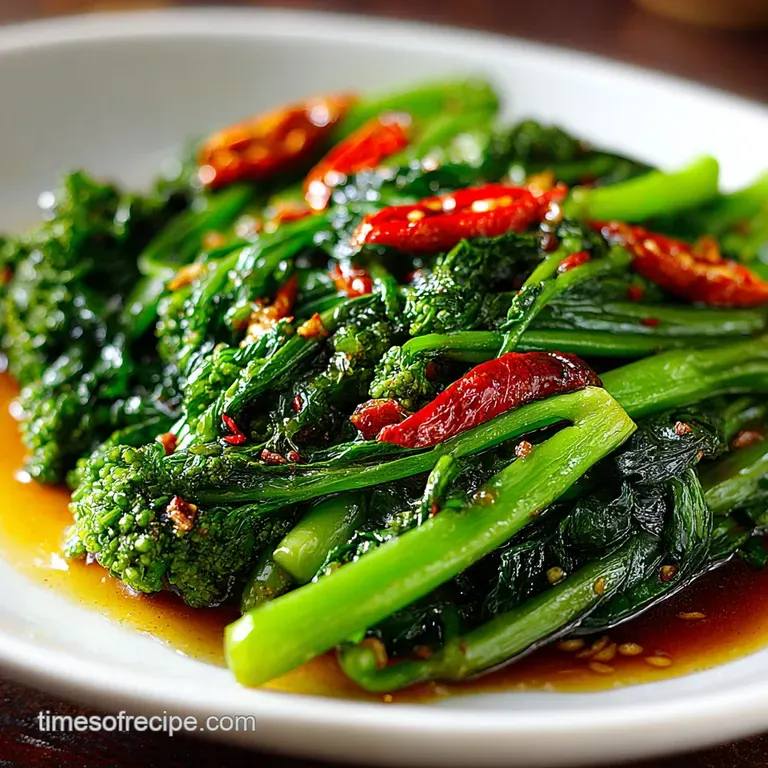
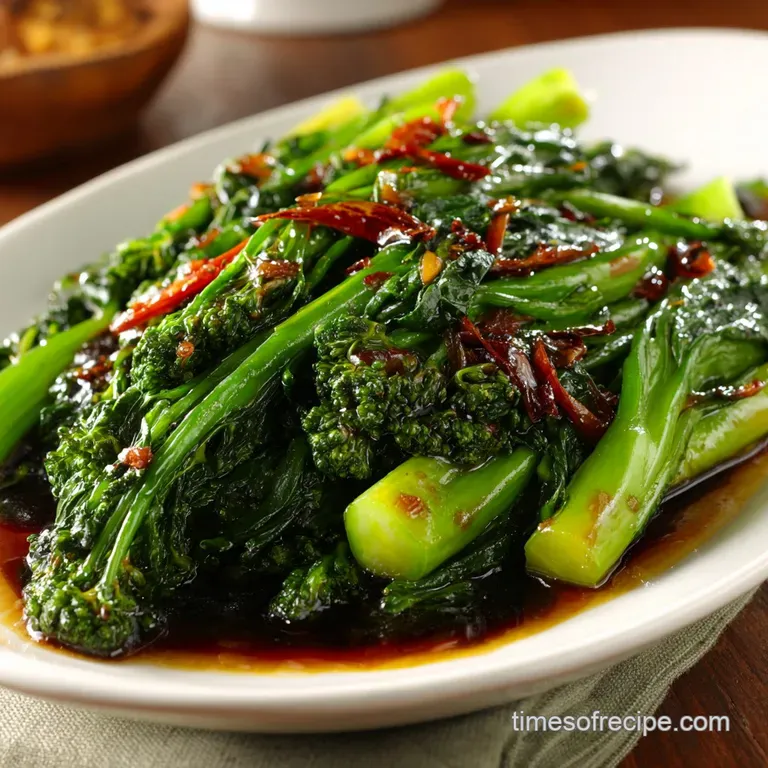
When a platter of Gai Lan Chinese Broccoli hits the table, it should honestly stop you in your tracks. That brilliant, almost fluorescent emerald green just screams freshness, right?
Then you bite into it it’s tender but still offers a satisfying, necessary snap that cuts perfectly through whatever rich, fatty main course you are serving.
I used to think Chinese restaurants had some secret, expensive equipment for this, but nope. This humble green is actually one of the fastest, easiest, and cheapest sides you can master in your own kitchen. You need less than 20 minutes, maximum, to achieve the texture they charge big bucks for.
This isn't about tossing it in a frying pan until it wilts sadly. We are going straight for the professional Hong Kong style: quick blanching, immediate chilling, and a deeply savoury, glossy oyster sauce reduction. Let’s crack on and elevate your veggie game.
Achieving Perfection: Why This Restaurant Style Gai Lan Technique Works
Understanding the Unique Bitter Note of Chinese Broccoli
Gai Lan (which translates literally to "mustard orchid," interesting, huh?) is part of the brassica family, just like regular broccoli. Unlike florets, the star here is the thick stem and the flat, glossy leaves.
It has a slightly more robust, pleasant bitterness than standard broccoli, and that is what makes it such a phenomenal pairing for rich, fatty proteins. Don't try to hide the bitterness. We embrace it, and the rich oyster sauce glaze balances it perfectly.
Selecting the Best Gai Lan: Stems vs. Leaves
Look for bunches with firm, thick stems. The thicker the stem, the better the crunch factor after blanching. You want leaves that are dark green and vibrant, without any yellowing or signs of wilting. If the stems look like tree trunks (thicker than your thumb), you absolutely must slice them lengthwise.
This ensures both the thick stem and the delicate leaf cook to the exact same snappy tenderness at the same time.
Quick Overview of the Hong Kong Style Preparation
Traditional preparation focuses on texture and colour above all else. We are not slow braising this; we are attacking it with heat! We dunk the greens in salted, boiling water (the Blanch), stop the cooking instantly in an ice bath (the Shock), and then finish with a simple, high impact sauce that’s made separately and drizzled over top.
This method guarantees that beautiful texture every single time.
The Science of the Snappy Texture (The Blanch & Shock Method)
Why bother with the ice bath? Blanching softens the Gai Lan but keeps the cell walls mostly intact. When you plunge it immediately into ice water, you stop the residual heat dead in its tracks. This preserves the perfect 'al dente' structural integrity, giving you that brilliant, toothsome snap.
Skipping this step means sad, soft, olive green Gai Lan. Nobody wants that.
Maximizing Color Retention (The Role of Optional Baking Soda)
I sometimes cheat a tiny bit by adding 1/4 teaspoon of baking soda to the blanching water. Why? Baking soda is alkaline, and alkali helps preserve chlorophyll. It makes the greens pop even more vividly, maintaining that insane bright green colour.
Just be careful; too much baking soda can make your vegetables taste soapy. The salt and oil method usually works perfectly well, but this is my pro-tip for when you really need the colour to sing.
Building the Deeply Savoury Glaze (The Oyster Sauce Reduction)
The key to a restaurant glaze is viscosity and flavour concentration. We use a combination of oyster sauce (pure umami), sugar (for balance), and soy sauce (for depth). Then, we thicken it with a cornstarch slurry.
This isn't just a runny dressing; it's a glossy, deeply savoury coating that sticks right to the stems and leaves.
Essential Ingredients for Gai Lan Chinese Broccoli and Key Substitutions
I believe in keeping ingredient lists short and impactful. Here’s what you need and what you can use if your pantry is looking a little sparse.
Sourcing Quality Oyster Sauce vs. Vegan Alternatives
Oyster sauce is the foundation of this dish's richness. I highly recommend spending a little extra on a quality brand like Lee Kum Kee or an equivalent. The cheap stuff tastes mostly of corn syrup, trust me, I learned that the hard way in my early cooking days!
| Ingredient | The Must Have | Viable Substitution |
|---|---|---|
| Gai Lan | Fresh, firm stalks | Broccolini (Baby Broccoli) |
| Oyster Sauce | high-quality brand | Vegan Mushroom Stir Fry Sauce or Hoisin Sauce (Use less sugar) |
| Light Soy Sauce | Low sodium preferred | Tamari (if gluten-free) |
| Cornstarch | Cornflour (UK) | Potato Starch or Arrowroot |
The Critical Role of high-quality Sesame Oil
The toasted sesame oil is almost always added after the sauce is taken off the heat. Why? Because the volatile oils in sesame burn very easily, and once they burn, they taste bitter. Adding it at the end preserves that nutty, aromatic finish that makes the whole dish smell amazing.
Preparing the Gai Lan: Trimming and Cleaning Notes
You absolutely must trim the thick, white, woody bottom end of the stalk. It’s too tough to eat, even after blanching. A good rule of thumb is to chop off about an inch, then inspect the remaining stalks.
If they are very thick, slice them in half lengthwise starting from the thickest end, stopping just before the leaves. This ensures every piece cooks evenly.
Alternative Oils for over High heat Finishing
We used a neutral oil (like canola or rapeseed) in the blanching water simply for sheen, not flavour. If you wanted to add a quick aromatic layer to the sauce, you could use peanut oil or even a tiny amount of avocado oil to sauté your optional ginger or garlic before adding the rest of the liquids.
Chef’s Note: Never use Olive Oil for this particular preparation. Its strong flavour completely clashes with the delicate balance of the classic Cantonese sauce. Keep it neutral!
step-by-step: Blanching, Shocking, and Dressing the Gai Lan
Follow these steps exactly, and you will nail that perfect texture. Remember, speed is your friend here.
Stage 1: The over High heat Boil and Tongs Test for Doneness
- Bring your large pot of salted water to a rolling boil. Add the teaspoon of neutral oil and the trimmed Gai Lan.
- Maintain the high heat and stir quickly to ensure all pieces are submerged. Cook for 60 to 90 seconds. The colour will change dramatically to a glowing green.
- Test a stem with a fork or tongs. It should still feel firm, but you should be able to pierce the thickest part without applying much pressure. This should feel slightly underdone. Trust the process.
Stage 2: The Immediate Ice Bath (Shocking for Color and Crunch)
- Immediately lift the Gai Lan out of the boiling water using tongs or a spider and plunge it straight into the ice bath. This step is non-negotiable!
- Let it sit in the ice bath for 30 seconds. This stabilizes the colour and temperature.
- Drain well. You can shake it off vigorously, but a brief pat-down with a clean kitchen towel ensures you don't water down the glossy sauce we are about to make.
Stage 3: Creating the Glossy Sauce Emulsion
- In your small saucepan, combine the oyster sauce, soy sauce, sugar, chicken stock, and grated ginger. Bring this mixture to a gentle simmer over medium heat until the sugar dissolves.
- While the sauce is heating, whisk the cornstarch and cold water together in a tiny cup until absolutely smooth (the slurry).
- Remove the simmering sauce from the direct heat source. Pour in the slurry while whisking rapidly. This prevents lumping.
Stage 4: Final Plating, Glazing, and Presentation
- Return the saucepan to low heat for about 30 seconds, stirring until the sauce thickens and achieves a brilliant, glossy sheen. It should coat the back of your spoon nicely.
- Remove from heat and stir in the toasted sesame oil.
- Arrange the chilled, drained Gai Lan neatly on a platter, stacking the stalks parallel to one another. Generously pour the hot, glossy sauce over the center of the greens just before serving.
Troubleshooting Gai Lan: Common Mistakes and Chef’s Texture Tips
Why Is My Gai Lan Limp? (Overcooking Errors)
The biggest failure point is blanching too long. If you leave it for 3 minutes, it’s mush. We only want 60 90 seconds, followed by the immediate shock.
If your water isn't boiling hard when you add the greens, the temperature will drop, and the cooking time will drag out, leading to flabby greens. Always use a very large pot of water to maintain temperature.
My Sauce is Too Thin/Thick: Adjusting Cornstarch Slurry
If the sauce is too thin after adding the slurry, you can always make a little more slurry (1/2 tsp cornstarch + 1 tsp cold water) and add it slowly. If it becomes too thick (gloopy!), just whisk in a teaspoon of warm water or chicken stock until you hit the desired consistency.
It’s much easier to add thickness than to take it away.
Cutting Methods for Faster, Even Cooking
If you’re in a massive rush, you can simply chop the Gai Lan into 2 inch segments before blanching. This works perfectly well and shortens the cooking time to about 45 60 seconds, but you lose a bit of the traditional, long stem presentation.
make-ahead and Storage Guide for Leftover Chinese Broccoli
Storing Uncooked Gai Lan for Maximum Freshness
Gai Lan is best when cooked soon after purchase. To store it, keep the bunch dry (do not wash it yet!) and wrap the stems loosely in a slightly damp paper towel, then place it inside a perforated plastic bag in the crisper drawer. It will last 3 4 days this way.
Reheating Blanched Gai Lan Without Losing Snap
Let's be real: this dish is best served immediately. However, if you have leftover blanched (but unsauced) Gai Lan, it keeps beautifully in the fridge for up to 3 days. To reheat, give it a quick 30 second steam, or toss it in a dry, very hot pan for 15 seconds. Do not try to re-blanch it.
Pour the sauce over fresh, hot greens.
Can I Freeze the Finished Dish? (Practical Guidance)
No. Absolutely not. The finished dish, with the sauce, will turn into a watery, flavourless mess when thawed. The texture of the Gai Lan will become spongy and sad. If you must prep ahead, blanch and shock the Gai Lan, store it naked in the fridge, and make the sauce right before serving.
Perfect Pairings: What to Serve Alongside Classic Gai Lan
This Gai Lan is deliberately simple so it can act as the perfect foil for something bold. It’s that bitter, refreshing contrast that every Chinese feast needs.
- Serving Suggestion 1: Alongside sticky, sweet Char Siu pork or any rich Cantonese roast duck. The bitterness cuts right through the richness.
- Serving Suggestion 2: Served next to a simple, steamed fish seasoned with ginger and soy sauce.
- Serving Suggestion 3: Use it as the mandatory green on a platter of rice dishes, like a simple egg fried rice.
Recipe FAQs
Why is my Gai Lan tough or overly bitter after cooking?
Toughness usually indicates undercooking. Ensure you are blanching the thick stems for a full 2 to 3 minutes, or until the stems are pierced easily with a fork. While Gai Lan naturally has a pleasant bitterness, trimming the very woody, thick ends and adding a teaspoon of sugar to the blanching water helps temper excessive sharpness.
Can I make the classic Oyster Sauce dressing vegan?
Absolutely. Replace classic oyster sauce with a high-quality vegan oyster sauce, which is typically made from concentrated shiitake or oyster mushrooms and provides the necessary umami depth.
Alternatively, you can use a savory blend of dark soy sauce, light soy sauce, and a touch of mushroom powder thickened with a cornstarch slurry.
How do I ensure my Gai Lan stays a vibrant emerald green?
The key technique is 'shocking' the vegetables. Immediately after draining the blanched Gai Lan, plunge it into a large bowl of ice water for 30 seconds. This process halts the cooking, locks in the chlorophyll, and ensures the texture remains beautifully tender crisp rather than mushy.
I cannot find Gai Lan. What is the best substitute for this recipe?
The closest and most traditional substitute is Choy Sum (Chinese flowering cabbage), which offers a similar thick stem structure and slight bitterness. Standard broccoli rabe or even trimmed broccoli florets can also work, but note that the cooking time may vary slightly depending on the thickness of the stems.
My oyster sauce dressing turned out too thin and watery. How can I fix this?
Watery sauce often results from residual water clinging to the blanched Gai Lan; ensure you drain the vegetable very thoroughly before plating and saucing. To thicken the existing sauce, whisk a cornstarch slurry (1 tsp cornstarch mixed with 2 tsp cold water) into the simmering sauce mixture and cook for 30 seconds until glossy.
How long will cooked Gai Lan last, and is it suitable for freezing?
Cooked Gai Lan is best consumed immediately for optimal texture and flavour, but leftovers can be stored in an airtight container in the refrigerator for up to 3 days. Freezing is generally not recommended for this type of delicate green vegetable.
The high water content causes it to become mushy and unpleasant once thawed.
Are there traditional garnishes for this Hong Kong Style preparation?
The classic preparation is minimalist, focusing on the quality of the greens and the glossy sauce. Common garnishes include a light drizzle of toasted sesame oil applied just before serving to add aroma, or sometimes a sprinkle of crispy fried garlic bits for added texture and savory depth.
Gai Lan Chinese Broccoli Oyster Sauce
Ingredients:
Instructions:
Nutrition Facts:
| Calories | 103 kcal |
|---|---|
| Protein | 6.2 g |
| Fat | 4.7 g |
| Carbs | 8.9 g |
