Au Gratin Potato Recipe with Garlic and Cheese
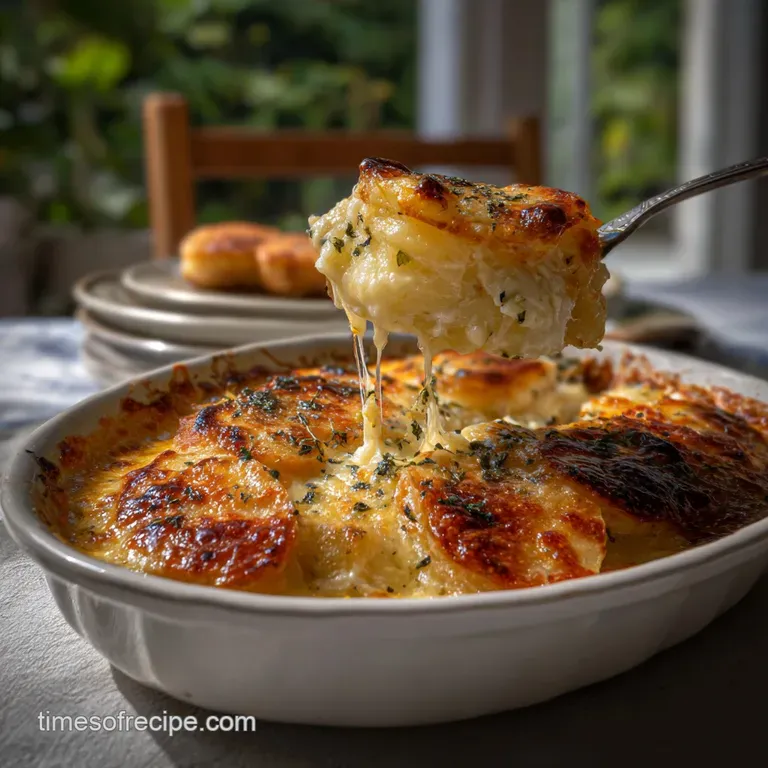
- Time: Active 25 minutes, Passive 1 hour 15 mins, Total 1 hour 40 mins
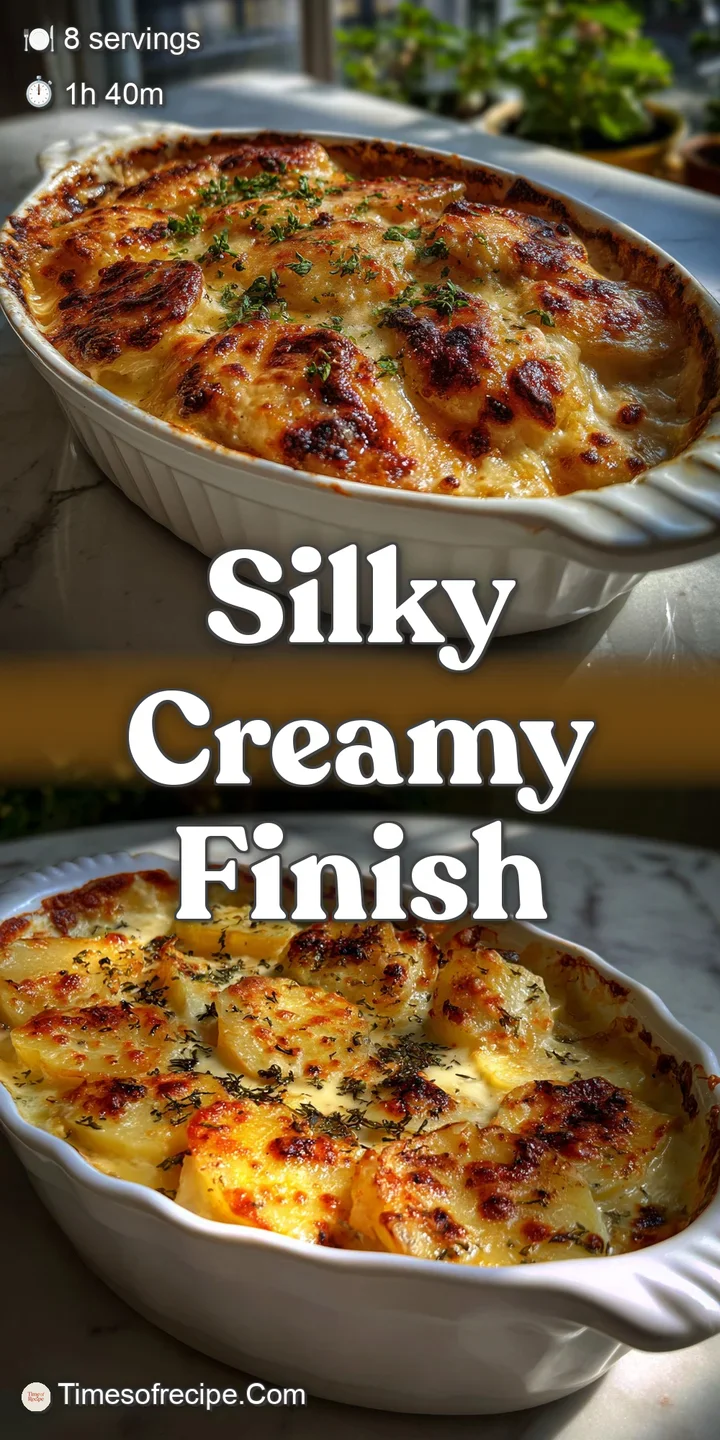
- Flavor/Texture Hook: Silky, garlic-infused cream against a sharp, bubbling cheese topping.
- Perfect for: A crowded holiday table or a slow Sunday family dinner.
- Best Au Gratin Potato Recipe with Garlic and Cheese
- Chemistry of the Golden Crust
- Essential Recipe Specifications
- Choosing the Finest Ingredients
- Necessary Cooking Tools
- Perfecting the Layered Bake
- Fixing Common Casserole Errors
- The Mathematics of Multiplication
- Creative Flavor Variations
- Storing and Using Leftovers
- Serving Your Comfort Side
- Common Questions
- 📝 Recipe Card
Ever dealt with a watery potato bake that lacks soul? We have all been there, staring at a separated sauce and bland spuds, but today that ends. Get ready to savor the ultimate Au Gratin Potato Recipe with Garlic and Cheese!
This dish is about the beautiful contrast between the tender, buttery interior of a Yukon Gold and the sharp, salty crunch of Parmigiano Reggiano. It is the kind of food that makes the whole house smell like a French bistro, hitting those notes of nutmeg and fresh thyme that stick to your ribs.
Honestly, skip the pre-shredded cheese and the low-fat milk for this one. We are going for full fat, hearty satisfaction that brings everyone to the table. Let's crack on and look at why this specific method works every single time.
Best Au Gratin Potato Recipe with Garlic and Cheese
Starch as Natural Thickener
The secret to a sauce that doesn't run across the plate lies in the potato itself. When we slice Yukon Golds, we release surface starch that, when heated with heavy cream, undergoes gelatinization to create a thick, stable emulsion.
Mastering this technique is key to a successful Au Gratin Potato Recipe with Garlic and Cheese.
Cold Infusion Garlic Technique
By smashing 4 cloves garlic and letting them steep in cold cream while it heats, we extract the essential oils without burning the sugars. This ensures the garlic flavor is mellow and pervasive rather than sharp or bitter.
Maillard Reaction and Texture
The high heat during the final stage of baking triggers the Maillard reaction between the proteins in the Gruyère and the lactose in the cream. This creates that iconic brown, bubbly crust that shatters under a fork.
The Science of Why it Works: Protein denaturation occurs as the cheese melts, while the starch granules in the potatoes swell and burst, absorbing the fat from the heavy cream.
This creates a cohesive, velvety structure that resists breaking even at high temperatures, making this Au Gratin Potato Recipe with Garlic and Cheese reliably delicious.
Chemistry of the Golden Crust
| Ingredient | Chemical/Physical Role (Science) | The Pro Secret (Why This Matters) |
|---|---|---|
| Yukon Gold | Amylopectin starch stability | Holds shape while thickening the sauce |
| Heavy Cream | High fat emulsion | Prevents curdling under acidic or high heat |
| Garlic | Allicin and sulfur compounds | Steeping releases deep aromatics without bitterness |
| Gruyère | Protein-to-fat ratio | Provides the perfect stretch and browning |
Essential Recipe Specifications
Before we start peeling, let's look at the numbers. Precision is what separates a soggy mess from a masterpiece when executing this classic side.
- Yield: 8 hearty servings
- Temperature: 375°F (190°C) for the main bake
- Potato Thickness: Exactly 1/8th inch for even softening
- Resting Time: 10 minutes (mandatory for sauce setting)
| Feature | Fast Version | Classic Method (This Recipe) |
|---|---|---|
| Liquid | Milk/Flour Rue | Pure Heavy Cream |
| Texture | Starchy/Gummy | Silky/Velvety |
| Prep Time | 10 minutes | 25 minutes |
Choosing the Finest Ingredients
Selecting the right components is half the battle. We want bold flavors that stand up to the richness of the cream in your Au Gratin Potato Recipe with Garlic and Cheese.
- 3 lbs Yukon Gold potatoes: Why this? Medium starch levels ensure they soften without turning into mashed potato mush.
- 2 cups heavy cream: Why this? The 36% fat content acts as a stabilizer, preventing the sauce from breaking.
- 4 cloves garlic, smashed: These provide the aromatic backbone.
- 1.5 cups Gruyère cheese, shredded: Why this? This Swiss classic has a nutty profile that balances the earthy potatoes.
- 1/2 cup Parmigiano Reggiano cheese: Use a microplane for a fine grate that melts instantly into the crust.
- 2 sprigs fresh thyme: Don't use dried here; the fresh oils are essential.
- 1/2 tsp ground nutmeg: Nutmeg is the "secret" spice that makes dairy based sauces taste professional.
- 2 tbsp unsalted butter, softened: For greasing the dish.
- 1.5 tsp Diamond Crystal Kosher salt: Essential for drawing moisture from the spuds.
- 1/2 tsp freshly cracked white pepper: White pepper provides heat without the black specks.
| Original Ingredient | Substitute | Why It Works |
|---|---|---|
| Gruyère | Sharp White Cheddar | High fat and bold flavor, though slightly more oily |
| Heavy Cream | Full fat Coconut Milk | Similar viscosity. Note: Adds a distinct tropical nutty flavor |
| Yukon Gold | Russet Potatoes | Higher starch makes a thicker sauce, but potatoes may break apart |
Necessary Cooking Tools
You don't need a professional kitchen, but a few specific items make this much easier.
- Lodge 9x13 Enameled Cast Iron Dish: This retains heat better than glass, ensuring the bottom layers cook through.
- Benriner Mandoline Slicer: Essential for getting those 1/8th inch slices consistent. Please use the hand guard!
- Small Saucepan: For the cream infusion.
Perfecting the Layered Bake
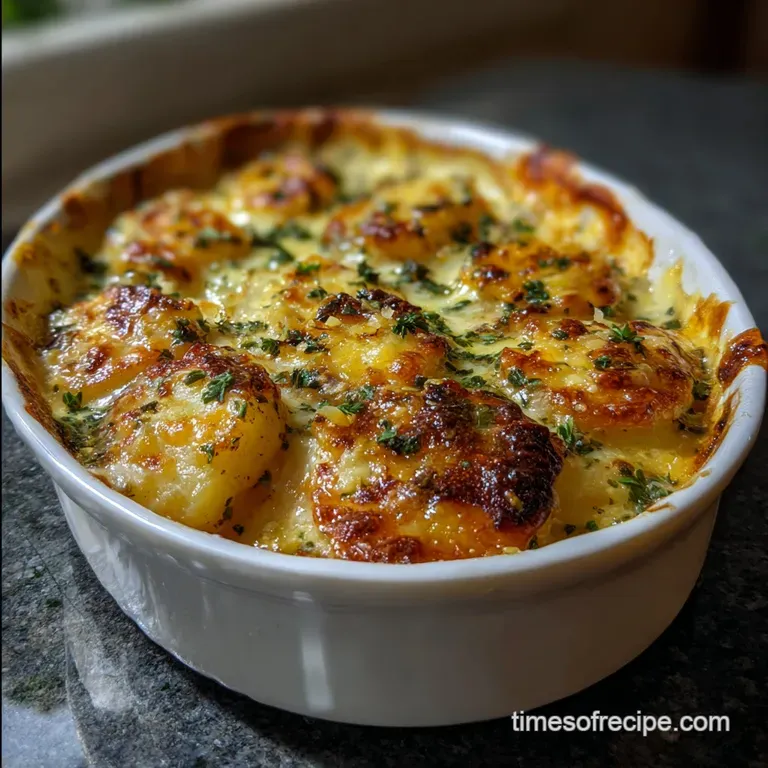
Let's get into the step-by-step process. Precision here ensures every bite is seasoned.
Infusing the Aromatic Cream
- Place 2 cups heavy cream in a saucepan.
- Add 4 cloves smashed garlic, 2 sprigs thyme, and 1/2 tsp nutmeg.
- Heat over medium until small bubbles form around the edges.Note: This starts the flavor extraction via lipid infusion.
- Remove from heat and steep for 15 minutes.
The Layering Architecture
- Peel 3 lbs Yukon Gold potatoes.
- Slice potatoes 1/8th inch thick using a mandoline.Note: Uniformity ensures all slices soften at the same rate.
- Grease your Lodge dish with 2 tbsp softened butter.
- Arrange 1/3 of the potatoes in an overlapping shingle pattern.
- Sprinkle with 1/2 tsp salt and a pinch of white pepper.
- Repeat layers until all potatoes are used.
- Strain the infused cream over the potatoes.Note: Discard the solids to keep the texture silky.
The Two-Stage Bake
- Cover tightly with foil and bake for 45 minutes.Check: Potatoes should be fork tender and the liquid should be bubbling vigorously.
- Remove foil and top with 1.5 cups Gruyère and 1/2 cup Parmigiano Reggiano.
- Bake uncovered for 20 25 minutes until the top is deep golden brown.Check: The cheese should form a crackly, dark spotted crust.
Chef's Tip: Freeze your Gruyère for 10 minutes before grating. It prevents the cheese from clumping and ensures a more even distribution over the hot potatoes.
Fixing Common Casserole Errors
Even the best cooks run into trouble. If your gratin isn't looking right, it is usually a simple fix, even in this highly rated recipe.
Why Your Gratin Separated
If you see a layer of oil at the bottom, the emulsion has broken. This happens when the heat is too high or you used low-fat milk. The protein in the dairy can't hold onto the fat, causing it to leak out.
| Problem | Root Cause | Solution | Pro Protocol |
|---|---|---|---|
| Curdled Sauce | High heat/Acid | Use heavy cream only | Add a splash of cold cream and stir gently |
| Hard Potatoes | Slices too thick | Increase bake time | Cover with foil to trap steam |
| Greasy Top | Cheap Cheese | Blot with paper towel | Mix Parmigiano with breadcrumbs next time |
Three Signs It's Done
- The Knife Test: A paring knife should slide into the center with zero resistance, like cutting through softened butter.
- The Bubble: The cream at the edges should be thick and bubbling slowly, not thin and watery.
- The Color: The cheese should have "leopard spots" - small areas of dark brown among the golden melt.
The Mathematics of Multiplication
Scaling Down (1/2 Batch)
- Pan: Use an 8x8 square dish.
- Time: Reduce the covered bake time by 10 minutes, but keep the uncovered time the same for the crust.
- Ingredients: Divide everything by two.
Batch Expansion Logic (2x Batch)
- Flavor: Scale salt and spices to 1.5x only to avoid over seasoning.
- Temperature: Drop the oven by 25°F and extend the covered bake by 20 minutes to account for the larger mass.
- Liquid: Reduce cream by 10% as less evaporation occurs in a crowded oven.
Creative Flavor Variations
Once you master the base, you can start playing with the profile of your rich side dish.
Smoky Alpine Twist
Add 1/2 cup chopped crispy bacon between the layers and swap half the Gruyère for Smoked Gouda. This adds a campfire depth that pairs beautifully with grilled meats.
Onion Garlic Fusion
Thinly slice a large shallot and sauté it in butter until translucent before layering it with the potatoes. This provides a natural sweetness that cuts through the rich heavy cream. For a bigger feast, this pairs wonderfully with a Try This Hearty recipe to bring some earthy contrast to the table.
Rosemary and Blue
Swap the thyme for fresh rosemary and add 1/4 cup of crumbled Gorgonzola to the cheese mix. It is a bold move, but the funk of the blue cheese is incredible with the garlic.
Storing and Using Leftovers
Storage: Keep in the fridge for up to 4 days in an airtight container. Freeze: You can freeze this for up to 2 months, though the potatoes may become slightly softer upon thawing. Zero Waste: Don't toss those potato peels!
Toss them in olive oil and salt, then air fry them for a crispy snack. Science: Potatoes are high in starch, which undergoes "retrogradation" when cooled. This makes the leftovers firmer and actually easier to slice into neat squares for reheating.
Reheating: The best way to revive a gratin is in the oven at 350°F. Cover it with foil so it doesn't dry out. If you're in a rush, a microwave works, but you'll lose that "shatter" in the crust.
Serving Your Comfort Side
This dish is a heavy hitter. It needs something to balance the richness.
The Steakhouse Pairing
Serve this alongside a seared ribeye and a crisp green salad with a sharp vinaigrette. The acidity of the dressing cleanses the palate between bites of the creamy potatoes.
Traditional Sunday Roast
Place a big scoop of these potatoes next to a roast chicken or beef. The juices from the meat mingle with the garlic cream sauce in a way that is purely satisfying. If it's the holidays, don't forget to serve a chilled glass of this Eggnog Recipe to round out the indulgence.
Myth: You must boil potatoes before baking them. Truth: Boiling removes the very starch we need to thicken the sauce. Raw, thinly sliced potatoes release their starch directly into the cream, creating a far superior texture.
Myth: Peeling potatoes hours in advance is fine. Truth: Once peeled and sliced, potatoes oxidize and turn gray. If you must prep early, keep the slices submerged in cold water, but pat them bone dry before layering to avoid a watery sauce.
Trust me on this, once you make this Au Gratin Potato Recipe with Garlic and Cheese, the boxed stuff will never cross your threshold again. It is a labor of love that pays off in every velvety, cheesy bite. Let's get cooking!
Common Questions
Can I use Russet potatoes instead of Yukon Gold?
Russets yield a starchier, potentially drier result. Yukon Golds offer better structural integrity due to lower amylose content, leading to a creamier sauce that doesn't separate easily.
- Lower surface starch
- Better moisture retention
- Holds shape during baking
What is the optimal thickness for potato slices?
Exactly 1/8th of an inch for uniformity. Slices must cook evenly so the center is tender when the top browns. Inconsistent thickness results in some slices being mushy while others remain firm.
Is pre-shredded cheese acceptable for the topping?
No. Pre-shredded cheese inhibits proper browning. Anti caking agents like cellulose prevent the proteins and fats from melting smoothly against each other, resulting in a greasy, non-cohesive crust layer.
- Grate cheese immediately before use
- Mix Gruyère with finely grated Parmigiano
- Ensure the top layer is evenly coated
Should I use unsalted or salted butter for greasing the dish?
Unsalted butter allows for precise salt control. Salted butter brands vary widely in sodium content, making it difficult to accurately account for the salt already present in the cheese and cream mixture. Mastering this balance is similar to controlling acid levels in baking.
Why is my sauce watery instead of velvety?
The sauce broke because the fat separated from the liquid. This usually happens from using low-fat dairy or applying excessive, unmanaged high heat too early in the cooking process.
If you master the fat stabilization principle here, you can apply it to creating stable emulsions in other dishes like our Pandesal Recipe: Softest Classic Filipino Bread Rolls.
Myth: I must use flour or a roux to thicken the cream base.
Myth: You must use flour or a roux to thicken the cream base. Reality: The starch released naturally from the thinly sliced potatoes undergoes gelatinization during the long bake, thickening the cream without added flour.
Myth: Adding garlic directly to the hot cream prevents bitterness.
Myth: Adding garlic directly to the hot cream prevents bitterness. Reality: We steep smashed garlic in the cold cream, gently warming it to infuse the flavor gently, avoiding scorching the sulfur compounds that cause harsh, acrid tastes.
Garlic Cheese Potato Gratin
Ingredients:
Instructions:
Nutrition Facts:
| Calories | 470 calories |
|---|---|
| Protein | 13g |
| Fat | 33g |
| Carbs | 32g |
| Fiber | 4g |
| Sugar | 2g |
| Sodium | 666mg |
