Bonein Rib Roast: Foolproof Reverse Sear Technique
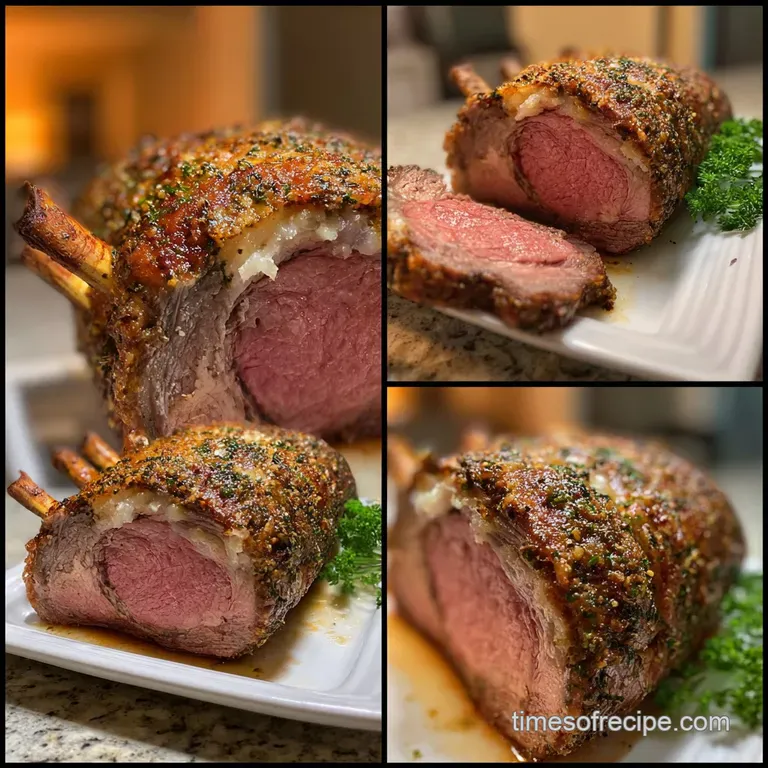
- The Perfect Sunday Joint: Mastering the Bone-In Rib Roast
- Achieving Maximum Crust and Succulence
- Essential Ingredients for Your Aromatic Prime Rib
- The Foolproof Reverse Sear: Step-by-Step Method
- Expert Tips and Troubleshooting Common Prime Rib Mistakes
- Handling Leftovers: Storage, Freezing, and Reheating Guide
- Essential Side Dishes and Flavor Pairings
- Recipe FAQs
- 📝 Recipe Card
The Perfect Sunday Joint: Mastering the Bone-In Rib Roast
That smell. It’s what signals a celebration. When that massive, deeply seasoned Bonein Rib Roast comes out of the oven, crusted in aromatic herbs and smelling like pure, buttery victory, everything stops. The anticipation, the satisfying crackle of the crust nothing beats it.
Honestly, people think preparing this is a high stress, technical meal, but it’s actually the opposite if you follow a simple structure. This particular Bonein Rib Roast recipe uses the reverse sear method, which is completely foolproof once you trust your equipment, delivering maximum impact for minimal active effort.
I used to ruin these glorious joints constantly by overcooking the outer edges until they were grey and dry. Now, I have the system locked down, promising you a perfectly medium rare interior every single time. Let’s ditch the guessing game and get this ultimate holiday centerpiece ready.
Achieving Maximum Crust and Succulence
Why does this specific recipe work where others fail? It all comes down to controlling two things: temperature and moisture. We are leveraging the scientific magic of the reverse sear.
Trust me, it’s not fancy; it’s just smart cooking that guarantees a superior eating experience, especially when dealing with a large piece of meat like this magnificent Bonein Rib Roast .
The Grandeur of Prime Rib
"Prime Rib" is often used interchangeably with Bonein Rib Roast , and while technically Prime Rib refers to the USDA quality grade (the highest), most roasts bought today, regardless of grade, still benefit from the same cooking method.
Choosing a Bonein Rib Roast means you get incredible flavour from the marrow and fat melting into the muscle fibers. Plus, those bones act as insulation, helping the meat cook more evenly and slowly. Don't skip the bones!
Why the Thermometer is Non-Negotiable
This is not a recipe where you poke it and guess. If you take away only one piece of advice from me, let it be this: Buy a reliable instant read digital thermometer. The difference between a perfect medium rare (54°C/130°F) and a dry, disappointing medium well is often just 5 degrees.
We pull the Bonein Rib Roast at a very specific temperature during the initial slow cook, and that number is your Bible. If you want a foolproof roast recipe bone in oven , precision is everything.
Reverse Sear: The Secret to Even Cooking
The reverse sear technique means we cook the meat low and slow first, then blast it with high heat at the very end. Cooking a large Bonein Rib Roast at 135°C (275°F) for hours allows the heat to penetrate gently, minimizing that awful grey ring you see in traditionally roasted joints.
This ensures the majority of the roast is evenly pink.
The Science Behind the Perfect Maillard Crust
Once the meat is gently cooked internally and has rested, we introduce it to the intense heat (260°C/500°F). This is where the magic happens! That sudden blast causes the Maillard reaction the chemical process where amino acids and sugars react under high heat, creating those complex, nutty, savoury flavour compounds and the deeply browned, crisp crust we all crave.
This quick sear doesn't have time to overcook the interior.
How the Herb Crust Prevents Moisture Loss
We slather this gorgeous Bonein Rib Roast with a thick paste of butter, garlic, and fresh herbs. This paste isn't just for flavour, though it brings massive aroma! The fatty coating acts like a shield, preventing too much surface moisture from evaporating during the long, low-temperature cook.
It keeps things juicy and prepares the surface perfectly for that final, fiery sear.
Understanding Internal Temperature Targets
When you are preparing any rib roast recipe bone in oven , you must account for carryover cooking. The temperature of the roast continues to rise even after it leaves the heat source, especially during the crucial 30 minute rest.
Therefore, we pull the roast 5 to 10 degrees before the final desired serving temperature. For a perfect Medium Rare, we pull at about 49°C (120°F). The temperature will climb during the rest, and then climb again slightly during the final over high heat sear, settling precisely where you want it.
Essential Ingredients for Your Aromatic Prime Rib
When making a showstopper like a Bonein Rib Roast , ingredient quality matters. Don't skimp on the fresh herbs or the cut of meat.
Selecting the Ideal Bone-In Rib Roast Cut
I always recommend asking the butcher for a 3 or 4 rib roast from the small end (loin end). It’s usually more tender and has a slightly better meat-to-fat ratio than the large end. Crucially, ask your butcher to "French" the bones and then tie them back onto the roast.
This makes for a beautiful presentation and much easier carving later. You want at least 1 pound (450g) of roast per person for generous servings.
Crafting the Ultimate Herb & Garlic Rub
This rub must be thick, aromatic, and aggressively seasoned. I use softened butter and olive oil because the fat is key to adhesion and carrying the flavour. Don't be shy with the garlic; we’re using a whole head. It mellows out beautifully and turns golden in the oven.
The combination of fresh rosemary, thyme, and dried oregano gives the crust that perfect, earthy complexity.
Ingredient Notes and Flavor Swaps (Substitutions)
This roast recipe bone in oven is quite flexible when it comes to the herb profile, but I advise sticking to the core elements of fat and salt.
| Ingredient | Role | Substitute Idea |
|---|---|---|
| Fresh Rosemary/Thyme | Aroma, Crust Texture | Use 1/3 the amount in dried herbs. Try marjoram or sage for a deeper, earthier profile. |
| Olive Oil/Butter | Fat Carrier, Moisture Barrier | Use rendered beef tallow, duck fat, or even bacon grease for deep savouriness. |
| Kosher Salt | Flavour, Moisture Removal | Use flaky sea salt, but avoid iodized table salt as it can taste metallic in large quantities. |
| Bone-In Rib Roast | The Star | A boneless rib-eye roast works, but you must truss it very tightly to maintain shape. |
Chef's Note: When mixing the rub, you want a paste that is easy to smear but doesn't run. If it's too soft, chill it for five minutes. This helps it stick fiercely to the Bonein Rib Roast .
The Foolproof Reverse Sear: step-by-step Method
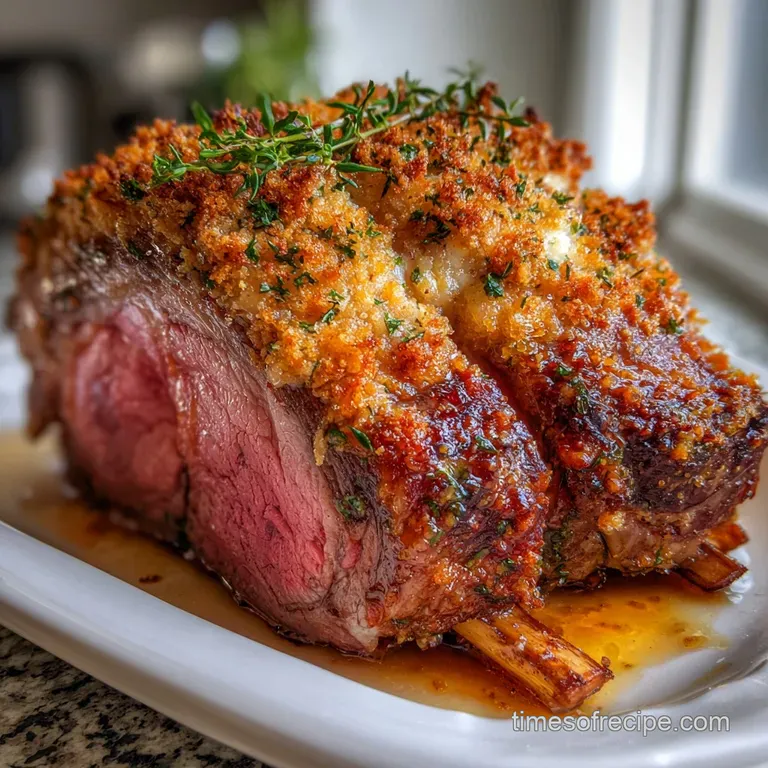
Let's crack on. This method for the Bonein Rib Roast requires patience during the low cook but zero stress.
Preparing the Bone-In Rib Roast (The Prep Step)
This is the most critical stage for crust development. First, pull the roast from its packaging and pat it down until it is bone dry. Then season the whole thing heavily with coarse Kosher salt and freshly cracked pepper. Now, place the Bonein Rib Roast , uncovered, on a rack in your fridge.
Let it sit there for at least four hours overnight is better. This brief, controlled air-drying draws moisture out of the surface. Moisture is the enemy of crust development! About one hour before cooking, pull the roast out and let it sit at room temperature.
Don't skip this tempering step; cold meat cooks unevenly.
The Low-Temperature Roasting Phase
Preheat your oven to 135°C (275°F). While the oven heats, smear that glorious herb and garlic butter paste over every square inch of the fat cap and sides. Place the roast, fat side up, on a rack in a roasting pan. Now, insert your thermometer deep into the centre, away from the bone.
We are roasting low and slow, bathing the kitchen in that heavenly garlic and thyme aroma, until the internal temperature hits 49°C (120°F). This slow cook might take 2.5 to 3 hours for a large Bonein Rib Roast cooking time , depending on your oven.
Achieving the over High heat Crust (The Browning Step)
Once it hits 49°C (120°F), pull the roast out immediately. Transfer it to a cutting board. Tent it loosely with foil and I mean loosely, don't steam it! Now, you MUST rest it for 30 minutes. Why?
This rest allows the internal temperature to equalize and, crucially, prepares the surface for the over high heat blast. While it rests, turn your oven up to a blazing 260°C (500°F).
Remove the foil and send the Bonein Rib Roast back into the fiery oven for 8 to 12 minutes. Watch it like a hawk! You are looking for a dark, crisp, sizzling crust. You will hear the crackle and the sizzle, and that sound is pure joy.
Resting and Carving the Perfect Joint
Remove the roast when the crust is perfectly browned. The internal temperature should now be a perfect 54°C (130°F). Allow the joint to rest for a final 10 minutes, uncovered, to maintain the crispy crust. Then, use a sharp carving knife to slice the strings holding the bones.
Remove the bones, and then slice the meat against the grain into thick, impressive steaks. You will see that stunning, edge-to-edge pink interior thanks to the reverse sear. Every slice will be perfection.
Expert Tips and Troubleshooting Common Prime Rib Mistakes
Calibrating Your Meat Thermometer for Accuracy
A faulty thermometer will ruin your day and your expensive Bonein Rib Roast . Test it occasionally! Place the probe in a pot of boiling water. It should read 100°C (212°F). If it’s off, adjust your targets accordingly. For truly premium cooking, the thermometer must be accurate.
The Salt Strategy: When to Season for the Best Results
Aggressive salting 4+ hours ahead of time (the dry-aging step) is non-negotiable for flavour and crust. Initially, salt draws moisture out, but then it reabsorbs the seasoned liquid, leading to a juicier, better seasoned piece of meat.
Don't wait until the last minute to season the Bonein Rib Roast .
Troubleshooting an Uneven Crust or Dry Edges
If your crust is uneven or one side is dry, you likely didn't temper the meat properly, or you didn't use a roasting rack. A rack allows 360 degree air circulation, ensuring the bottom cooks and browns just as well as the top.
Also, if you carved too soon and lost all the juice that’s why the 30 minute rest is gospel!
Handling Leftovers: Storage, Freezing, and Reheating Guide
A large Bonein Rib Roast often means amazing leftovers, but only if you handle them correctly.
Safe Storage Guidelines for Cooked Prime Rib
Once cooled completely, slice any remaining roast into thick pieces (don't dice it yet). Store the slices in an airtight container in the refrigerator along with any remaining cooking juices (jus). This keeps the slices moist. They are safe to consume for up to 3 to 4 days.
Freezing Cooked Rib Roast Successfully
But does it freeze well? You bet! Wrap individual slices or small portions tightly in plastic wrap, then wrap again in heavy duty aluminium foil. Label and date them. They will keep perfectly in the freezer for up to three months. When you’re ready to eat, defrost them slowly overnight in the refrigerator.
Best Methods for Reheating Prime Rib Without Drying
Never, ever microwave your beautiful Bonein Rib Roast slices. They will become tough and rubbery instantly. The best way to reheat is low and slow. Place the slices in a baking dish with a tablespoon or two of saved jus or stock, cover the dish tightly with foil, and warm them gently in a 160°C (325°F) oven for about 15 minutes, until just warmed through.
This keeps them tender and juicy.
Essential Side Dishes and Flavor Pairings
You've mastered the main event. Now you need worthy supporting players. A great rib roast recipe bone in oven deserves classic pairings.
My absolute favourite pairing is with classic, velvety Creamed Onions Recipe: Velvety British Pearl Onions for Sunday Roast . The delicate, sweet onions cut through the richness beautifully. Also, you must serve homemade Yorkshire Puddings they are non-negotiable for a proper roast dinner. I also suggest pairing the Bonein Rib Roast with simple mashed celeriac for a lighter, earthier contrast to the rich meat, perfect for elegant dinner party side dishes. A little horseradish sauce for that necessary kick seals the deal. This is the only Bonein Rib Roast method you will ever need. Enjoy!
Recipe FAQs
What internal temperature should I target for medium rare prime rib?
For a perfect medium rare, you should pull the roast out of the oven when the thermometer registers 120°F (49°C). Remember that the temperature will increase by another 5 10 degrees (carryover cooking) during the crucial resting period, settling ideally between 125°F and 130°F.
My crust isn't crispy after the final high heat sear. What went wrong?
A soft crust usually indicates that the meat was too moist before the sear, or the searing oven temperature was not hot enough. Ensure the roast is patted completely dry with paper towels immediately before the high heat blast.
Additionally, confirm your oven reaches at least 450°F and is fully preheated before beginning the searing phase.
How long must I rest the rib roast, and why is this step so important?
You must rest the roast, loosely tented with foil, for a minimum of 20 to 30 minutes after it comes out of the oven. This mandatory rest allows the internal muscle fibers to relax and redistribute the trapped juices throughout the meat.
Skipping this step or rushing it will result in all the succulent moisture running out onto the cutting board.
I used the reverse sear, but the center of my roast is grey. Why is it overcooked?
If the center is grey, it means the initial low-temperature cook was too long or too high, pushing the core temperature beyond the desired mark before the sear. Always use a reliable leave-in meat thermometer to monitor the progress and pull the roast promptly when the temperature hits the 120°F mark, regardless of the time elapsed.
Can I use a boneless rib roast for this recipe instead of bone-in?
While you can use a boneless roast, the cooking time will be slightly reduced, so monitor the temperature closely. The bone-in cut is strongly recommended because the bones provide natural insulation, helping achieve a more evenly cooked, edge-to-edge pink center, and they also enhance the flavor of the pan drippings.
What is the best way to store and reheat leftover prime rib?
Store leftover slices tightly wrapped in the refrigerator for up to three days. To reheat gently, slice the meat thinly, place it in an oven safe dish with a splash of beef broth, cover tightly with foil, and warm slowly at 300°F (150°C) until just heated through.
Should I remove the fat cap before applying the rub?
No, the fat cap should remain as it acts as insulation and self bastes the meat during the long, slow cook. However, you should use a sharp knife to score the fat deeply in a crosshatch pattern, ensuring the rub adheres and the fat renders nicely during the high heat searing stage.
Herb Crusted Bone In Rib Roast
Ingredients:
Instructions:
Nutrition Facts:
| Calories | 491 kcal |
|---|---|
| Protein | 47.1 g |
| Fat | 32.6 g |
| Carbs | 2.9 g |
