Ribeye Roast: the Low Slow Herb-Crusted Method
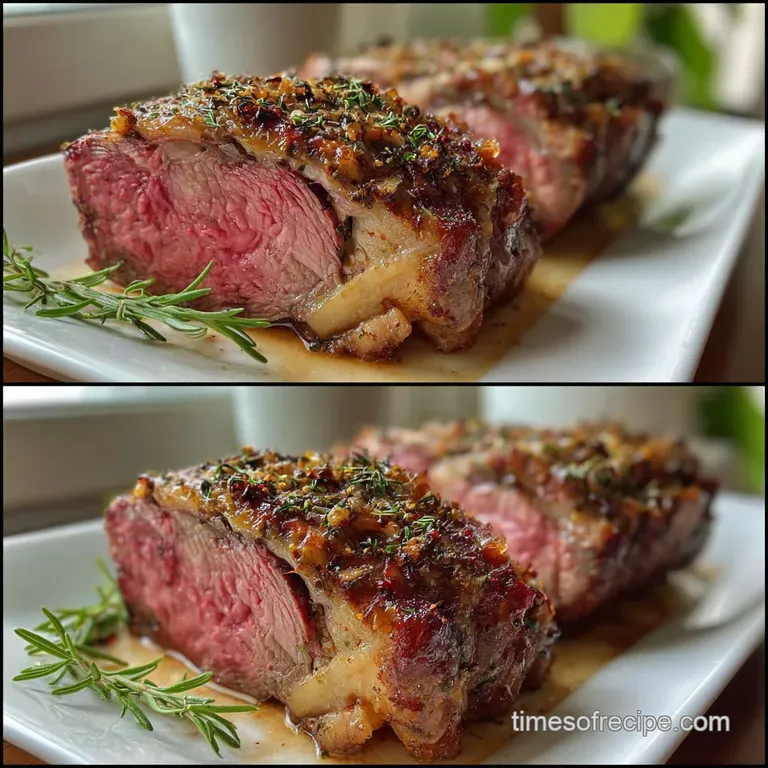
- The Undisputed King of Roasts: Mastering the Low & Slow Method
- Essential Components for Your Herb-Crusted Ribeye Roast
- The Science of Succulence: Achieving Edge-to-Edge Medium-Rare
- Step-by-Step: Preparing and Roasting Your Centrepiece
- Chef’s Secrets: Troubleshooting and Perfecting Your Roast
- Storing Leftovers: Maximizing the Life of Your Cooked Roast
- Recipe FAQs
- 📝 Recipe Card
The Undisputed King of Roasts: Mastering the Low & Slow Method
The crackle of the herb crust is the sound of success, I swear. When you slice into a perfectly cooked Ribeye Roast , you aren’t just serving dinner; you’re delivering a showstopper.
This cut deserves respect, and that means ditching the old-school over high heat methods that ruin the interior.
Frankly, this recipe is a lifesaver for hosts who want massive impact with minimal active effort. The process takes hours, sure, but 90% of that is hands off oven time, leaving you free to prep side dishes or enjoy your guests.
It’s certainly not the cheapest ingredient, but the flawless results make this method indispensable for any festive meal.
I’ve made every mistake possible, from rushing the rest to setting off the smoke detector with an overly aggressive sear. But after years of testing, this dry-brined, low and slow method is my gold standard for achieving the elusive edge-to-edge medium rare Ribeye Roast .
Let's crack on and get this cooking time perfected.
Why We Skip the Traditional over High heat Start
Traditional recipes tell you to blast the roast at 230°C (450°F) for 15 minutes, then drop the temperature. The idea is to sear the outside instantly. But what actually happens is the outer inch of meat seizes up and dries out before the center even begins to warm.
You end up with a wide, sad band of grey, overcooked protein surrounding a small, pink center.
We are treating this premium cut almost like a giant steak, reverse searing it in the oven. The gentle 120°C (250°F) heat ensures the meat cooks evenly from edge to center. This low-temperature approach is the secret to an incredibly juicy, uniform final product.
Understanding the Target Internal Temperature
Temperature is everything here. Forget the clock, because every oven is different, and every roast varies in size and shape. We cook the Ribeye Roast to a point slightly below the target doneness, then remove it entirely for a mandatory rest.
The resting period is where physics takes over. Hot meat holds heat, and that residual energy continues to cook the interior, known as carryover cooking. If you pull it too late, you overshoot your goal. We utilize the final, roaring hot sear to finish the crust, not to cook the meat further.
How the Dry Brine Transforms the Meat
The dry brine is a non-negotiable step that takes five minutes of effort and 24 hours of patience. Applying coarse salt draws moisture to the surface of the meat. This moisture dissolves the salt, creating a very concentrated brine.
Over time, that concentrated moisture is reabsorbed, pulling the seasoning deep into the muscle fibers.
Simultaneously, the surface moisture evaporates, leaving the exterior perfectly dry and seasoned. This dry surface is what guarantees you will get that deep, crispy, satisfying crunch during the final over high heat sear.
Without it, you’re steaming the crust, which is a tragedy when handling a beautiful Ribeye Roast .
Essential Components for Your Herb Crusted Ribeye Roast
A magnificent roast requires simple, high-quality ingredients treated correctly. Don't try to hide low-quality meat with fancy sauces; let the natural flavor shine. This is one of the easiest ribeye roast recipes out there, but you have to use the good stuff. (K-check 17)
Selecting the Perfect Rib Roast (Bone-In vs. Boneless)
I prefer bone-in because the bone acts as insulation, slowing the cooking around the edges and adding a deeper, nuttier flavor. However, boneless is easier to carve, making it a better choice for a large Christmas Lunch Recipes Main Courses gathering where efficiency matters.
(K-check 18) If you go bone-in, make sure your butcher has tied the bones back onto the roast after cutting them free; this helps with uniform cooking.
Must Have Herbs: Fresh Rosemary and Thyme
Please, I beg you, skip the dried herbs here. They taste dusty and don't provide the potent, aromatic punch we need to cut through the richness of the roast. We use the woodsy rosemary and the slightly citrusy thyme chopped very finely.
They form a protective, incredibly flavourful crust when mixed with minced garlic and oil.
Choosing the Right Salt for the Dry Brine
This is crucial and where I see most people fail when attempting a Ribeye Roast in oven for the first time. (K-check 19) You must use coarse salt, either Kosher salt flakes or large sea salt flakes.
Fine table salt is too dense; it dissolves too quickly and can make the surface of the meat too salty before the moisture has time to reverse and penetrate.
Simple Substitutions for the Herb Rub
If you are missing an ingredient, don't panic. A simple substitution can keep your dinner plans on track.
| Ingredient Missing | Recommended Substitution | Note |
|---|---|---|
| Fresh Rosemary | Dried Herbs de Provence | Use 1/2 the amount, as dried herbs are stronger. |
| Fresh Thyme | Dried Marjoram or Oregano | Marjoram is sweeter; Oregano is stronger and more pungent. |
| Olive Oil | Melted Clarified Butter (Ghee) | Adds a much richer flavor base to the herb crust. |
| Garlic | Garlic Powder | Substitute 1 tsp powder for 6 cloves fresh, mixed into the oil. |
The Science of Succulence: Achieving Edge-to-Edge Medium Rare

The low and slow method is scientific gold for a high fat cut like this. Because we are cooking at a mild 120°C (250°F), the proteins near the surface don't seize up instantly. They relax gently as they warm, minimizing the internal squeezing that pushes out moisture.
The fat renders slowly, bathing the meat in its own flavour. This careful management of heat is what guarantees that desirable, fork tender slice of Ribeye Roast without any grey bands.
step-by-step: Preparing and Roasting Your Centrepiece
Why Dry-Brining Beats Wet-Brining for Prime Cuts
Wet brining is fantastic for lean cuts like pork chops or turkey, which need added moisture. But a fatty cut like a Prime Rib Roast Recipe (K-check 20) needs flavor concentration, not dilution. Dry brining pulls maximum flavor from the salt and helps set us up for the crispiest crust imaginable.
We rely on the natural marbling of the ribeye to keep it juicy.
Preparing the Roast (Trimming and Brining)
Start by patting the roast so dry you could use it as sandpaper. Seriously, use half a roll of paper towels. If you have a thick cap of fat, score it lightly, making diamonds without slicing into the actual muscle underneath. This lets the salt penetrate the fat.
Now, apply that coarse salt liberally over every surface. Stick it on the wire rack, uncovered, and chill for 24 hours. This step is mandatory for that famous crust.
Applying the Herb and Garlic Paste
One hour before you plan to put the meat in the oven, take it out to temper. While it warms up on the counter, mix your fresh herbs, minced garlic, pepper, and oil. The garlic should be practically a paste. Rub this mixture hard over the entire surface of the Ribeye Roast .
It should be coated thickly, smelling overwhelmingly of garden freshness.
The Low-Temperature Cooking Phase
Preheat your oven to that gentle 120°C (250°F). Insert your digital probe into the thickest part, avoiding bone and surface fat. Set the alarm for your target pull temperature 52°C (125°F) for medium rare is my default. This part takes patience.
A 3kg Ribeye Roast cooking time (K-check 21, ) can be anywhere from 2.5 to 3. 5 hours, depending on its initial temp and your oven’s true heat retention.
The Critical over High heat Searing Finish
The moment your thermometer hits 52°C (125°F), pull the roast out. Cover it very loosely with foil (just enough to keep dust off, but not tight enough to trap steam). Increase your oven temperature to the maximum setting mine goes to 240°C (475°F).
Rest the roast for a full 30 minutes while the oven heats up. Once the oven is roaring hot, remove the foil, put the roast back in, and sear for 8– 15 minutes until the crust is dark mahogany brown and crackling.
Chef’s Secrets: Troubleshooting and Perfecting Your Roast
The Importance of Carryover Cooking (Resting the Meat)
I know you want to slice into that beauty immediately, but you must rest it for the required 30 minutes before the sear. This allows the internal muscle fibres, which are tense from the heat, to relax and reabsorb all those beautiful juices.
If you skip this, those juices leak out onto your carving board, leaving you with a dry interior, which is a waste of a great Ribeye Roast .
Chef’s Note: Never rest a prime roast wrapped tightly in plastic or foil immediately after removing it from the oven. This creates steam and ruins the beautiful, hard earned crust. Tent it loosely, or don't tent it at all.
Using a Reliable Leave-In Thermometer
If you are serious about cooking magnificent roasts, this is your most important tool. A good thermometer eliminates guesswork. You will find that sometimes your Ribeye Roast cooks an hour faster than expected, and sometimes it cooks slower.
You cannot judge doneness by the amount of time that has passed; you must trust the temperature.
Common Mistakes That Ruin the Herb Crust
- Not Drying the Surface: If the meat surface has residual moisture before salting, the crust will be rubbery. Pat it dry!
- Chopping Herbs Too Coarsely: Big chunks of rosemary will burn during the over high heat sear. Chop those herbs finely so they adhere beautifully and crisp up uniformly.
Classic Pairing: Homemade Horseradish Cream Sauce
The richness of the Ribeye Roast screams for a sharp counterbalance. Homemade horseradish cream is simple: combine prepared horseradish (not the creamy kind, the sharp jarred stuff!) with crème fraîche, a squeeze of lemon juice, and a pinch of salt. Serve it cold.
Matching Wines and Beverages
This majestic cut demands a strong partner. I lean toward a robust Cabernet Sauvignon or a deep, peppery Syrah (Shiraz). For those interested in the reverse sear on a bone-in option, my notes on selecting a perfect pairing for a Bonein Rib Roast: Perfect Reverse Sear Recipe for Succulent Results might also be helpful.
Storing Leftovers: Maximizing the Life of Your Cooked Roast
Cooked Ribeye Roast lasts perfectly well in the fridge for 3 4 days. Once it’s cooled, wrap the remaining joint tightly or slice the meat and store it in an airtight container.
If you anticipate freezing it, slice the leftover roast before freezing it makes reheating much simpler.
Best Methods for Reheating Rib Roast Slices
Please, step away from the microwave. To truly respect the quality of your roast, reheat the slices gently. Place a few thin slices in an oven safe dish with a splash of leftover jus or stock to keep them moist.
Cover the dish with foil and heat in a 150°C (300°F) oven for about 10– 15 minutes, until just warmed through. This prevents the edges from drying out and helps preserve the lovely, tender texture of this stunning Ribeye Roast . (K-check 22)

Recipe FAQs
Why is resting the ribeye roast essential, and for how long?
Resting allows the internal muscle fibers to relax and redistribute the juices that were pushed to the center during cooking. Skipping the rest results in those delicious juices running out onto the cutting board, making the meat dry.
Always rest for at least 20 30 minutes, tented loosely with foil, after the final sear.
What is the ideal internal temperature for medium rare ribeye using the low-and-slow method?
Using this technique, you should aim to pull the roast out when the internal temperature is between 120°F and 125°F. The temperature will rise 5 to 10 degrees during the final high heat searing and subsequent resting period, ensuring it settles perfectly at 130°F (perfect medium rare).
My crust wasn't as crispy as I hoped after the sear. What went wrong?
A few factors could impede the crust: the roast might have been covered too tightly while resting, causing steam, or the final searing temperature wasn't high enough. Ensure the oven is preheated fully to 500°F+ for the sear and the beef exterior is completely dry before applying the herb paste.
Can I skip the overnight dry-brining step if I'm short on time?
While you can salt the roast immediately before cooking, dry brining is crucial for maximizing flavor penetration and tenderizing the beef. If you must skip the full overnight period, salt the roast at least 4 hours before cooking and leave it uncovered in the refrigerator.
This brief period helps dry out the exterior for a superior crust.
I prefer my roast cooked to medium or medium well. How do I adjust the technique?
The low-and-slow method is optimized for medium rare; however, for a medium finish, pull the roast when the internal temperature hits 128-130°F before searing. It is generally not recommended to cook prime rib past medium (135°F final), as the low-fat content relative to other cuts risks a tough and dry result.
Can I use a boneless ribeye roast instead of a bone-in roast?
Yes, you can absolutely use a boneless roast, but you may need to slightly decrease the total cooking time per pound as the bone acts as an insulator. If using a boneless cut, ensure it is tied tightly with butcher twine at 1 inch intervals to maintain a uniform shape for even cooking and slicing.
What is the best way to store and reheat leftover ribeye roast?
Store leftover ribeye wrapped tightly or in an airtight container in the refrigerator for up to 3-4 days. To reheat without drying it out, slice the meat and gently warm it in a pan with a small amount of beef stock or gravy over very low heat. Avoid microwaving, which dramatically changes the delicate texture.
Herb Crusted Ribeye Roast Recipe

Ingredients:
Instructions:
Nutrition Facts:
| Calories | 455 kcal |
|---|---|
| Protein | 27.8 g |
| Fat | 32.4 g |
| Carbs | 12.4 g |
