Seafood Bisque: Velvety and Rich
- Time: Active 25 minutes, Passive 45 minutes, Total 1 hour 10 minutes
- Flavor/Texture Hook: Velvety, buttery, and rich with a subtle smoky finish
- Perfect for: Holiday dinners, milestone celebrations, or a cozy Sunday feast
- Why This Works
- The Alchemy of Shell Infusion
- Selecting the Freshest Seafood Bisque Elements
- Essential Tools for a Smooth Texture
- Crafting Your Homemade Seafood Bisque Stepwise
- Troubleshooting Your Creamy Shrimp and Crab
- Adjusting for Different Batch Sizes
- Debunking Common Kitchen Myths
- Adapting Your Bisque for Dietary Needs
- Stowing and Reheating Your Seafood Soup
- Hearty Sides to Serve with Bisque
- High in Sodium
- Recipe FAQs
- 📝 Recipe Card
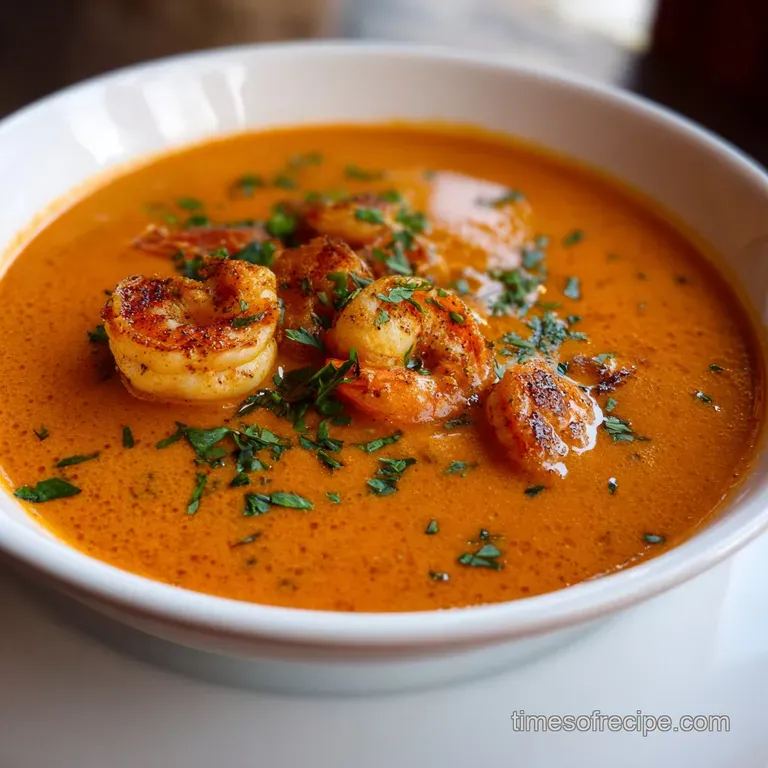
The aroma of roasting shrimp shells hitting a hot pan is something you never forget. I used to think the secret to a great soup was just buying the most expensive fish, but I was wrong. I once made the mistake of tossing my shrimp shells into the bin, only to realize I was throwing away the very soul of the dish.
Now, my kitchen fills with that nutty, toasted scent every time I start this base.
You'll see the color transform from a pale liquid into a vibrant, sunset orange hue as the tomato paste and shells mingle. It’s a hearty process that feels more like a labor of love than a simple chore.
When you finally stir in that heavy cream, the texture becomes so velvety it coats the back of your spoon like liquid gold. Trust me, your family will be asking for seconds before the first bowl is even finished.
Why This Works
- Shell Carbonization: Roasting the shrimp shells in neutral oil triggers the Maillard reaction, extracting deep, savory compounds that water alone cannot reach.
- Alcohol Solubility: The dry sherry dissolves flavor molecules that are neither water- nor fat soluble, creating a multi dimensional taste profile.
- Starch Gelatinization: A precise butter to flour roux provides a stable suspension, ensuring the heavy cream won't separate or "break" when heated.
- Triple Threat Protein: Using shrimp, crab, and scallops provides a contrast of textures, from the snap of the shrimp to the melt in-your mouth lump crab.
Quick Decision Table
| Seafood Type | Internal Temp | Cook Time | Visual Cue |
|---|---|---|---|
| Large Shrimp | 120°F | 2-3 mins | Opaque and C shaped |
| Bay Scallops | 125°F | 2 mins | Firm but bouncy |
| Lump Crab | 145°F (pre cooked) | 1 min | Just heated through |
The timing in this table is vital because overcooked seafood turns rubbery faster than you can say "dinner's ready." By adding the delicate bay scallops and lump crab at the very end, we preserve that tender, buttery bite that makes a Seafood Bisque recipe truly special.
The Alchemy of Shell Infusion
| Component | Science Role | Pro Secret |
|---|---|---|
| Shrimp Shells | Flavor Foundation | Press them firmly with a wooden spoon while toasting to release "head fat." |
| Tomato Paste | Color & Umami | Sauté until it turns a dark brick red to lose the raw metallic tin taste. |
| Dry Sherry | Acidity & Deglazing | Always use "dry" sherry; the sugars in sweet cream sherry will ruin the balance. |
We want to build layers of flavor here, and it starts with the items people usually discard. The shells contain chitin and proteins that, when seared, provide that "ocean" depth that bottled stock simply lacks.
Selecting the Freshest Seafood Bisque Elements
- 1 lb Large Shrimp: Keep those shells! They are the most important ingredient for the stock foundation. Why this? The shells provide 80% of the base flavor.
- 8 oz Lump Crab meat: Look for "lump" rather than "backfin" for larger, more satisfying pieces. Why this? Provides a sweet, delicate contrast to the savory broth.
- 8 oz Bay Scallops: These are smaller and sweeter than sea scallops, fitting perfectly on a spoon. Why this? Their size ensures they cook evenly in the hot liquid.
- 1/2 cup Dry Sherry: Don't use "cooking sherry" from the grocery aisle; get a real bottle from the liquor store.
- 1 cup Heavy cream: Do not substitute with half and half if you want that iconic velvety mouthfeel.
- 4 cups Fish stock: Use a high-quality brand or even clam juice in a pinch.
- 1 Yellow Onion, 2 stalks Celery, 1 large Carrot: The classic mirepoix for aromatic depth.
- 4 tbsp Unsalted butter & 1/4 cup All purpose flour: This creates our thickener (roux).
- 1 tsp Smoked Paprika & 1/4 tsp Cayenne: For a gentle heat and smoky undertone.
- 2 cloves Garlic, 2 sprigs Thyme, 1 Bay leaf: Our aromatic bouquet.
Chef's Tip: Freeze your shrimp shells for 10 minutes before toasting. This small temperature shock helps the shells "shatter" and release their oils more efficiently when they hit the hot oil.
Essential Tools for a Smooth Texture
To get that restaurant quality finish, you'll need a heavy bottomed Dutch oven (like a Lodge or Le Creuset) to prevent the cream from scorching. A fine mesh strainer (chinois) is non negotiable; you want to strip away every bit of shell and veggie fiber until only the silk remains.
A high speed blender or immersion blender will work for the base, but I find a traditional blender creates a more aerated, light texture. Just be careful with hot liquids never fill it more than halfway and hold the lid down with a kitchen towel to prevent a "soup explosion."
Crafting Your Homemade Seafood Bisque Stepwise
- Toast the shells. Heat 1 tbsp neutral oil in a large pot and sear the shrimp shells until they are bright orange and fragrant.
- Sauté aromatics. Add the chopped onion, carrot, celery, and smashed garlic to the shells, cooking for 5 minutes until the onions soften.
- Caramelize the paste. Stir in 2 tbsp tomato paste and cook for 2 minutes until it turns a deep mahogany.
- Deglaze the pan. Pour in 1/2 cup dry sherry, scraping the bottom of the pot until all the brown bits dissolve.
- Simmer the stock. Add 4 cups fish stock, thyme, and bay leaf. Simmer for 30 minutes until the liquid reduces slightly.
- Strain the base. Pour the mixture through a fine mesh strainer into a clean bowl, discarding all solids. Note: Press the solids to extract every drop of liquid.
- Create the roux. In the same pot, melt 4 tbsp butter. Whisk in 1/4 cup flour, smoked paprika, and cayenne until it smells nutty and looks like wet sand.
- Thicken the soup. Slowly whisk the strained stock back into the roux. Simmer for 10 minutes until the sauce thickens and coats a spoon.
- Finish with cream. Stir in 1 cup heavy cream and 1 tsp lemon juice. Adjust seasoning with salt and white pepper.
- Poach the seafood. Add the shrimp, bay scallops, and lump crab. Cook for 3-5 minutes until the shrimp are pink and opaque.
Fresh Seafood vs. Shortcut Methods
| Feature | Fresh Shell Stock | store-bought Base |
|---|---|---|
| Flavor Depth | Intense, nutty, and oceanic | Salty and one dimensional |
| Preparation Time | Adds 40 minutes | Saves 40 minutes |
| Texture | Silky and natural | Can be "gloppy" from starches |
If you are in a rush, you can skip the shell toasting and use a high-quality Marinade Sauce recipe technique to flavor your proteins separately, but for a true bisque, the homemade stock is king.
Troubleshooting Your Creamy Shrimp and Crab
Why Your Bisque Looks Grainy
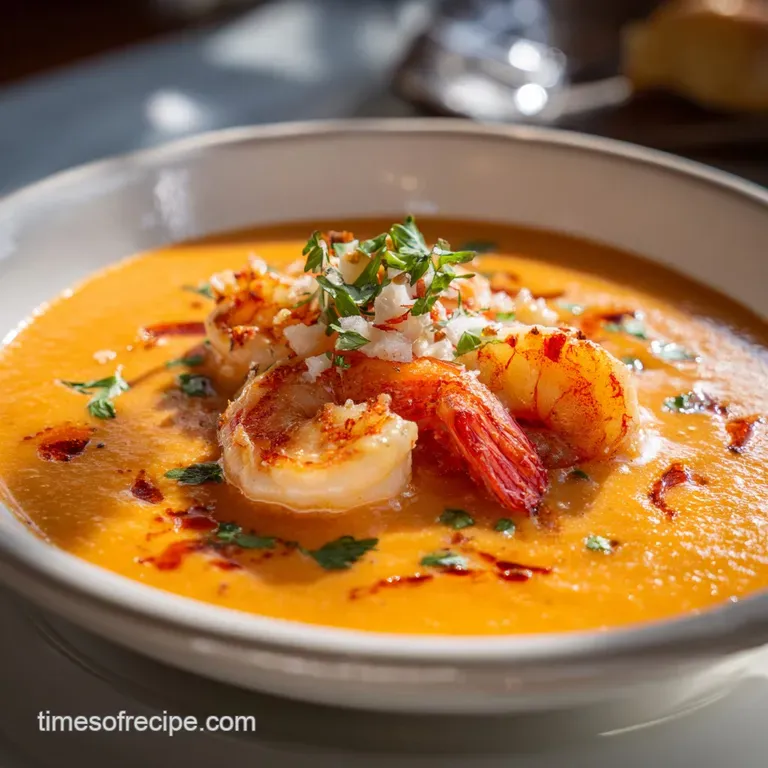
This usually happens if the flour in the roux didn't cook long enough or if the heat was too high when adding the cream. The proteins in the dairy can "curdle" or tighten up. To fix this, you can try passing the finished base (before adding the seafood) through the fine mesh strainer one more time.
Why the Color Is Dull
If your soup looks beige instead of vibrant orange, you likely didn't sauté the tomato paste long enough. That "puch" of color comes from the lycopene in the tomato paste reacting with the fat in the butter.
| Problem | Root Cause | Solution |
|---|---|---|
| Soup is too thin | Not enough roux or simmer time | Simmer longer or whisk in a "beurre manié" (equal parts soft butter/flour). |
| Sauce "broke" (oily) | Boiling after adding cream | Remove from heat and whisk in a splash of cold heavy cream. |
| Overly salty | Fish stock reduced too much | Add a splash of water or a pinch of sugar to balance the palate. |
Common Mistakes Checklist:
- ✓ Always peel the shrimp before making the stock; the meat becomes rubbery if boiled for 30 minutes.
- ✓ Use white pepper instead of black pepper to keep the liquid looking pristine and "clean."
- ✓ Don't skip the lemon juice; the acid is what "wakes up" the heavy fats in the cream.
- ✓ Never let the soup reach a rolling boil once the cream is added, or it may separate.
Adjusting for Different Batch Sizes
Scaling Down (1/2 Batch): This is easy to do for a romantic dinner for two. Use a smaller saucepan to prevent too much evaporation. Reduce the simmering time for the stock by about 5 minutes, but keep the seafood poaching time the same to ensure doneness.
Scaling Up (Double Batch): When doubling, do not double the salt immediately. Spices like cayenne and smoked paprika should only be increased by 1.5x, then tasted and adjusted. You will likely need to sear the shrimp shells in two batches to ensure they toast rather than steam.
If you are looking for a slightly different flavor profile for a smaller crowd, the techniques in this Crab Shrimp Bisque recipe offer a great alternative perspective on seafood ratios.
Debunking Common Kitchen Myths
- Myth: You must use "fresh" fish for the stock. Truth: high-quality frozen shrimp shells actually retain their flavor compounds very well. In fact, many "fresh" shrimp at the store were previously frozen anyway.
- Myth: Boiling the cream makes the soup thicker. Truth: Boiling cream actually risks breaking the emulsion. The thickness should come from your roux and the natural reduction of the stock.
Adapting Your Bisque for Dietary Needs
For a gluten-free Variation
Replace the all purpose flour with a high-quality 1:1 gluten-free flour blend. Alternatively, you can use a cornstarch slurry (2 tbsp cornstarch mixed with 2 tbsp cold water) added at the very end, though the texture will be slightly more "glossy" than a traditional roux based bisque.
For a dairy-free Seafood Bisque
Use full fat coconut milk instead of heavy cream. Note: This will add a distinct tropical/nutty flavor to the dish. Substitute the butter with a vegan butter stick or high-quality olive oil for the roux.
Stowing and Reheating Your Seafood Soup
Fridge Storage: Store in an airtight container for up to 2 days. Because of the seafood, I don't recommend pushing it past 48 hours for the best flavor.
Freezing: You can freeze the bisque base (before adding cream and seafood) for up to 3 months. I do not recommend freezing the finished version, as the cream and seafood textures degrade significantly upon thawing.
Zero Waste Tip: Don't toss the veggie scraps from your mirepoix! The onion skins and celery leafy tops can be added to the shell toasting phase for even more aromatic extraction before being strained out.
Hearty Sides to Serve with Bisque
This is a rich, bold soup, so you need something to cut through that decadence. A crusty sourdough baguette is essential for swiping up the last drops of broth. I also love serving this alongside a bright, citrusy salad to refresh the palate between spoonfuls.
If you're hosting a larger party, this bisque makes a "wow" starter followed by a Crab Dip Recipe for an all out seafood extravaganza. The contrast of the hot soup and the creamy dip is always a hit with my family.
- Rich
- Heavy Cream & Butter
- Salty
- Fish Stock & Sea Salt
- Bright
- Fresh Lemon Juice & Sherry
- Earthy
- Smoked Paprika & Thyme
- Sweet
- Lump Crab & Toasted Shells
- 1. 30 Minutes
- The exact time needed to extract flavor from the shells without making the stock bitter.
- 2. 145°F
- The target temperature for the crab meat to ensure it is safe but still succulent.
- 3. 1/4 Cup
- The specific amount of flour needed to achieve a "nappe" consistency (where the sauce coats a spoon perfectly).

High in Sodium
920 mg mg of sodium per serving (40% % of daily value)
The American Heart Association recommends limiting sodium intake to about 2,300mg per day for overall cardiovascular health.
Tips to Reduce Sodium in Your Seafood Stew
-
Low-Sodium Broth-30%
Swap regular fish stock for low-sodium or no-salt added fish stock. This can significantly cut down on the sodium content.
-
Reduce Added Salt-25%
Omit the fine sea salt entirely, or reduce it by half. Taste and adjust after cooking. Remember that other ingredients already contain some sodium.
-
Fresh Crab is Key-15%
Ensure the lump crab meat is fresh and not pre-packaged in brine, which often contains added salt. If brined, rinse thoroughly before adding it to the stew.
-
No-Salt Added Tomato Paste-10%
Use no-salt added tomato paste to avoid unnecessary sodium in the base of the stew. Most tomato paste already has added salt.
-
Enhance with Lemon
Increase the amount of fresh lemon juice to brighten the flavor. This can help compensate for the reduction in salt.
-
Spice It Up!
Experiment with other herbs and spices, such as garlic powder (use sparingly), onion powder, or different types of pepper, to enhance flavor without adding sodium. Fresh herbs will provide more pronounced flavor.
Recipe FAQs
What is a seafood bisque?
It is a rich, creamy, smooth soup of French origin. This classic preparation is traditionally thickened by pureeing the shells and simmering the base until velvety, capturing the pure essence of the seafood.
What is the difference between seafood chowder and bisque?
Chowder is chunky, while bisque is fully puréed and strained. Chowders usually contain diced vegetables, potatoes, and whole pieces of seafood suspended in a thinner, often milk based broth.
Why do they call it bisque?
The name originates from the French word "bisquer," meaning to strain or push through a sieve. This refers to the essential step of passing the pureed shells and aromatics through a fine mesh strainer to achieve that signature silken texture.
What is usually a main ingredient in a bisque?
Lobster, crab, or shrimp are the most common primary ingredients. The shells of these crustaceans are essential as they are toasted and simmered to build the deep, fundamental flavor of the stock.
How do I prevent my bisque from tasting too "fishy" or strongly of the sea?
Balance the base with acid and fat for complexity, not just salinity. Toasting the shells deeply and deglazing with dry sherry helps achieve that nutty depth, similar to how acid brightens flavors in our Rich Creamy Garlic recipe.
How do I achieve the perfectly velvety texture without adding a heavy starch load?
Rely on the emulsification of the toasted shells' natural starches and fats, thickened with a precise roux. Avoid boiling once the cream is added, as high heat can cause the proteins to tighten and result in a grainy mouthfeel.
Is it true that I must discard all the seafood if I want to use a shelf stable stock?
No, you can create a fantastic flavor base using high-quality boxed fish stock as a shortcut. If using pre-made stock, ensure you deeply sauté your tomato paste and sear your main protein briefly before adding liquid to develop some fond.
Luxury Seafood Bisque Recipe

Ingredients:
Instructions:
Nutrition Facts:
| Calories | 412 kcal |
|---|---|
| Protein | 27.2 g |
| Fat | 24.8 g |
| Carbs | 12.4 g |
| Fiber | 1.3 g |
| Sugar | 3.6 g |
| Sodium | 920 mg |
