The Best French Toast Recipe Casserole: No Soggy Centers
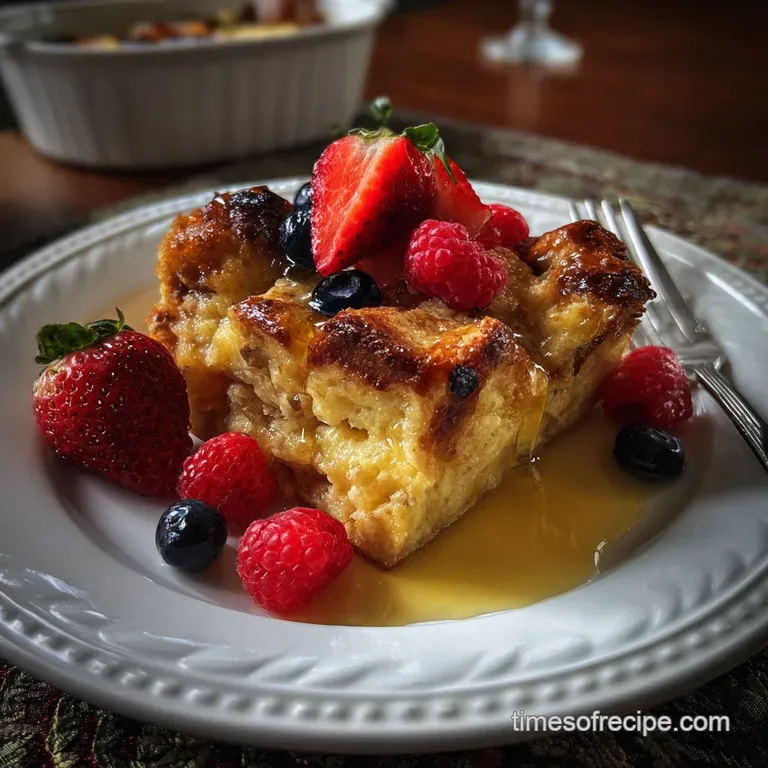
- Effort/Time: 15 minutes prep; 45 minutes active baking.
- Flavor Hook: Deeply caramelized brown sugar and nutmeg-infused custard meet a shattering pecan streusel.
- Perfect for: Low-stress holiday-brunch hosting and high-volume meal-prepping.
- The Physics of Texture: Why This French Toast Recipe Casserole Works
- Performance Metrics: Time, Yield, and Energy Density
- The Alchemy of Elements: Selecting Your Ingredients
- Essential Gear: Tools for Thermal Precision
- Precision Assembly Protocol: Mastering the Custard Infusion
- Troubleshooting Texture Failures and Soggy Centers
- Flavor Architecture: Creative Variations and Substitution Physics
- Preservation Laws: Storage and Reheating Dynamics
- The Scaling Lab: The Physics of Quantity
- Serving for Maximum Sensory Impact
- Recipe FAQs
- 📝 Recipe Card
There is nothing more demoralizing than pulling a heavy ceramic dish out of the oven only to realize you’ve baked a tray of sweet, egg-flavored soup. I spent $25 on high end bakery bread last Christmas, only to serve a french toast recipe casserole that was essentially soggy bread pudding with a raw, liquid core.
The emotional cost of a ruined holiday breakfast is far higher than the grocery bill; seeing guests pick around wet bread is a culinary nightmare that stays with you.
I've destroyed at least half a dozen batches by rushing the soak or using the wrong bread density. I once thought that fresh, soft brioche would make the most "luxurious" french toast recipe casserole, but the high moisture content caused the bread to disintegrate into a structural mess before it even hit the oven.
I had to learn the hard way that the physics of a bake like this requires a specific state of dehydration to allow the custard to actually penetrate the crumb rather than just sitting on the surface.
The secret to a world class french toast recipe casserole isn't adding more sugar; it’s mastering starch gelatinization and the Maillard reaction. By using slightly staled bread, we create "room" for the custard to move via capillary action into the center of each cube.
This results in a texture that is velvety and set, rather than leaking liquid, while the high heat transforms the brown sugar topping into a mahogany, shattering crust that provides the necessary structural contrast.
The Physics of Texture: Why This French Toast Recipe Casserole Works
- Capillary Action: Stale bread acts like a desiccated sponge, drawing the egg-milk emulsion into the center of the crumb through microscopic pores.
- Protein Denaturation: The 8 large eggs provide a structural matrix; as they heat, the proteins uncoil and bond, turning liquid custard into a firm, sliceable solid.
- Starch Gelatinization: Flour in the streusel absorbs melting butter and heat, creating a crisp barrier that prevents the custard's steam from softening the topping.
- Hygroscopic Dynamics: The brown sugar in this french toast recipe casserole attracts moisture during the soak but caramelizes during the bake, creating a dual layered texture.
Performance Metrics: Time, Yield, and Energy Density
To execute this french toast recipe casserole with professional precision, you must adhere to these specific timing and nutritional parameters. These values are calculated based on the precise 1 lb brioche loaf and 8 egg ratio provided in the official data.
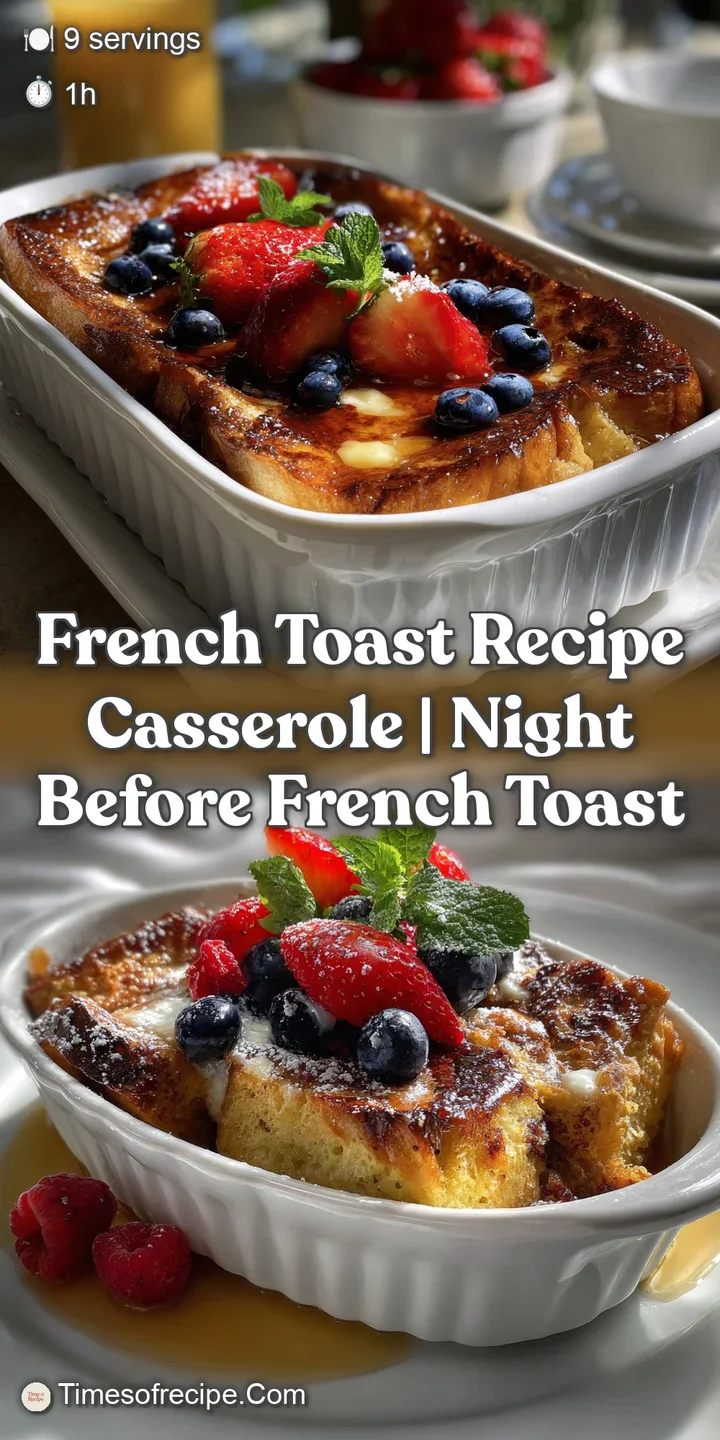
- Yield: 9 servings
- Prep Time: 15 minutes
- Cook Time: 45 minutes
- Total Time: 1 hour
- Calories per serving: 612 kcal
- Protein per serving: 14g
- Fat per serving: 37g
- Carbohydrates: 62g
The Alchemy of Elements: Selecting Your Ingredients
| Ingredient | Chemical/Physical Role (Science) | The Pro Secret (Why This Matters) |
|---|---|---|
| 1 lb Brioche Loaf | High fat crumb structure for lipid absorption | Higher egg/butter content in bread prevents "weeping" after baking |
| 8 Large Eggs | Emulsification and structural protein binding | Acts as the "glue" that prevents the casserole from collapsing |
| 1 cup Heavy Cream | Fat-to-water ratio stabilization | High milk fat prevents the custard from curdling at high heat |
| 3/4 cup Brown Sugar | Maillard reaction catalyst and humectant | Molasses content adds depth and ensures a moist (not wet) interior |
- 1 lb Brioche Loaf (Cubed): Why this? High egg/butter content in brioche ensures the bread remains rich even after starch gelatinization. I recommend a loaf from a local bakery, cut into 1 inch cubes. If it's too fresh, toast the cubes at 300°F for 10 minutes to simulate staling.
- 8 Large Eggs: These provide the lift and "set."
- 2 cups Whole Milk & 1 cup Heavy Cream: This 2:1 ratio provides the optimal fat percentage for a velvety mouthfeel without feeling greasy.
- 3/4 cup Brown Sugar (Packed): Use Domino Light Brown Sugar for consistent moisture.
- 2 tbsp Pure Vanilla Extract: Why this? Alcohol based carriers in Nielsen Massey Vanilla penetrate the bread fibers better than imitation.
- 1 tsp Ground Cinnamon & 1/4 tsp Ground Nutmeg: These spices provide the olfactory triggers associated with high end brunch.
- 1/2 tsp Sea Salt: Why this? Sodium ions suppress bitterness and amplify the perception of sweetness.
- 1/2 cup All-Purpose Flour: The base for your streusel.
- 1/2 cup Cold Unsalted Butter (Cubed): Why this? Cold fat creates "pockets" in the topping that result in a flaky, shattering texture.
Essential Gear: Tools for Thermal Precision
To ensure your french toast recipe casserole cooks evenly without the edges burning before the center is set, you need the right heat conductors.
- 9x13-inch Ceramic Baking Dish: I prefer a Le Creuset Heritage Rectangular Dish because ceramic holds heat more steadily than glass, preventing "thermal shock" to the custard.
- Large Stainless Steel Mixing Bowl: A Vollrath Stainless Steel Bowl allows for aggressive whisking without chipping.
- Balloon Whisk: Essential for fully incorporating the egg whites and yolks to avoid "egg streaks" in the finished bake.
- Pastry Cutter: For integrating the cold butter into the flour for that signature streusel.
Precision Assembly Protocol: Mastering the Custard Infusion

- Grease the Le Creuset dish with 1 tbsp unsalted butter until the surface is slick and fully coated.
- Arrange 1 lb of brioche cubes in the dish until the bread is evenly distributed in a single, thick layer.
- Whisk 8 large eggs in a large bowl until no visible streaks of yolk or white remain. Note: This ensures a homogenous custard structure.
- Integrate 2 cups milk, 1 cup heavy cream, 3/4 cup brown sugar, 2 tbsp vanilla, 1 tsp cinnamon, 1/4 tsp nutmeg, and 1/2 tsp sea salt until the sugar is fully dissolved.
- Pour the mixture over the bread until every cube is saturated and the liquid reaches halfway up the bread.
- Compress the bread gently with a spatula until you see the liquid bubble up through the cubes.
- Chill (Optional) if making an Overnight French Toast Casserole, cover and refrigerate for up to 12 hours.
- Synthesize the streusel by mixing 1/2 cup flour, 1/2 cup brown sugar, 1 tsp cinnamon, and 1/4 tsp salt.
- Cut 1/2 cup cold butter into the flour mixture until it resembles pea-sized crumbles. Note: These fat nodules create the "shatter" effect.
- Fold in 1/2 cup chopped pecans until evenly distributed throughout the crumble.
- Top the casserole with the streusel until the bread is completely obscured by the topping.
- Bake at 350°F (175°C) for 45 minutes until the center jiggles slightly but feels set, and the topping is mahogany brown.
Chef's Note: If the top is browning too quickly at the 30 minute mark, tent the dish with foil. This prevents the sugars from burning while the center finishes its protein denaturation. If you love a complex flavor profile, try serving this alongside our Eggnog Recipe during the holidays.
Troubleshooting Texture Failures and Soggy Centers
If your toast recipe casserole isn't reaching that masterclass level of texture, it usually comes down to one of three scientific failures: moisture imbalance, temperature lag, or poor emulsification.
Why Your French Toast Recipe Casserole is Soggy
The most common culprit is "fresh bread syndrome." Fresh bread is already saturated with moisture, so it cannot absorb the custard. Instead, the custard sits in the gaps between the bread, creating a sweet omelet rather than a unified bake.
This is why we insist on stale or toasted brioche for this french toast recipe casserole.
| Problem | Root Cause | The Fix | Pro Protocol |
|---|---|---|---|
| Liquid in bottom | Incomplete absorption | Use staler bread (stale 24h) | Press bread down firmly after pouring custard |
| Rubbery texture | Overbaked eggs | Use an instant read thermometer | Pull at 160°F (71°C) internal temp |
| Soggy Top | Steam trapped under foil | Remove foil for last 15 mins | Ensure streusel butter is ice-cold before mixing |
Flavor Architecture: Creative Variations and Substitution Physics
Changing ingredients in a french toast recipe casserole changes the thermodynamics of the bake. If you swap a high fat dairy for a lower fat version, the "set" will be different. For more breakfast inspiration, check out our Homemade Granola Clusters recipe for a crunchy side.
Dietary Swaps:
- Whole Milk (2 cups): Substitute with Full Fat Coconut Milk. Note: Adds tropical notes and maintains the necessary fat content for a creamy custard.
- Brioche (1 lb): Substitute with Challah. Note: Similar egg-rich structure but slightly less buttery; works perfectly for this french toast recipe casserole.
- Pecans (1/2 cup): Substitute with Walnuts. Note: Increases the tannin profile, which balances the sweetness of the brown sugar.
Flavor Twists:
- The Espresso Kick: Add 1 tsp of instant espresso powder to the custard to deepen the caramel notes.
- Zest Infusion: Add 1 tbsp of orange zest to the egg mixture for a bright, citrusy finish that cuts through the heavy lipids.
Preservation Laws: Storage and Reheating Dynamics
The french toast recipe casserole is subject to starch retrogradation the process where starch molecules realign into a crystalline structure as they cool, making the bread feel "stale" or hard.
- Fridge: Store in an airtight container for up to 4 days. The custard will continue to firm up over time.
- Freeze: You can freeze the baked casserole for up to 2 months. Wrap individual portions in parchment paper then foil to prevent freezer burn.
- Reheating: Avoid the microwave if possible; it makes the brioche rubbery. Reheat in a 350°F oven for 10 15 minutes until the edges sizzle and the top regains its crunch.
Zero Waste Philosophy: Don't discard the bread crusts if you trim them! Transform: Dry them out and pulse in a blender for "Sweet Brioche Breadcrumbs." Science: The high fat and sugar content in these crumbs makes them a world class topping for fruit crumbles or even a unique coating for fried chicken.
The Scaling Lab: The Physics of Quantity
When doubling this toast recipe casserole for a crowd, do not simply double every factor.
- Pan Crowding: Doubling the recipe into one massive, deep dish will result in burnt edges and a raw center. Mandatory instruction: Use two separate 9x13 dishes rather than one deep 12x15 dish.
- Flavor Saturation: When doubling spices like nutmeg and cinnamon, scale to 1.5x (not 2x). Spices can become overpowering and bitter when doubled linearly in a custard base.
- Thermal Mass: A doubled batch in two pans will take roughly the same time, but if you must use a larger pan, drop the temperature to 325°F and extend the bake time by 20 minutes to allow the center to reach 160°F without scorching the exterior.
Serving for Maximum Sensory Impact
To truly showcase your french toast recipe casserole, presentation should focus on contrasting textures.
- The "Shatter" Test: Serve with a sharp knife so guests can hear the "crack" of the pecan streusel.
- Temperature Contrast: Serve the hot casserole with a dollop of cold, unsweetened whipped cream or a pour of cold maple syrup. The thermal delta enhances the flavor perception.
- Visual Cues: Dust with a fine layer of powdered sugar just before serving to highlight the deep mahogany color of the baked brioche.
The french toast recipe casserole is more than just a breakfast; it's a study in moisture management and heat transfer. By respecting the science of the soak and the precision of the bake, you'll never serve a soggy brunch again. Let's crack on and get that brioche staling!
Recipe FAQs
What is the single most critical factor for preventing a soggy center?
Using slightly staled or pre-toasted brioche cubes. Stale bread develops microscopic pores, allowing the custard to fully penetrate via capillary action rather than just pooling on the surface. If your bread is fresh, toast cubes at 300°F for 10 minutes to simulate staling.
Can I substitute whole milk for the heavy cream called for in the custard?
No, low-fat dairy compromises structure. Heavy cream (36% fat) stabilizes the emulsion better than whole milk, preventing the egg proteins from curdling upon heating. If you substitute, you risk a thinner, slightly grainy final texture.
Is it necessary to chill the casserole overnight before baking?
No, chilling allows for deeper saturation. Soaking longer permits the starch granules to fully gelatinize as the bread slowly imbibes the liquid. If you enjoy mastering hydration control in baking, this slow infusion principle is also key in our Pandesal Recipe: Softest Classic Filipino Bread Rolls.
My streusel topping burned before the center set; what went wrong?
The oven temperature was too high for the surface sugar. The streusel topping contains highly volatile brown sugar, which caramelizes rapidly compared to the deep protein denaturation occurring in the center.
- Tent the dish loosely with foil at the 30-minute mark
- Ensure the butter in the streusel is ice-cold
- Check final internal temperature using a probe thermometer
What is the difference between using brioche versus challah bread?
Brioche provides superior fat absorption. Brioche has a higher concentration of butter and eggs in its basic dough, leading to a richer, more velvety mouthfeel post bake. Challah is also excellent but offers less lipid content, resulting in a slightly firmer structure.
Myth: I can use imitation vanilla extract for better cost savings.
Myth: Imitation vanilla offers equivalent flavor dispersion. Reality: Alcohol based pure vanilla extracts better penetrate the dense bread fibers during the soak, carrying the flavor compounds deeper into the casserole structure.
What is the ideal final internal temperature for a fully set casserole?
Pull the casserole at 160°F (71°C) for optimal texture. The residual heat (carryover cooking) will raise the internal temperature to the safe threshold of 165°F while preserving a slight, velvety jiggle in the center. If you're interested in precise temperature management for proteins, review the technique used in our Gai Lan Chinese Broccoli: Restaurant Quality Oyster Sauce Recipe.
Master French Toast Casserole
Ingredients:
Instructions:
Nutrition Facts:
| Calories | 612 kcal |
|---|---|
| Protein | 14g |
| Fat | 37g |
| Carbs | 62g |
| Fiber | 2g |
| Sugar | 32g |
| Sodium | 485mg |
