Pastalaya: Authentic Cajun Comfort in a Single Pot
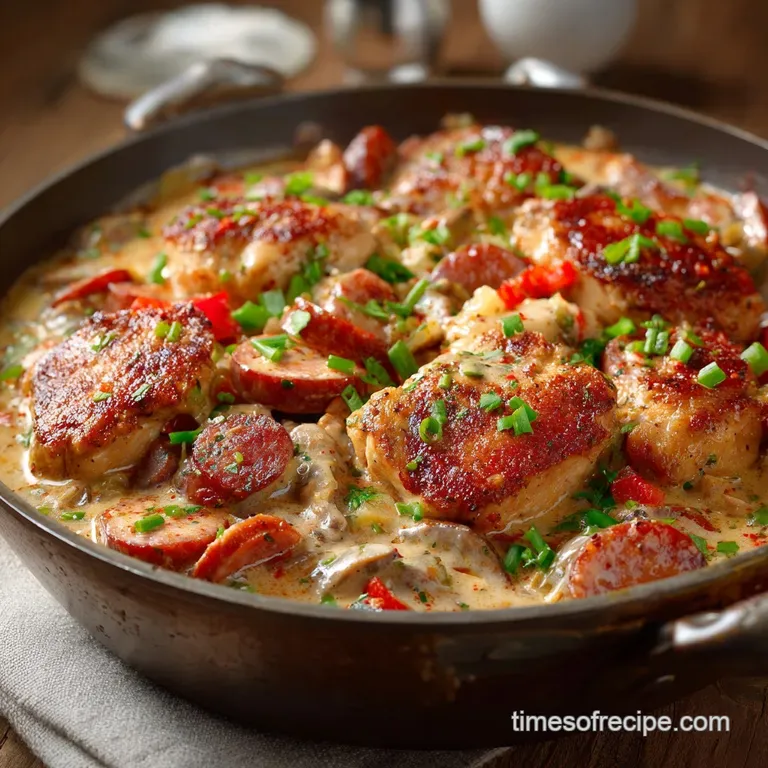
- Welcome to Pastalaya: The Ultimate One-Pot Cajun Comfort Food
- Mastering the Texture: Why This Pastalaya Method Guarantees Success
- Your Essential Shopping List: Ingredients for Authentic Pastalaya
- The One-Pot Method: Simple Steps to Cooking Pastalaya
- Troubleshooting and Expert Tips for Your Pastalaya
- Handling Leftovers: Storage, Reheating, and Make-Ahead Pastalaya
- Completing the Meal: What to Serve Alongside Pastalaya
- Recipe FAQs
- 📝 Recipe Card
Welcome to Pastalaya: The Ultimate One-Pot Cajun Comfort Food
When this one-pot wonder hits the stove, the resulting aroma is just unbelievable. Seriously, that deep, smoky Andouille sausage mixed with simmering bell peppers makes my whole house smell like a trip straight to Louisiana.
It’s comforting, robust, and honestly, once that spicy steam hits you, resisting a bowl is totally impossible.
This dish is my absolute weeknight hero. We are talking about achieving maximum depth of flavor with minimum dish cleanup, which is a major win in my book. Pastalaya takes the traditionally slow simmered, rich soul of jambalaya and gets it done in barely an hour because we swap the fussier rice for simple pasta.
Forget fussy techniques or endless stirring. I’m going to share all the little, real world secrets like how to get that crazy creamy texture without adding a single drop of heavy cream so you can nail this Cajun pastalaya recipe every single time.
Trust me on this one, you’re going to want to double the batch.
Mastering the Texture: Why This Pastalaya Method Guarantees Success
Defining the Dish: Jambalaya Meets Pasta
Pastalaya, simply put, is the love child of Cajun jambalaya and Italian pasta. It takes the "Holy Trinity" (onion, celery, and bell pepper) and fuses it with smoked sausage and tender chicken. The genius move? We cook the pasta directly in the seasoned stock.
The Soul of Cajun Cooking: Deep Flavor Depth
The key to any great Cajun dish is layering flavor upon flavor, not just dumping everything in at once. We start by browning the meats hard to build a dark, beautiful fond on the bottom of the pot. Then we sauté the trinity in that glorious rendered fat, locking in that initial smoky depth.
What Makes This Recipe Truly Simple?
It really is a one-pot dish, simplifying cleanup immensely. Everything happens sequentially in the same heavy Dutch oven, meaning the liquid from one step becomes the flavor base for the next. This streamlines the whole process, making it perfect even after a long day.
The Starch Release Secret (Pasta Water Creaminess)
Why do we cook the pasta directly in the stock? That pasta is releasing its starches right into the liquid as it absorbs it. This starchy liquid acts as a natural emulsifier, essentially creating its own thickening agent without needing any dairy or added flour.
This is the secret to getting that perfect, non-watery creamy finish.
Building the Flavor Base (Sausage Browning and Holy Trinity)
You absolutely cannot skip browning the sausage. Those dark, sticky bits left after searing are called the fond , and they are pure flavor concentrate. When you add the Holy Trinity, their moisture helps scrape that fond up, integrating deep, savory, complex notes into the sauce immediately.
Chef's Note: If you don't brown the meat and scrape the fond off the bottom, you lose 80% of the flavor. Take the time to get a good sear!
Achieving Perfectly Tender Chicken Every Time
We sear the chicken first, remove it, and only reintroduce it at the very end of the cooking process. Why? If you simmer chicken thighs for the whole 40 minutes, they get tough and stringy. By adding them back in the final moments, they just heat through, staying juicy and tender.
Your Essential Shopping List: Ingredients for Authentic Pastalaya
Selecting the Right Smoked Sausage (Andouille Focus)
Andouille sausage is traditional here because its spice level and smoky flavor are robust enough to stand up to the strong Cajun seasoning. If you can find a quality, locally made Andouille, grab it immediately!
| Ingredient | My Preference | Viable Substitute |
|---|---|---|
| Smoked Andouille Sausage | Spicy, high-quality, pre-cooked | Kielbasa (less spicy) or hot Italian sausage (remove casings) |
| Chicken Thighs | Boneless, skinless for richness | Boneless, skinless chicken breast (reduce cook time) |
| Chicken Stock | Low Sodium | Vegetable stock (it will be less rich, but still fine) |
The Cajun Holy Trinity: Precision Cuts and Ratios
The Holy Trinity is onion, celery, and bell pepper, and it forms the aromatic foundation of the dish. I like a 1:1:1 ratio, and I dice them finely so they truly melt into the sauce. Make sure you use a green bell pepper. It adds a bitterness that balances the richness of the sausage perfectly.
Best Short Cut Pasta Shapes for Maximum Sauce Cling
We need a short cut pasta that holds up to simmering and has plenty of surface area for the sauce to cling to. Penne is classic, but rotini (those corkscrews!) or ziti work brilliantly too. Long, thin pasta shapes like spaghetti are an absolute disaster here.
Flavor Boosters and Essential Cajun Seasonings
A good quality Cajun or Creole seasoning blend is non-negotiable. If you're sensitive to heat, check the blend first, or simply use less. I also add a tiny bit of tomato paste and Worcestershire sauce. That tomato paste adds subtle sweetness and color, and the Worcestershire sauce offers a deep, savory umami punch.
It’s a secret weapon!
The One-Pot Method: Simple Steps to Cooking Pastalaya
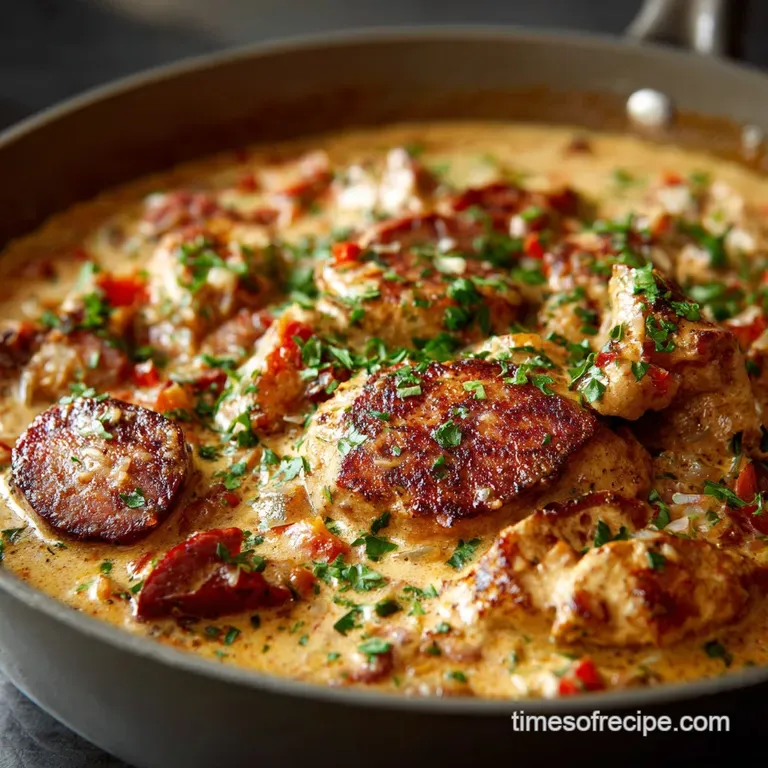
Searing the Proteins and Building the Foundation
Get your heavy pot screaming hot over medium high heat. Add your sliced Andouille sausage and let it cook until you see those beautiful brown spots and plenty of fat has rendered out. Scoop the sausage out, leaving the fat.
Next, sear your cubed chicken thighs until they have some color, then remove and set aside with the sausage.
Deglazing the Pot and Sautéing the Trinity
Reduce the heat to medium. Add the diced onion, celery, and green bell pepper to the pot. Cook these for 8- 10 minutes until they soften completely. Use your wooden spoon to scrape up all that glorious browned fond off the bottom while they cook!
Once soft, stir in the minced garlic and tomato paste for one minute. Sprinkle in the Cajun seasoning and thyme and stir until you smell a wonderful, toasty, nutty aroma that means the spices are "blooming."
Simmering the Stock and Introducing the Pasta
Pour in a cup of the warmed chicken stock first, scraping aggressively to capture any remaining brown bits. Add the rest of the stock, the bay leaves, and the Worcestershire sauce. Bring it all to a rapid simmer. Taste the liquid now!
It should taste slightly saltier than you think is necessary, as the plain pasta will absorb much of that seasoning. Add the pasta, stir well, and reduce the heat to maintain a gentle simmer.
The Final Stir, Garnish, and Rest Period
Simmer, stirring every 3– 4 minutes to prevent sticking, for about 15 minutes, or until the liquid is mostly absorbed and the pasta is nearly tender.
Now, return the reserved chicken and sausage to the pot, stirring gently for two minutes until everything is piping hot. Remove from heat, cover tightly, and let it rest for 5– 10 minutes. This rest is mandatory!
Remove the bay leaves, stir in your fresh spring onions and parsley, and serve immediately.
Troubleshooting and Expert Tips for Your Pastalaya
Preventing Mushy Pasta: The Al Dente Rule
Mushy pasta is the most common failure in one-pot dishes. You need to cook the pasta until it is just al dente —meaning it still has a slight resistance in the center before the resting period. The residual heat will finish the cooking process during the rest.
If it’s soft before you cover it, it will be mushy when you serve it.
Achieving Proper Consistency (Too Soupy vs. Too Dry)
If your pastalaya is too soupy after the rest, simply remove the lid and simmer gently, uncovered, for another few minutes until it thickens. If it's too dry, you likely didn't have your pot covered tightly enough or the simmer was too high.
Fix this easily by adding an extra half cup of warm stock or water until the desired creaminess returns.
Adjusting Heat and Spice Levels Post Cook
Did you taste it and realize you went too heavy on the Cajun seasoning? Oops! Don't panic. You can temper the heat by stirring in a spoonful of sour cream or, better yet, a generous splash of fresh lemon juice or vinegar. The acidity helps cut through the capsaicin heat, balancing the flavors.
Handling Leftovers: Storage, Reheating, and make-ahead Pastalaya
Chilling and Refrigeration Guidelines
This dish holds up beautifully! Store leftover pastalaya in an airtight container in the fridge. Because of the combination of protein and pasta, it's best consumed within 3 to 4 days.
Best Practices for Freezing Cooked Pasta
But does it freeze well? You bet, though you should expect a slight texture change in the pasta it might be a little softer upon thawing. Freeze cooled pastalaya in individual portions in freezer safe containers, ensuring you leave about an inch of headspace for expansion.
It will last safely for up to three months.
Reviving the Dish: Tips for Reheating Without Drying Out
When reheating, whether from the fridge or freezer (thaw first!), the pasta will have soaked up all the available moisture, making the dish seem dry. Always reheat gently on the stovetop or in the microwave with a generous splash of extra liquid (stock or water).
Add enough liquid until you get back that beautiful, saucy texture you started with.
Completing the Meal: What to Serve Alongside Pastalaya
Pastalaya is so rich and hearty that it really only needs a simple counterbalance. I always serve it with a basket of warm, slightly sweet cornbread. That cornbread is perfect for soaking up any leftover creamy sauce in the bowl.
Alternatively, a simple side salad with a zesty, vinegary dressing provides a welcome fresh crunch to cut through the smokiness.
Recipe FAQs
Why did my Pastalaya turn out dry or stiff, not creamy?
This issue typically occurs if the heat was too high or if the lid was removed too frequently, allowing crucial steam and moisture to escape during the absorption phase. If your dish is too dry, gently stir in 1/4 to 1/2 cup of warmed chicken stock until the texture loosens to the desired creaminess.
Next time, ensure the heat is truly reduced to a low simmer once the pasta is added, and resist the urge to peek until the 15-minute mark.
Can I use a different type of pasta, or is short cut essential?
Short, sturdy shapes like penne, rotini, or ziti are highly recommended because they cook evenly and hold up well to the stirring required in this one-pot method. You should avoid using long, thin pasta like spaghetti or fettuccine, as these shapes tend to clump together and often become mushy before the cooking liquid has fully absorbed.
If you must substitute, choose a shape with a thick wall that can handle the long simmer time.
My Pastalaya stuck to the bottom of the pot. How do I prevent this?
Sticking is a common challenge when cooking starches directly in the pot, especially with a dish as thick as Pastalaya. To prevent this, ensure you stir vigorously immediately after adding the stock and pasta, then allow the mixture to come to a full simmer.
Once the lid is on, maintain the heat level just low enough to produce a very gentle bubble, checking and stirring once halfway through the cooking time.
I want to increase the heat/spiciness. What is the best way?
The easiest way to boost the heat is to add a tablespoon of finely diced jalapeño or serrano pepper when sautéing the holy trinity (onion, celery, bell pepper). For a deeper, internal heat, you can increase the amount of cayenne pepper or stir in a teaspoon of smoked paprika alongside the dried herbs.
Remember that the heat will mellow slightly during the long cooking process, so be generous.
How should I store Pastalaya, and can I freeze leftovers?
Store leftovers in an airtight container in the refrigerator for up to four days. While you can freeze Pastalaya, note that the texture of the pasta may become softer and slightly grainy upon thawing due to the starch breakdown.
If freezing, make sure the dish is completely cooled first, and use the leftovers within two months for best quality.
Can I use different proteins, like shrimp or leftover roast chicken?
Yes, you can substitute proteins, but timing is crucial to prevent overcooking. If using raw shrimp, add them only in the final 5 minutes of cooking, letting them steam until pink and opaque.
If using pre-cooked protein, such as shredded rotisserie chicken, stir it in during the last minute of cooking just to warm it through.
Is it possible to adapt this recipe for vegetarians?
Absolutely; to make a vegetarian Pastalaya, substitute the chicken and sausage with hearty, flavourful alternatives like sliced portobello or oyster mushrooms and chickpeas. Crucially, replace the chicken stock with a robust vegetable broth and ensure you add 1/2 teaspoon of liquid smoke to maintain that essential Cajun smokiness the andouille sausage usually provides.
One Pot Cajun Chicken Pastalaya
Ingredients:
Instructions:
Nutrition Facts:
| Calories | 757 kcal |
|---|---|
| Protein | 52.0 g |
| Fat | 30.0 g |
| Carbs | 69.0 g |
