Oysters Rockefeller: Buttery & Briny
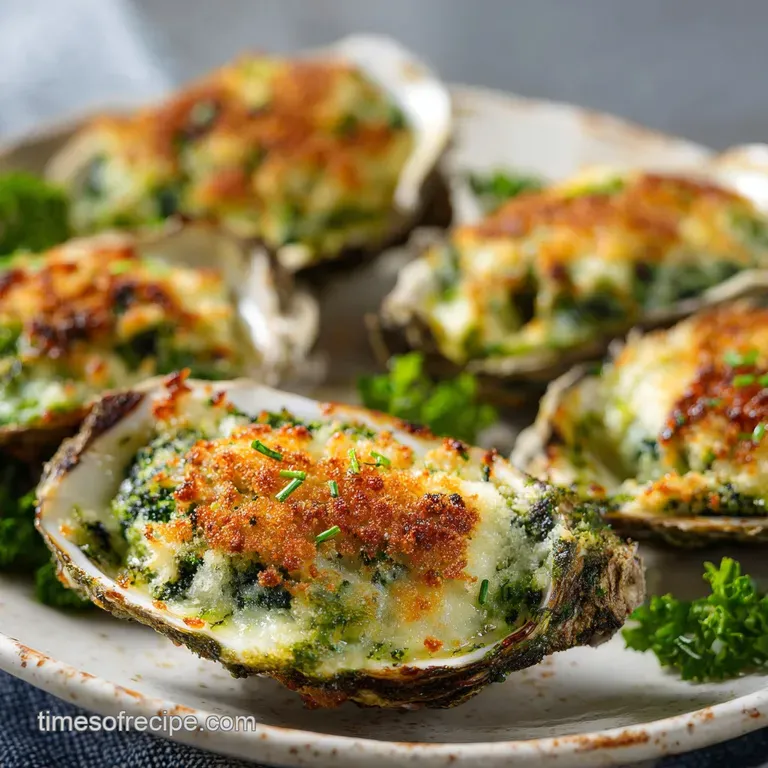
- Time: Active 25 minutes, Passive 10 minutes, Total 35 minutes
- Flavor/Texture Hook: Briny, buttery silkiness topped with a shattering panko crunch
- Perfect for: Holiday gatherings, celebratory dinners, or a bold weekend treat
- A Bold Legacy of Oysters Rockefeller
- The Logic of Bold Flavor
- Precise Specs for Kitchen Success
- The Hearty Elements of Flavor
- Essential Tools for Shucking Success
- From Briny Shell to Broiled Plate
- Solving Common Shucking and Baking Woes
- Creative Variations on the Classic
- Storage and Reducing Kitchen Waste
- Plating Tips for Maximum Impact
- Recipe FAQs
- 📝 Recipe Card
A Bold Legacy of Oysters Rockefeller
The first time I smelled Oysters Rockefeller, I wasn't even the one eating them. I was ten years old, trailing behind my grandfather into a dimly lit seafood shack on the coast. The aroma hit me before we even saw a menu: a thick, heady cloud of sizzling butter, garlic, and that unmistakable, medicinal scent of anise.
It felt grown up and mysterious. When the tray finally arrived, the shells were nestled in a bed of glowing rock salt, topped with a green crust so vibrant it looked like buried treasure.
I watched him take a bite, the sound of the topping shattering clearly audible over the jukebox, and I knew I had to learn how to make it.
This dish isn't about being dainty. It is about a hearty, satisfying contrast between the cold, metallic brine of a fresh oyster and the rich, warm embrace of a compound butter. For years, I struggled with soggy toppings and watery spinach, but I eventually learned that the secret lies in the moisture control.
We want that spinach to be a concentrated essence of flavor, not a soup. We are going for bold, punchy notes of celery salt and cayenne that wake up the palate without overstaying their welcome.
You can expect a recipe that respects the traditional flavors but adds enough texture to keep every bite interesting. We are moving away from the "mushy green" versions you might see at cheap buffets. Instead, we are building layers: the silky oyster, the velvety green base, and the crispy, citrus kissed panko.
It is a family favorite in my house now, especially during the holidays when we want something that feels special but satisfies that deep seated craving for comfort food.
The Logic of Bold Flavor
Thermal Mass Stability: Using rock salt creates a heat reservoir that stabilizes the temperature around the shell, preventing the oyster from cooling too quickly once out of the oven.
Emulsified Moisture Control: Sautéing the shallots and garlic in butter before adding the spinach helps coat the greens in fat, which prevents them from releasing excess water into the oyster shell during the broiling process.
The Anise Bridge: Pernod contains anethole, a compound that chemically bridges the gap between the briny minerals in the seafood and the earthy sweetness of the cooked spinach.
Thermal Mass of Rock Salt
Rock salt isn't just for show. It acts as a stabilizer for the uneven oyster shells, but more importantly, it holds heat. This ensures the bottom of the oyster stays warm while the broiler works on the top.
Without it, your oysters would slide around and spill their precious liquor, which is the heart of the dish's flavor.
Emulsifying the Green Sauce
When we combine the finely minced spinach with the butter and Pernod, we are creating a thick, concentrated emulsion. This is why we remove the stems from the 2 cups of fresh baby spinach. Stems hold water and can feel stringy.
By using only the leaves, we ensure a velvety texture that clings to the oyster rather than sliding off into a pool of green liquid.
Pernod for Herbal Depth
Pernod is the secret weapon here. It provides a bold, licorice like aroma that cuts through the heavy fat of the butter and Parmesan cheese. If you skip this, the dish still tastes good, but it loses that professional, "restaurant style" complexity that makes Oysters Rockefeller famous.
It provides a bright, herbal top note that balances the deep, savory base.
| Method | Time | Texture | Best For |
|---|---|---|---|
| Standard Oven | 10 minutes | Evenly cooked, juicy | Large batches, traditional feel |
| Air Fryer | 6 minutes | Extreme crunch, faster | Small batches, extra crispy topping |
| Outdoor Grill | 8 minutes | Subtle smoky notes | Summer parties, rustic flavor |
Choosing your method depends on the vibe of the evening. I personally love the air fryer for a quick midnight snack, but for a family dinner, the oven is the only way to go. The consistent heat of the oven allows the butter to permeate the breadcrumbs slowly, creating a deeper golden color without burning the delicate edges of the spinach.
Precise Specs for Kitchen Success
Precision is the difference between a soggy oyster and a masterpiece. I always tell my friends to treat the broiler with respect. It is a powerful tool, but it moves fast. You want to stay within a few inches of the heat source to get that immediate "shatter" on the panko without overcooking the delicate bivalve underneath.
- Temperature Check: Broil at 400°F (200°C) for exactly 8-10 minutes.
- Weight/Count: Use 24 large fresh oysters to ensure the topping to meat ratio is satisfying.
- Visual Cue: Pull them the second the panko turns the color of a toasted almond and you see the butter bubbling at the edges.
| Servings | Ingredient Adjustments | Pan Size | Cook Time |
|---|---|---|---|
| 2 People | 12 oysters, 2 tbsp butter | 9 inch pie tin | 8 minutes |
| 4 People | 24 oysters, 4 tbsp butter | Large rimmed baking sheet | 10 minutes |
| 8 People | 48 oysters, 8 tbsp butter | Two baking sheets | 12 minutes (rotate) |
If you are scaling up for a crowd, remember that the rock salt takes longer to heat up in a crowded oven. You might need an extra minute or two of cook time. Always work in batches if your oven is small to ensure the air can circulate freely around each shell.
The Hearty Elements of Flavor
We are looking for bold, high-quality components here. Don't settle for the pre shucked oysters in a jar; half the fun is the presentation of the shell. The saltiness of the 1/4 cup Parmesan cheese works in tandem with the 1/2 tsp celery salt to season the dish from within, so be careful not to add extra table salt.
| Ingredient | Science Role | Pro Secret |
|---|---|---|
| Fresh Baby Spinach | Provides volume and moisture | Wring it out in a clean towel after sautéing to prevent sogginess |
| Panko Breadcrumbs | Creates structural crunch | Toss with olive oil first to ensure every crumb browns evenly |
| Pernod Liqueur | Aromatic bridge | Add it at the very end of the sauce prep to keep the aromatics volatile |
For the Oysters & Base
- 24 large fresh oysters: The fresher the better. Why this? Provides the essential briny, metallic base for the rich toppings.
- 4 cups rock salt: Use this as your bed. Why this? Stabilizes shells and retains heat during and after baking.
For the Bold Signature Sauce
- 4 tbsp unsalted butter: High fat content is best. Why this? Carries the flavors of garlic and shallots across the palate.
- 2 cloves garlic, minced: Fresh only.
- 2 shallots, finely minced: For a sweet, onion like depth.
- 2 cups fresh baby spinach, stems removed: The green heart of the dish.
- 1/4 cup fresh parsley, chopped: For a bright, peppery finish.
- 1 tbsp Pernod liqueur: The essential anise note.
- 1/2 tsp celery salt: Adds a savory, "old school" seafood flavor.
- 1/4 tsp cayenne pepper: Just enough for a back of-the throat warmth.
For a Shattering Crust
- 1/2 cup panko breadcrumbs: Specifically panko for maximum surface area.
- 1/4 cup finely grated Parmesan cheese: Adds salt and a nutty crust.
- 1 tbsp extra virgin olive oil: Helps the crumbs crisp up.
- 1 tsp lemon zest: Cuts through the richness with a hit of acid.
| Original Ingredient | Substitute | Why It Works |
|---|---|---|
| Pernod Liqueur | Finely minced fresh fennel | Similar anise profile. Note: Sauté with shallots for best flavor extraction. |
| Rock Salt | Uncooked rice or dried beans | Provides stability for the shells. Note: Won't hold heat as long as salt. |
| Panko Breadcrumbs | Crushed saltine crackers | Traditional and very buttery. Note: Slightly less crunch than panko. |
Essential Tools for Shucking Success
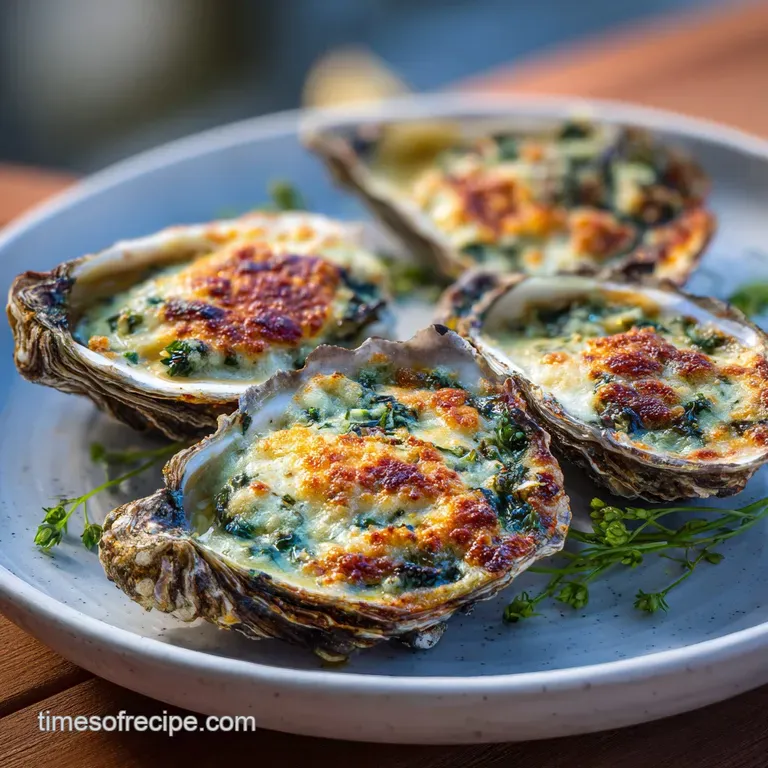
You don't need a professional kitchen, but a few specific items make this much easier. A solid shucking knife is non negotiable. Don't try to use a paring knife; you'll likely break the blade or, worse, hurt yourself. I like a knife with a high grip handle because things get slippery fast.
A large, rimmed baking sheet is perfect for holding the bed of rock salt. Make sure it is sturdy enough to handle the weight of 4 cups of salt plus the oysters. If you have individual gratin dishes, those work beautifully for a more "elegant" (shh, don't tell anyone I used that word) presentation.
Chef's Tip: If you find shucking too difficult, place the oysters in a 400°F (200°C) oven for just 2 minutes. They will "relax" and pop open slightly, making it much easier to get your knife in without a struggle.
From Briny Shell to Broiled Plate
Master the Art of Shucking
Scrub the 24 oysters under cold running water to remove any grit or sand. Hold the oyster flat side up in a folded kitchen towel. Insert the shucking knife into the hinge, twist firmly until you hear a "pop," and slide the blade along the top shell to sever the muscle.
Remove the top shell, but keep that liquid (the liquor) in the bottom shell!
Building a Velvety Base
In a large skillet over medium heat, melt the 4 tbsp unsalted butter. Add the minced 2 shallots and 2 cloves garlic, cooking until they are soft and fragrant, about 3 minutes. Stir in the 2 cups of fresh baby spinach and 1/4 cup parsley.
Sauté until the spinach is completely wilted and dark green.
Flavoring the Sauce
Add the 1 tbsp Pernod, 1/2 tsp celery salt, and 1/4 tsp cayenne pepper to the skillet. Let it simmer for 1 minute to cook off the raw alcohol bite. Remove from heat. If there is a lot of liquid in the pan, tilt it and spoon out any excess butter/water so the mixture is a thick paste.
Preparing the Topping
In a small bowl, combine the 1/2 cup panko breadcrumbs, 1/4 cup Parmesan cheese, 1 tbsp olive oil, and 1 tsp lemon zest. Use a fork to toss everything together until the crumbs are evenly coated and smell like citrus.
Assemble with Extreme Care
Spread the 4 cups of rock salt onto your baking sheet. Nestle the shucked oysters into the salt so they are level. Spoon a generous tablespoon of the spinach mixture onto each oyster, pressing it down slightly to cover the meat.
Adding the Crunch
Sprinkle the panko and Parmesan mixture over the top of the spinach. You want a thick layer that covers the green entirely. This acts as an insulator for the oyster while it bakes.
Watching the Clock Carefully
Slide the pan into the oven at 400°F (200°C). Bake for 8-10 minutes. Keep a close eye on them; you are looking for the moment the edges of the oyster curl slightly and the topping is deep golden and crackling.
The Final Touch
Remove the pan from the oven and let it sit for 2 minutes. This allows the rock salt to pass its residual heat into the shells. Serve immediately while the butter is still sizzling.
Solving Common Shucking and Baking Woes
Banishing Any Gritty Texture
Nothing ruins a hearty oyster faster than a mouthful of sand. This usually happens during the shucking process when bits of the shell break off. Root Cause: Improper shucking technique or unwashed shells.
Solution: Use a damp paper towel to wipe the inside edge of the oyster shell after opening, and always scrub the outsides before you start.
| Problem | Root Cause | Solution |
|---|---|---|
| Watery Sauce | Spinach wasn't drained | Squeeze sautéed spinach in a sieve before adding to shells |
| Rubbery Oysters | Cooked too long | Reduce cook time by 2 minutes; pull when edges just begin to curl |
| Bland Flavor | Too little celery salt | Ensure you use celery salt, not plain salt, for that signature punch |
Fixing a Thin Sauce
If your spinach mixture looks like a soup rather than a paste, it will run out of the shell and make the rock salt a soggy mess. The fix is simple: add a teaspoon of panko directly into the spinach mixture to soak up the excess butter and Pernod before you top the oysters.
Preventing Rubbery Seafood
Overcooking is the enemy. Oysters are mostly water and protein; under high heat, that protein tightens up fast. If your oysters look small and tough, you’ve gone too far. Aim for the "just set" look where the oyster is still plump.
- ✓ Common Mistakes Checklist
- ✓ Never discard the "liquor" (the juice inside the shell); it is the concentrated flavor of the sea.
- ✓ Don't use frozen spinach; the water content is too high and the texture is too mushy.
- ✓ Ensure the rock salt is dry; damp salt won't hold heat as effectively.
- ✓ Avoid low-fat substitutes for butter; you need the fat to emulsify the herbs and Pernod.
- ✓ Don't overcrowd the pan; leave an inch of space between shells for the heat to circulate.
Creative Variations on the Classic
Adding a Smoky Kick
If you want to move away from the traditional herbal profile, try adding 2 strips of finely minced, crispy bacon to the spinach mixture. This adds a bold, smoky fat that pairs incredibly well with the brine of the oyster. It turns the dish into something even more satisfying and hearty.
Using Fennel Instead
If Pernod is too strong for your guests, use finely minced fennel bulb sautéed with the shallots. It provides a much subtler anise flavor that is sweet and earthy. It's a great "introductory" version for people who are wary of the stronger liqueur.
When scaling this recipe down for a date night, simply halve all the ingredients. However, when scaling up for a big family party, don't just double the cayenne and celery salt. Spices can become overwhelming in large quantities. I suggest using 1.5x the spices for a double batch and tasting as you go.
For the panko, you can always make a little extra; having a bit of leftover topping is better than running out halfway through the tray!
Storage and Reducing Kitchen Waste
Oysters Rockefeller are best eaten immediately. The contrast between the hot, crispy topping and the cool, silky oyster disappears quickly as it sits. However, if you have leftovers, store them in an airtight container in the fridge for no more than 24 hours.
To reheat, use a toaster oven or air fryer at 350°F (180°C) for 3-4 minutes to crisp the topping back up. Never use a microwave, or you'll end up with rubbery seafood and soggy breadcrumbs.
For zero waste, save your oyster shells! Once cleaned, they can be used as mulch in your garden to add calcium to the soil. If you have leftover spinach and butter mixture, toss it with some hot pasta and a splash of cream for a quick, bold lunch the next day.
Even the rock salt can be stored in a jar and reused for your next batch of Oysters Rockefeller or for roasting beets.
Kitchen Myths Debunked
- Myth: "You can't eat oysters in months without an 'R'." This is an old rule from the days before refrigerated shipping. Today, with modern farming and transport, fresh oysters are safe and delicious year round.
- Myth: "The spinach must be raw when it goes on the oyster." Actually, raw spinach releases too much water during the short broil. Sautéing it first ensures the flavor is concentrated and the texture is velvety.
Plating Tips for Maximum Impact
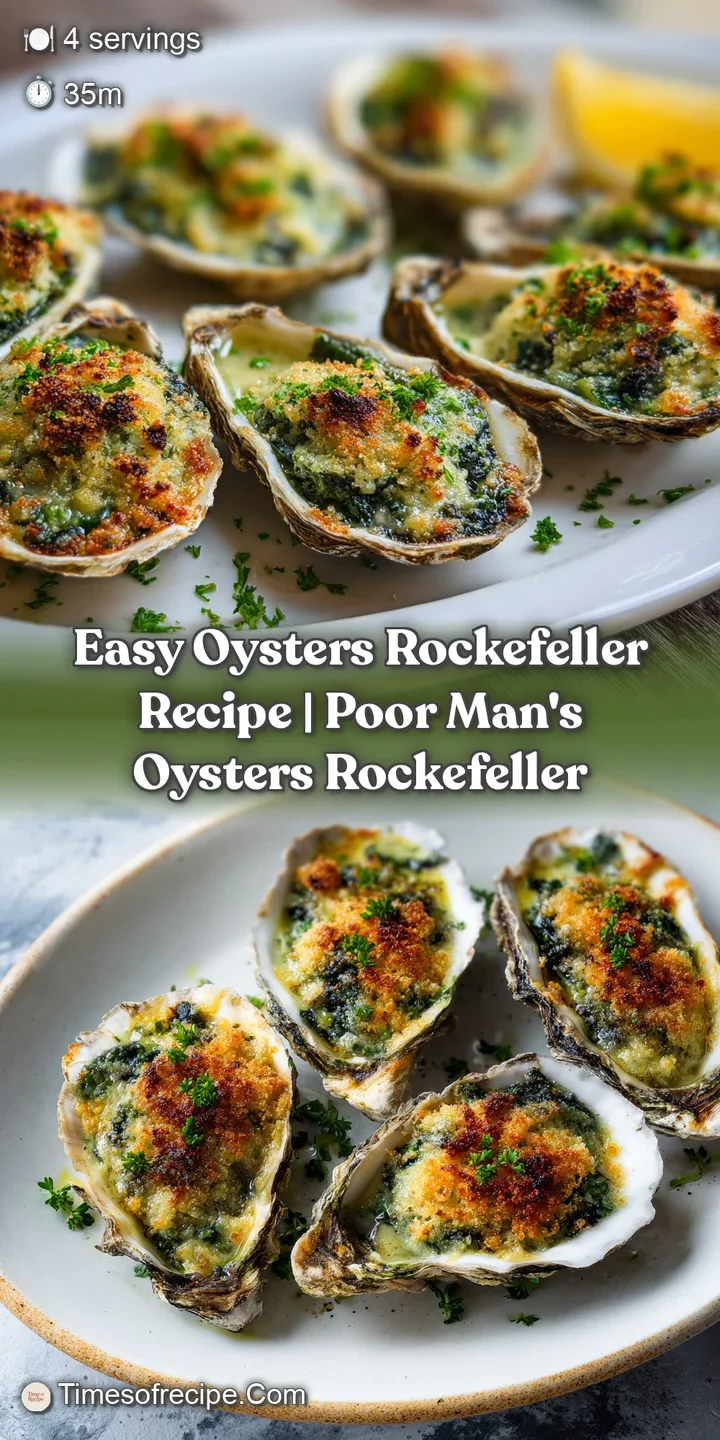
Serve these on the bed of rock salt they were baked in. It looks rustic and bold, and it keeps them from sliding around on the tray. I like to scatter a few extra lemon wedges and some fresh parsley sprigs around the shells to give the platter a pop of color.
The contrast of the white salt, green spinach, and golden crust is naturally beautiful.
Perfect Bubbles for Pairing
The richness of the butter and the saltiness of the oysters scream for something acidic and effervescent. A crisp Champagne or a dry Prosecco is the classic choice. For a punchy pairing that cuts through the butter with a bit of a wink, try my Pickle Martini Recipe. The vinegar and dill in the martini act as a palate cleanser, making every bite of the Oysters Rockefeller feel like the first one.
Garnishing for Bold Flavor
A final dusting of fresh lemon zest right before serving provides a bright, aromatic lift that hits the nose before the taste buds. It wakes up the heavy fats in the butter and cheese.
If you're feeling adventurous, a single drop of hot sauce on top of the panko just before serving adds a sharp vinegar note that brings the whole dish into perfect balance. Trust me, your family will be fighting over the last shell!
Recipe FAQs
What does Rockefeller mean for oysters?
It signifies a rich, baked preparation. The name refers to the immense richness of the topping, which uses copious amounts of butter, herbs, and often Parmesan cheese, reminiscent of the wealth of the Rockefeller family.
What kind of oysters are used for Rockefeller?
Use large, fresh, briny oysters. While any fresh oyster works, larger varieties are preferred because their size accommodates the heavy topping without being overwhelmed.
What do Oysters Rockefeller taste like?
They taste briny, buttery, and herbaceous with a crunchy top. The flavor profile balances the cold, metallic ocean brine with a warm, velvety spinach base and an aromatic hint of anise from the Pernod.
Is Oysters Rockefeller raw or cooked?
Oysters Rockefeller are always cooked. They are baked or broiled until the topping is golden and the oyster meat is just set, resulting in a warm, savory dish.
How do I prevent the spinach base from being watery?
Sauté the spinach until completely wilted and drain excess liquid. After sautéing the greens with the butter mixture, tilt the pan and spoon out any excess liquid before topping the oysters.
Is it true that I must use rock salt under the shells?
No, this is a common misconception, but highly recommended. While you can use beans or rice, rock salt acts as a heat stabilizer, keeping the shells level and ensuring the oyster stays warm throughout the broiling process.
How long should I broil the topped oysters?
Broil for 8 to 10 minutes at 400°F (200°C). Watch closely; the dish is done when the panko topping achieves a deep golden color and the edges of the oyster begin to visibly curl.
Oysters Rockefeller Recipe
Ingredients:
Instructions:
Nutrition Facts:
| Calories | 248 kcal |
|---|---|
| Protein | 7.4 g |
| Fat | 17.9 g |
| Carbs | 7.9 g |
| Fiber | 0.9 g |
| Sugar | 0.5 g |
| Sodium | 452 mg |
