Creamed Onions: Proper British Pearl Onions for the Sunday Roast

- Proper British Creamed Pearl Onions: The Sunday Roast Classic
- Shopping List: Essential Ingredients for Proper British Creamed Onions
- Mastering the Method: Step-by-Step Guide to Creamed Onion Preparation
- The Culinary Science of Perfectly Textured Creamed Onions
- Troubleshooting and Expert Tips for Richer Creamed Onions
- Prep Ahead and Storage: Keeping Your Creamed Onions Fresh
- Perfect Pairings: What to Serve Alongside Creamed Pearl Onions
- Recipe FAQs
- 📝 Recipe Card
Proper British Creamed Pearl Onions: The Sunday Roast Classic
Elevating the Classic: Why Creamed Onions Belong on Your Sunday Table
Forget everything else on the plate for a second. Creamed onions are all about that incredibly rich, velvety sauce hugging sweet, tiny pearls of onion goodness. The smell alone warm butter, a hint of spice, and sweet onions tells you this is going to be good.
It’s pure, nostalgic comfort food, and trust me, the texture is divine.
Look, many people only pull this recipe out for Christmas or Thanksgiving, and that’s a tragedy. This dish is seriously fast once you get past the initial faff of peeling, it uses staple pantry ingredients, and it feels incredibly impressive without trying too hard.
If you need a side that screams "I tried," but only took 35 minutes of actual cooking time, this recipe is your absolute winner.
We aren't making those watery, bland versions you sometimes get at a buffet; we are going for the proper, ultra creamy, British Sunday roast classic. I’ve messed up the roux, I've burned the onions, and I finally figured out the simple, non-negotiable tricks that make this dish perfect every single time.
Let's crack on and get this on your table!
The British Sunday Roast Tradition: A Culinary History
For centuries, the Sunday roast has been the cornerstone of British cooking, the meal where all the best side dishes come out to play. Creamed onions, often served alongside roasted beef or lamb, provide a creamy, sweet contrast to the savory meat and sharp gravy.
They are the definition of indulgent side dish, right up there with the best Yorkshire puddings.
What Makes Miniature Pearl Onions the Ideal Choice?
Pearl onions are naturally much sweeter and milder than larger cooking onions, especially after a quick blanch. Because they are tiny, they soften quickly and completely absorb the béchamel sauce, transforming into little bursts of buttery flavor.
Using small onions also means you get that wonderful texture contrast: soft, yielding onion encased in thick sauce.
The Appeal of Buttery, Savoury Comfort Food
The logic of this dish is simple comfort engineering. We use butter for flavor, flour for structure, milk for base, and then a blast of heavy cream for unadulterated decadence. It is the perfect savory vehicle for fat, which is why it tastes so ridiculously satisfying.
Plus, who doesn't love a dish where the main ingredient is 90% sauce?
Shopping List: Essential Ingredients for Proper British Creamed Onions
We are keeping this simple and focused. The quality of your dairy really matters here. Don't skimp on the butter or the milk.
Choosing the Right Pearl Onions (Size and Freshness)
Fresh pearl onions are always best, but they require that fiddly peeling step. If you are truly short on time, use frozen pearl onions . They skip the blanching and peeling, saving you about 20 minutes, though they sometimes hold more water, so make sure they are well drained.
Look for small, uniform onions for even cooking.
Dairy Breakdown: Butter, Milk, and Heavy Cream Ratios
We use whole milk for the initial béchamel base because its fat content keeps the sauce stable and thick. Heavy cream (or double cream) is added at the end for pure richness and texture; it also helps prevent the sauce from separating when it cools slightly.
Flavor Enhancers: The Essential Role of Nutmeg and White Pepper
These two spices are absolutely non-negotiable for authentic creamed onions. Nutmeg adds a necessary earthy warmth that complements the sweetness of the onions perfectly. White pepper gives you the required spice without the visible specks of black pepper, keeping your sauce pristine and white.
Quick Substitutions for Pearl Onions
| Ingredient | Amount (Approx.) | Viable Substitute | Notes |
|---|---|---|---|
| Pearl Onions (1 lb) | 450g | Small Boiler Onions or Shallots (peeled) | Must be uniformly small for even cooking. |
| Whole Milk | 2 cups | Half and Half (use less cream later) | Sauce will be slightly thinner but still workable. |
| Heavy Cream | 1/2 cup | Full fat Coconut Cream (canned) | Only if flavor change is acceptable; stir well. |
| Unsalted Butter | 3 Tbsp | Ghee or Clarified Butter | Must use high-quality fat for the roux. |
Mastering the Method: step-by-step Guide to Creamed Onion Preparation
Prepping the Onions: The Efficient Blanch and Peel Technique
This is where everyone throws in the towel, but I have a trick. Before boiling, use a small knife to score a shallow ‘X’ into the root end of each onion. Bring a pot of salted water to a rolling boil and dump in the onions for 2– 3 minutes.
Immediately strain them and shock them in an ice bath. Once they cool, the skins should slip right off when you squeeze the onion gently from the top. It’s brilliant!
Building the Perfect Roux and Velvety Béchamel Sauce
Melt your butter in a heavy bottomed saucepan over medium low heat; heavy bottomed is key to prevent scorching. Whisk in the flour and cook, stirring constantly, for 1 to 2 minutes.
The roux should smell slightly nutty, like toasted grains, but it absolutely must not turn brown. This is your foundation!
Chef's Note: Warm your milk slightly before adding it to the roux. Cold milk guarantees lumps because it shocks the hot fat/flour mixture, causing it to seize up instantly. Using warm milk keeps everything flowing beautifully and smoothly.
Remove the pan from the heat, slowly pour in the warm milk, and whisk until it's perfectly smooth. Then return it to medium heat, bring it just to a gentle simmer, and let it cook for about 5– 7 minutes until it’s thick enough to coat the back of a spoon.
Gentle Simmering: Infusing the Onions with Cream Sauce
Once the béchamel is thick and dreamy, stir in your heavy cream, salt, white pepper, and that essential pinch of nutmeg. Now, gently fold in the pre-cooked, drained pearl onions. We are just heating them through here, letting them soak up the creamy goodness.
Final Checks and Seasoning Adjustments
Simmer on the lowest heat possible for 2– 3 minutes, stirring occasionally to prevent the bottom from sticking or scorching. Taste it right before serving. Does it need more salt? Maybe a little extra white pepper kick?
Seasoning right before serving is crucial —it's the difference between good and fantastic creamed onions.
The Culinary Science of Perfectly Textured Creamed Onions
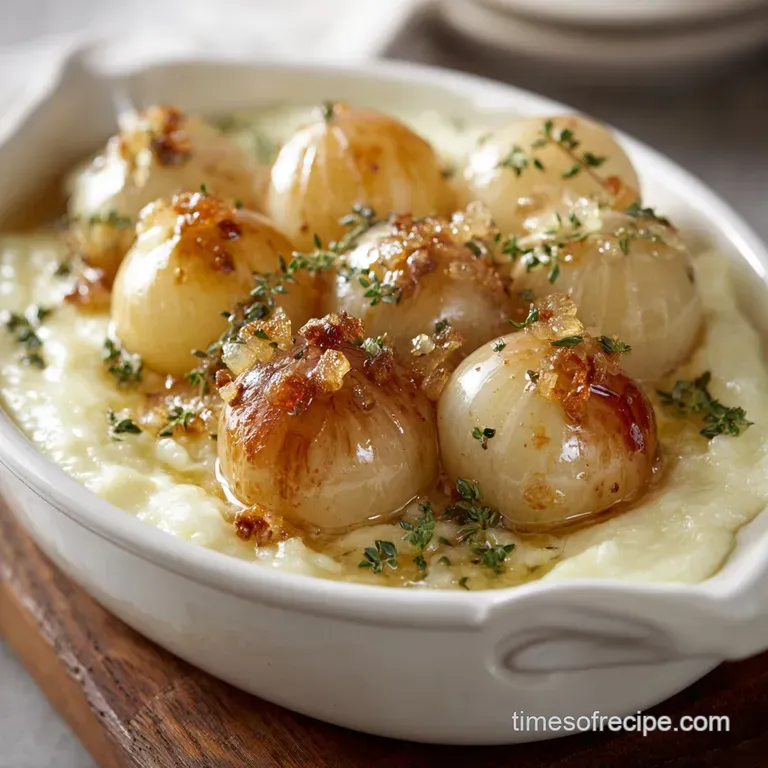
This dish hinges entirely on the successful execution of the béchamel sauce. The roux (equal parts fat and flour) creates an emulsifying starch matrix that stabilizes the milk, ensuring it doesn't separate. When the sauce thickens, the starch granules burst and trap the liquid.
Adding the cream after the initial thickening process ensures maximum richness without thinning the sauce, creating that beautiful, velvety texture we crave.
Troubleshooting and Expert Tips for Richer Creamed Onions
The Secret to a Velvety Smooth Béchamel Base
If you did end up with lumps (it happens to everyone, even me!), don't panic and try to whisk it out for 10 minutes. The fastest, most effective fix is to strain the sauce through a fine mesh sieve into a clean pot.
If you want to be ultra efficient, you can also hit it quickly with an immersion blender. No one needs to know your secret.
Achieving Optimum Onion Tenderness Through Blanching
A common mistake I once made was trying to cook the onions from raw directly in the cream sauce. Don’t do this! By the time the onions are tender, the sauce will have reduced into a thick, dry paste or potentially curdled.
Blanching them first ensures they are almost fully cooked before they ever touch the béchamel, preserving the sauce's glorious texture.
Avoiding Curdling: Temperature Control is Key
Dairy curdles when exposed to high, rapid heat or high acid (which isn't a factor here, thankfully). When you add the onions back to the sauce, keep the heat on low. Do not let the sauce boil rapidly.
Maintain a gentle simmer for the final heating stage, and your creamed onions will stay silky smooth.
Prep Ahead and Storage: Keeping Your Creamed Onions Fresh
Refrigeration Guidelines and Safe Reheating Methods
These are great for making ahead! You can cook the onions and the béchamel entirely, combine them, and cool the dish completely. Store the finished creamed onions in an airtight container in the refrigerator for up to 3 days. When reheating, the key is gentleness.
Reheat slowly in a saucepan over very low heat, stirring frequently, and add a tablespoon or two of extra milk or cream if the sauce seems too tight or dry.
Can You Freeze Creamed Dishes Without Separation?
Yes, but proceed with caution. Sauces made primarily with flour (like a proper béchamel) generally freeze better than pure cream sauces. However, the texture will change slightly upon thawing. If you must freeze them, cool them completely, freeze for up to 2 months, and thaw in the fridge overnight.
When reheating, do it very, very slowly, and be prepared to give the sauce a vigorous whisk to re-emulsify the fat, or add a small splash of fresh cream to restore the texture.
Perfect Pairings: What to Serve Alongside Creamed Pearl Onions
Creamed pearl onions are the perfect partner for any robust, rich main dish. Serve them alongside a perfectly roasted turkey or a high-quality steak. They also contrast beautifully with tangy, acidic side dishes think something with sharp vinegar notes.
For instance, if you're serving a rich pork shoulder, these are the ideal creamy counterpoint. They also provide a beautiful balance to dishes that involve intensely savory pickled flavors, like the fantastic pickled onions you find on top of a Dominican mangu. If you love that sharp flavor, you should seriously check out my recipe for Mangu: Authentic Dominican Mashed Plantains with Pickled Onions — it’s a completely different flavor profile, but equally satisfying.

Recipe FAQs
What is the best way to peel pearl onions efficiently?
Peeling is the most time consuming step, so preparation is key: trim the root and stem ends, then boil the onions for 60 seconds before plunging them into ice water. The sudden temperature shift helps loosen the skin, which should then slip right off when gently squeezed.
My béchamel sauce is too thick (or too thin). How can I fix the consistency?
If the sauce is too thick, whisk in a tablespoon of warm milk or cream at a time until you reach the desired velvety consistency. If it is too thin, create a small slurry of cornstarch and cold water, add it slowly while simmering, and whisk vigorously until the sauce thickens beautifully.
Can I make this Creamed Onion recipe dairy-free or vegan?
Yes, substitute the butter with a high-quality vegan butter substitute, and use unsweetened oat milk or cashew cream for the dairy base. Ensure you use a plant based flour or gluten-free rice flour to make the initial roux, maintaining the 1:1 ratio with the vegan fat.
Why do my creamed onions sometimes taste slightly bitter?
Bitterness usually occurs if the onions were sautéed too long at high heat before adding them to the sauce, or if the flour in the roux was not fully cooked out. To prevent this, ensure the onions are only blanched and focus on cooking the roux for at least two full minutes before incorporating the milk.
How should I store leftover creamed onions, and can I freeze them?
Leftover creamed onions can be stored tightly covered in the refrigerator for up to three days. Freezing is strongly discouraged because the béchamel sauce contains high fat and dairy content which tends to split and become grainy upon thawing and reheating.
Can I use larger slicing onions instead of the small pearl onions?
While you can substitute, the signature texture and sweetness of this dish rely on the small, whole pearl onions. If substituting, use small button onions or shallots, but be sure to quarter or halve them before blanching so they cook through evenly and soften appropriately.
What are the traditional British pairings for Creamed Pearl Onions?
These creamed onions are a quintessential staple alongside any grand Sunday Roast, pairing brilliantly with rich meats like prime roast beef, lamb, or game poultry. They also serve as an excellent, decadent side for grilled ham, elevated sausages, or simple holiday turkey.
Proper British Creamed Pearl Onions
Ingredients:
Instructions:
Nutrition Facts:
| Calories | 264 kcal |
|---|---|
| Protein | 6.6 g |
| Fat | 15.9 g |
| Carbs | 23.7 g |
