The Perfect Prime Rib Roast Recipe
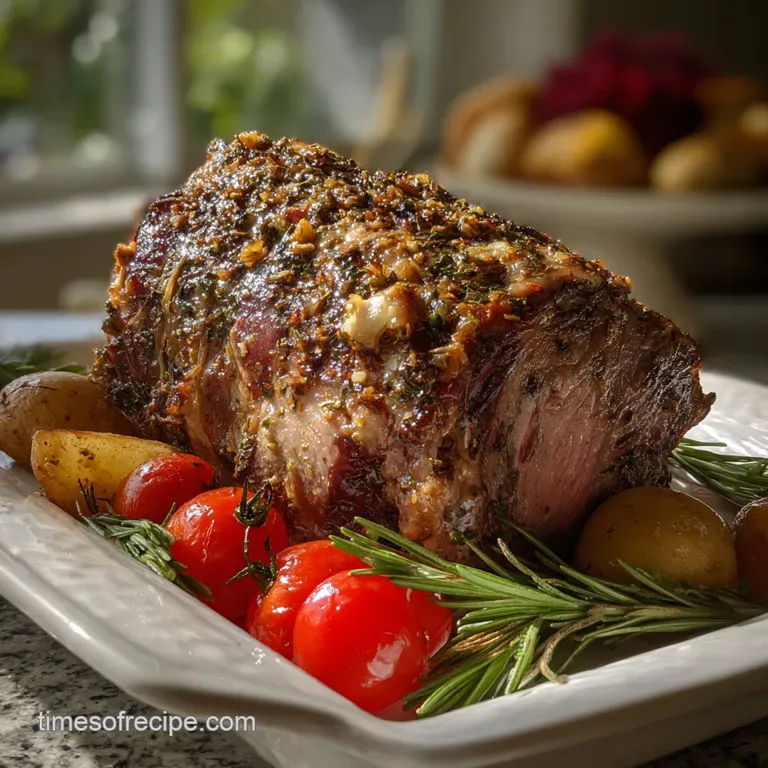
- Effort/Time: 3 hour 50 mins (Moderate effort)
- Flavor Hook: Herb-crusted exterior meets buttery, melt-in-your-mouth beef.
- Perfect for: Holiday gatherings and crowded tables.
- Achieving a Mahogany Crust on Your Holiday Rib Roast Recipe
- The Thermal Dynamics of Slow Roasting for Ultimate Tenderness
- Precision Metrics and Critical Checkpoints for Your Beef Feast
- The Essential Foundation: Sourcing Your Marbled Rib Roast Elements
- Necessary Culinary Artillery for a Successful Bone-In Roast
- The Systematic Execution of a Perfect Standing Rib Roast
- Navigating Thermal Failures and Rectifying Texture Issues
- ⚗️ The Scaling Lab: The Physics of Quantity
- Flavor Modifications and Practical Ingredient Substitutions for Rib Roasts
- Common Myths about Cooking Large Beef Cuts
- Preserving Quality and Managing Leftovers for Maximum Flavor
- Mastering the Presentation for Your Crowded Family Table
- Recipe FAQs
- 📝 Recipe Card
Achieving a Mahogany Crust on Your Holiday Rib Roast Recipe
There is nothing more gut-wrenching than pulling an 8 pound, $150 slab of beef out of the oven only to find it's a dry, gray disappointment with a rubbery exterior. I’ve lived that nightmare; the silence at a crowded table when the meat is tough is a sound you never forget.
We’ve all been there, staring at a massive investment of both money and time, praying the center isn’t as overcooked as the edges look.
Years ago, I destroyed a beautiful bone-in roast by following an old family "over high heat start" method that scorched the outside before the middle even reached room temperature. I ended up serving slices that were charred on the rim and raw in the dead center.
It was a humbling lesson in thermodynamics that forced me to rethink how heat moves through dense muscle fibers.
The secret to this rib roast recipe is the "Reverse Sear" combined with a heavy dry brine. By roasting at a low temperature first, we allow the enzymes to naturally tenderize the meat while keeping the protein denaturation gradual.
This results in a satisfying, edge-to-edge pink interior and a crust that crackles with every slice. Let’s get that oven preheated and build a meal that brings everyone back for seconds.
The Thermal Dynamics of Slow Roasting for Ultimate Tenderness
- Enzymatic Tenderization: Maintaining a low internal temperature for an extended period allows cathepsins (natural enzymes) to break down connective tissues before they tighten.
- Surface Dehydration: The dry brine pulls moisture from the surface, allowing the Maillard reaction to occur faster during the final over high heat blast.
- Uniform Heat Gradient: Low-temp roasting prevents the "bullseye" effect where the outer layers are overcooked while the center remains cold.
Precision Metrics and Critical Checkpoints for Your Beef Feast
| Checkpoint | Metric | Purpose |
|---|---|---|
| Internal Temperature (Pull) | 48°C (118°F) | Target for medium rare after carryover and searing |
| Resting Duration | 30 minutes | Allows fibers to reabsorb juices and stabilizes pressure |
| Oven Finish Temp | 260°C (500°F) | Triggers rapid Maillard reaction for a crisp crust |
The Essential Foundation: Sourcing Your Marbled Rib Roast Elements
To make the best rib roast recipe, the quality of your beef is paramount. I always look for a "Choice" or "Prime" grade with heavy intramuscular fat. That fat is where the hearty flavor lives, melting into the meat as it roasts.
- 1 bone-in Standing Rib Roast (approx. 8 lbs): Why this? Bones act as an insulator, slowing the cooking process for juicier meat.
- 3 tbsp Diamond Crystal Coarse Kosher salt: Why this? Larger grains dissolve slowly, creating a deep osmotic seasoning effect.
- 1/2 cup Unsalted butter, softened: Why this? Fat carries the herb aromatics into the nooks of the crust.
- 2 tbsp Extra virgin olive oil: Helps the butter spread and prevents the herbs from burning too quickly.
- 4 tbsp Fresh rosemary, finely minced: Provides a piney, savory backbone.
- 3 tbsp Fresh thyme, finely minced: Adds a subtle, earthy floral note.
- 6 cloves Garlic, grated: Grating creates a paste that emulsifies into the butter.
- 2 tbsp Coarsely ground black pepper: Adds a biting contrast to the rich fat.
Ingredient Chemistry Breakdown
| Ingredient | Chemical/Physical Role (Science) | The Pro Secret (Why This Matters) |
|---|---|---|
| Kosher Salt | Denatures surface proteins via osmosis | Draws out moisture, then reabsorbs seasoned brine for deep flavor. |
| Unsalted Butter | Fat-soluble flavor carrier | Aromatics in herbs are released more effectively in fat than water. |
| Beef Rib Roast | Collagen hydrolysis | Slow heat converts tough connective tissue into silky gelatin. |
Necessary Culinary Artillery for a Successful Bone-In Roast
You cannot wing a rib roast recipe with subpar tools. You need a heavy duty Lodge Cast Iron Roasting Pan or a thick stainless steel roasting pan that won't warp under high heat. A cheap, thin pan will cause the drippings to smoke and burn, ruining your chance at a satisfying jus.
Most importantly, get a ThermoWorks ChefAlarm or a similar leave-in digital thermometer. If you are guessing the temperature of an 8 pound roast based on time, you are gambling with your dinner.
You also need a sharp Wusthof Carving Knife to slice through the ribs cleanly without tearing the tender meat.
The Systematic Execution of a Perfect Standing Rib Roast
- Pat the beef dry with paper towels until the surface is completely matte.
- Apply 3 tbsp Kosher salt evenly over all sides, including the bone side and the fat cap.
- Refrigerate uncovered for at least 12 hours (up to 24) to let the salt penetrate and the skin air-dry.
- Mash 1/2 cup softened butter, olive oil, rosemary, thyme, garlic, and pepper into a thick paste.
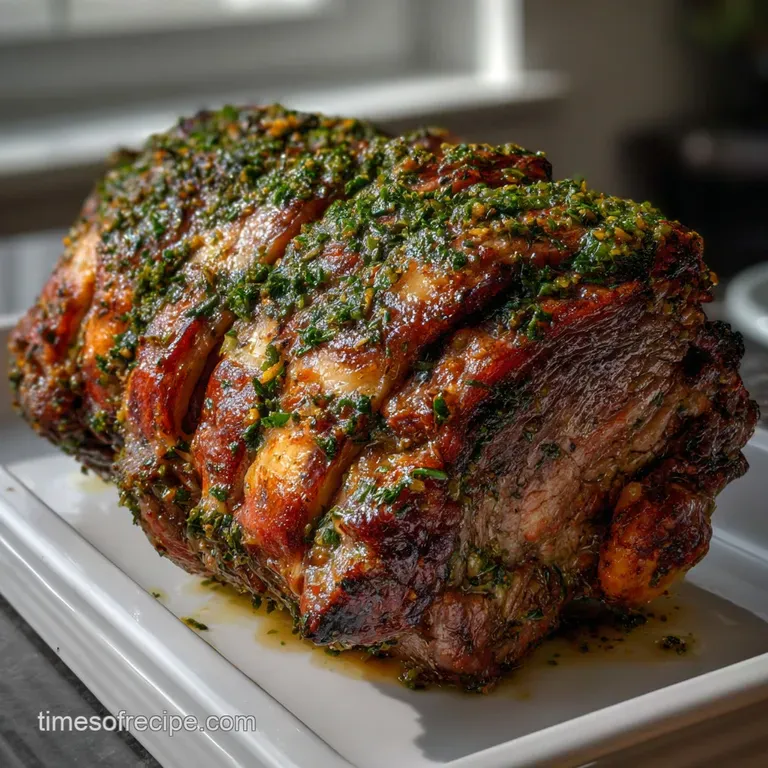
- Smear the herb butter over the entire roast until a thick, green flecked coating is formed.
- Roast at 120°C (250°F) in the center of the oven until the internal temperature hits 48°C (118°F).
- Remove from oven and tent loosely with foil for 30 minutes until the meat feels slightly firm to the touch.
- Crank the oven to 260°C (500°F) while the meat rests and the heat stabilizes.
- Return roast to oven for 6 10 minutes until the exterior is mahogany brown and the fat is sizzling and crackling.
- Slice immediately across the grain until the velvety, pink interior is revealed.
Navigating Thermal Failures and Rectifying Texture Issues
Why Your Roast is Gray and Tough
If your meat lacks that satisfying pink center, the oven was likely too hot. High heat causes the protein fibers to contract violently, squeezing out moisture and creating a rubbery texture. This is why a low and slow start is non-negotiable for a rib roast recipe.
| Problem | Root Cause | The Fix | Pro Protocol |
|---|---|---|---|
| Gray Ring of Meat | Temperature too high | Lower oven to 120°C | Use a leave-in thermometer to track progress. |
| Soggy Crust | Surface moisture | Dry brine for 24 hours | Salt early to draw out and evaporate water. |
| Burnt Garlic | over High heat too long | Watch the final sear | Pull the roast as soon as the butter stops foaming. |
⚗️ The Scaling Lab: The Physics of Quantity
When doubling this rib roast recipe for a massive holiday crowd, you must account for thermal mass. If you put two 8 pound roasts in one oven, the total moisture release doubles, which can create a steaming effect.
- The Evaporation Paradox: With two roasts, the humidity in the oven rises significantly. You may need to extend the initial roasting time by 20% to achieve the same surface dryness.
- Flavor Saturation: Do not double the salt to 6 tbsp if using two roasts in a small pan. Scale the salt and herbs to 1.5x first, as the close proximity of the meats will concentrate the seasoning in the drippings.
- Pan Crowding: Ensure at least 5cm of space between the roasts. If they touch, the sides will be gray and steamed rather than roasted and brown.
- Carry Over Heat: Two roasts in a pan hold more thermal energy. Pull them 2°C earlier than a single roast, as they will continue to cook longer while resting.
Flavor Modifications and Practical Ingredient Substitutions for Rib Roasts
| Original Ingredient | Substitute | Why It Works |
|---|---|---|
| Fresh Rosemary | Dried Rosemary (1 tbsp) | Concentrated oils. Note: Crush in your palm to release aromatics; slightly more bitter. |
| Unsalted Butter | Ghee (Clarified Butter) | Higher smoke point. Note: Better for the final sear, but lacks milk solid sweetness. |
| Kosher Salt | Sea Salt (Fine) | Similar salinity. Note: Use 20% less by volume to avoid over salting. |
Chef's Note: If you want a more pungent kick, fold 2 tbsp of prepared horseradish into the herb butter. It cuts through the rich fat of the rib roast recipe beautifully.
Common Myths about Cooking Large Beef Cuts
Myth: You must sear the meat first to "lock in the juices." Truth: Searing does not create a moisture barrier; in fact, high heat at the start often overcooks the outer layers.
The reverse sear method used in this rib roast recipe is scientifically proven to retain more moisture.
Myth: Taking the meat out of the fridge 2 hours early brings it to room temperature. Truth: A large 8 pound roast only moves a few degrees in two hours. It’s better to focus on the oven temperature than worrying about "tempering" the meat on the counter.
Preserving Quality and Managing Leftovers for Maximum Flavor
Store leftovers in an airtight container for up to 4 days. When reheating, do not use the microwave; it will turn your beautiful medium rare beef into gray rubber. Instead, place slices in a pan with a splash of beef stock, cover with foil, and warm at 120°C (250°F) until just heated through.
💡 ZERO WASTE PHILOSOPHY: Don't discard the rib bones! Transform: Simmer the bones with onions, carrots, and celery for 6 hours to create a deeply satisfying bone broth.
Science: The marrow and connective tissue release gelatin and minerals, providing a silky mouthfeel and intense umami that store-bought stocks can't touch.
Mastering the Presentation for Your Crowded Family Table
When it's time to serve this rib roast recipe, the presentation should be as hearty as the flavor. Serve it on a large wooden board to catch any stray juices. This roast is best accompanied by traditional, comforting sides that balance the richness of the beef.
- Classic Pairings: A side of creamy horseradish sauce and a splash of red wine jus made from the pan drippings.
- Gourmet Sides: This beef pairs perfectly with my Hoppin John recipe for a complete, lucky meal.
- Crowded Table Drinks: For a festive finish, offer a chilled glass of my homemade Eggnog Recipe to contrast the savory, salty crust of the beef.
The goal of this rib roast recipe is to create a moment of connection. When you bring that mahogany crusted beast to the table and the aroma of garlic and rosemary fills the room, you aren't just serving food; you're building a memory.
Enjoy the sizzle, the shatter of the crust, and the satisfied sighs of your guests.
Recipe FAQs
What internal temperature should the roast reach before I pull it out?
118°F (48°C) for medium rare. This low pull temperature accounts for significant carryover cooking during the 30-minute rest period. Always trust the thermometer over the clock for precision beef preparation.
Why must I dry brine the roast uncovered?
To maximize surface dehydration. Salt draws out moisture, and refrigeration allows that moisture to evaporate without reabsorbing, ensuring the surface is dry for the Maillard reaction. If you enjoyed mastering this surface preparation technique here, see how the same principle of evaporative drying applies to our Pandesal Recipe: Softest Classic Filipino Bread Rolls for perfect crust development.
Can I substitute the kosher salt with table salt?
No. Use diamond crystal coarse salt. Table salt is much finer, meaning you will oversalt the meat by volume because its density is higher. You must weigh salt if substituting finer grains to maintain seasoning accuracy.
How long should the roast rest after it comes out of the oven?
Rest for a full 30 minutes. Resting allows muscle fibers, tightened by heat, to relax and reabsorb the expelled internal moisture. Insufficient resting causes juices to flood the cutting board instead of staying in the meat.
Does searing first lock in the juices?
Myth: Searing first locks in juices. USDA science confirms searing creates no impenetrable moisture barrier; high initial heat only causes rapid protein contraction on the exterior. This reverse sear method cooks gently first for uniformity.
Should I use a thin aluminum pan for the drippings?
A heavy cast iron pan is required. Thin pans warp under high heat, causing drippings to burn and create acrid smoke that ruins the final flavor profile. Heavy pans retain steady heat for better fond development for your jus, similar to how a Gai Lan Chinese Broccoli: Restaurant Quality Oyster Sauce Recipe uses precise heat control for sauce consistency.
What happens if I skip the low-temperature roast phase?
The roast develops a severe gray ring. Rapid external heat cooks the outer layer too quickly, forming a thick band of overcooked meat surrounding the desirable pink center. This rapid temperature spike causes excessive protein denaturation before heat can penetrate evenly.
- Pull meat closer to 110°F initially
- Use a lower final oven temperature
- Ensure the meat is fully thawed before starting
Rib Roast Recipe Oven Finish
Ingredients:
Instructions:
Nutrition Facts:
| Calories | 865 kcal |
|---|---|
| Protein | 52 g |
| Fat | 72 g |
| Carbs | 1.5 g |
| Fiber | 0.4 g |
| Sugar | 0.1 g |
| Sodium | 980 mg |
