New Years Eve Dinner Idea with Roasted Beef Tenderloin
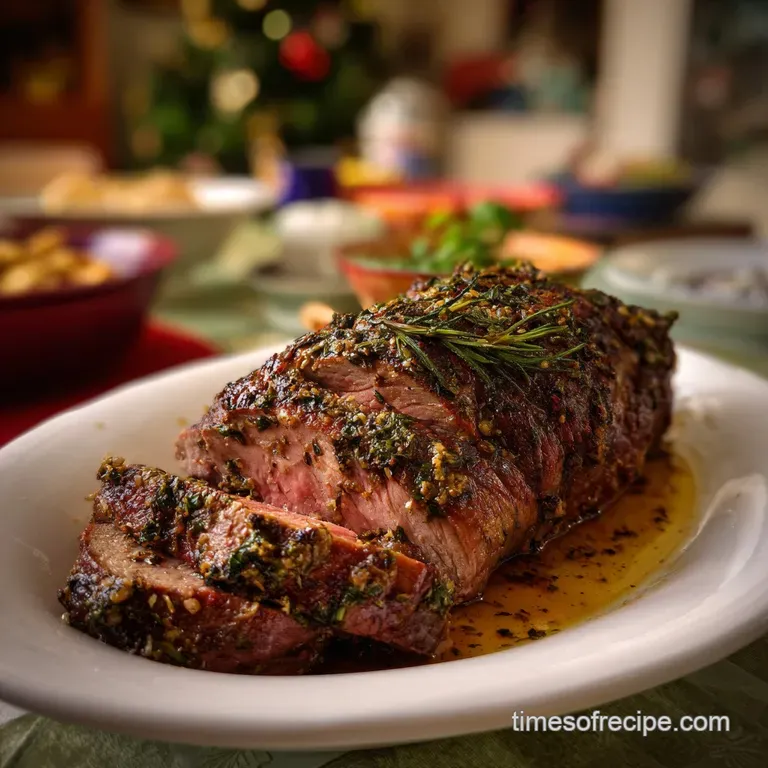
- Effort/Time: Low-effort prep, high-precision roasting (1 hour 20 mins total)
- Flavor Hook: Herb-infused garlic butter meets a deep, bone-broth-enriched red wine reduction.
- Perfect for: Crowd-pleasing holiday feasts and satisfying a hungry table.
- The Scientific Foundation of a Hearty New Years Eve Dinner Idea with Roasted Beef Tenderloin
- Precision Benchmarks for the Ultimate Holiday Roast
- The Hearty Pantry: Sourcing Elements for Maximum Flavor Impact
- Essential Tools for Achieving over High heat Crust and Tender Center
- Executing the Masterclass: The Workflow for a Crowded Table
- Common Pitfalls and How to Rescue Your Holiday Roast
- Flavor Architecture and Swap Options for Diverse Palates
- Preserving Your Satisfying Leftovers for the New Year
- Complementary Sides that Bring Families Together
- Recipe FAQs
- 📝 Recipe Card
There is nothing quite as gut-wrenching as pulling a 1.8 kg center cut roast out of the oven only to realize you’ve turned an expensive investment into a grey, leathery cylinder of disappointment.
I’ve been there standing in a kitchen filled with guests, staring at a roast that cost more than my first car’s tires, realizing it was bone dry because I ignored the thermodynamics of carryover cooking.
It’s a silent, expensive failure that haunts every home cook until they master the physics of the beef tenderloin.
I used to think that "more heat equals more flavor," a mistake that led me to incinerate the outside while the center remained a cold, purple mess. I’ve spent years tinkering with the ratio of salt-to-surface area and the exact timing of the Maillard reaction.
This New Years Eve Dinner Idea with Roasted Beef Tenderloin is the result of those failures, designed to provide a satisfying, hearty meal that actually brings families together rather than sending them reaching for the gravy boat to hide the dryness.
The scientific revelation came when I stopped treating the meat like a steak and started treating it like a delicate thermal mass. The secret isn't a "magic" rub; it's the osmotic pressure created by dry-brining and the enzymatic breakdown that happens during a proper rest.
By understanding how protein denaturation works, we can ensure every slice is velvety, mahogany colored, and dripping with concentrated beef flavor. Let's get into the mechanics of why this works.
The Scientific Foundation of a Hearty New Years Eve Dinner Idea with Roasted Beef Tenderloin
Success in the kitchen isn't about luck; it's about controlling chemical reactions. To master this New Years Eve Dinner Idea with Roasted Beef Tenderloin, you need to understand these three pillars:
- The Maillard Reaction: High heat (above 150°C) triggers a chemical reaction between amino acids and reducing sugars, creating hundreds of flavor compounds and that signature "shattering" crust.
- Protein Denaturation Zones: At 50°C (122°F), myosin proteins begin to coagulate, but if you push past 60°C (140°F), the collagen fibers contract sharply, squeezing out moisture and leaving you with a dry, satisfyingly ruined roast.
- Osmotic Pressure Management: Salting early (dry-brining) allows Kosher salt to dissolve into a brine, penetrate the muscle fibers via osmosis, and denature the proteins so they hold more water during the roast.
- Carryover Thermodynamics: Because of the roast's density, the exterior heat continues to migrate toward the cooler center even after it's removed from the oven, typically raising the temperature by 3°C to 5°C.
Precision Benchmarks for the Ultimate Holiday Roast
When you're planning a New Years Eve Dinner Idea with Roasted Beef Tenderloin, you need exact numbers. Vague "cook until done" instructions lead to disaster. These metrics are the guardrails for your holiday meal.
| Metric | Value | Significance |
|---|---|---|
| Target Pull Temperature | 49°C (120°F) | Ensures a medium rare finish after carryover cooking. |
| Resting Duration | 15 minutes | Allows muscle fibers to relax and reabsorb internal juices. |
| Searing Surface Temp | 200°C+ | Required to initiate the Maillard reaction without overcooking the core. |
| Salt Ratio | 2 tsp per 1.8 kg | Optimal concentration for deep tissue seasoning without curing. |
The Hearty Pantry: Sourcing Elements for Maximum Flavor Impact
A hearty New Years Eve Dinner Idea with Roasted Beef Tenderloin depends entirely on the quality of your elements. We aren't looking for "elegant" garnishes; we want bold, satisfying flavors that stand up to a crowded table.
- 4 lbs Center Cut Beef Tenderloin: Why this? Lean but incredibly tender muscle (Psoas major) with minimal connective tissue. Ensure it is trimmed of silver skin and tied with butcher’s twine to maintain a uniform cylinder for even heat distribution.
- 2 tsp Diamond Crystal Kosher Salt: Why this? Large, hollow flakes provide better surface coverage and slower dissolution than table salt.
- 4 tbsp Unsalted Butter: Why this? High fat content emulsifies with meat juices for a velvety mouthfeel.
- 1 cup Beef Bone Broth: Why this? High collagen content provides natural body and viscosity to the pan sauce.
- 1/2 cup Dry Red Wine: Why this? Tartaric acid cuts through the richness of the beef fat while deglazing the fond.
- 1 tsp Dijon Mustard: Why this? Acts as a natural emulsifier (lecithin) to bind the herb rub and the sauce.
Ingredient Chemistry Breakdown
| Ingredient | Chemical/Physical Role (Science) | The Pro Secret (Why This Matters) |
|---|---|---|
| Kosher Salt | Osmotic pressure regulator | Draws out moisture, dissolves, then pulls seasoned brine back into the fibers for deep flavor. |
| Fresh Rosemary | Fat-soluble volatile oils | Heat releases pinene and camphene, which bond with the beef fat during the roast. |
| Red Wine | Acidic deglazer | Alcohol dissolves flavor compounds that water can't, while acid balances the heavy lipids. |
| Cold Butter | Emulsification agent | Adding cold fat to hot liquid at the end creates a stable, glossy emulsion (monter au beurre). |
Essential Tools for Achieving over High heat Crust and Tender Center
You don't need a professional kitchen, but a few specific pieces of gear will make or break your New Years Eve Dinner Idea with Roasted Beef Tenderloin.
- Lodge Cast Iron Skillet (12 inch): This is your primary weapon. The high thermal mass of cast iron prevents the temperature from dropping when the cold meat hits the pan, ensuring a rapid sear.
- Digital Instant Read Thermometer: Non-negotiable. Guessing the internal temperature of a $100 roast is the fastest way to ruin a New Year's Eve.
- Heavy Duty Wire Rack and Sheet Pan: Elevating the meat allows hot air to circulate 360 degrees, preventing the bottom from steaming in its own juices.
- Butcher's Twine: Essential for tying the tenderloin into a uniform shape. If one end is thinner than the other, you'll have one half overcooked and the other raw.
Executing the Masterclass: The Workflow for a Crowded Table
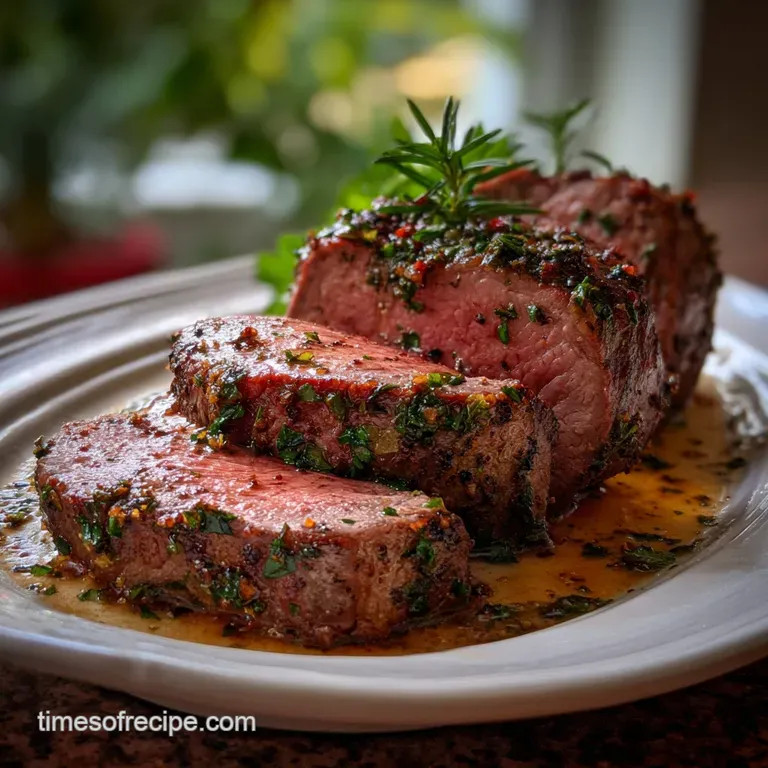
Follow these steps exactly. This New Years Eve Dinner Idea with Roasted Beef Tenderloin relies on the sequence of heat application.
- Pat the beef dry. Use paper towels until the surface is bone dry to prevent steam from blocking the Maillard reaction.
- Tie the roast. Space butcher's twine every 2.5 cm to create a uniform cylinder.
- Season aggressively. Coat with 2 tsp Kosher salt and 1 tsp black pepper, letting it sit for 30 minutes to initiate osmosis.
- Heat the oil. Add 2 tbsp neutral oil to a Lodge Cast Iron Skillet over high heat until the first wisps of smoke appear.
- Sear the beef. Brown for 2 minutes per side until a deep mahogany crust forms and the meat releases easily from the pan.
- Apply the herb rub. Mix 4 tbsp butter, 4 cloves garlic, rosemary, thyme, and 1 tsp Dijon mustard, then slather over the seared meat.
- Roast at 225°F (107°C). Place on a wire rack in the oven for about 45 60 minutes until the internal temperature hits exactly 49°C (120°F).
- Deglaze the skillet. While the meat roasts, add 1/2 cup red wine to the searing pan until the liquid reduces by half and smells fruity/sharp.
- Finish the sauce. Whisk in 1 cup beef bone broth and simmer for 10 minutes until it coats the back of a spoon.
- Rest the meat. Remove from oven and let sit on a cutting board for 15 minutes until juices settle and the internal temp peaks at 54°C (130°F).
- Mount the sauce. Whisk in 1 tbsp cold unsalted butter until the sauce becomes glossy and velvety.
Chef's Tip: Freeze your 1 tbsp of cold butter for 10 minutes before whisking it into the sauce. The extreme temperature difference helps create a tighter, more stable emulsion that won't break on the plate.
Common Pitfalls and How to Rescue Your Holiday Roast
Even with a great New Years Eve Dinner Idea with Roasted Beef Tenderloin, things can go sideways if you lose focus.
Why Your Roasted Beef Tenderloin is Grey and Mushy
If your meat lacks a crust and looks grey, it's likely due to surface moisture or a crowded pan. When water sits on the surface, the heat energy goes into evaporating that water (latent heat of vaporization) instead of browning the meat.
| Problem | Root Cause | The Fix | Pro Protocol |
|---|---|---|---|
| No Crust | Surface moisture | Pat dry with paper towels | Dry-brine uncovered in the fridge for 2 hours before cooking. |
| Uneven Doneness | Tapered shape | Tie with twine | Fold the thin "tail" of the tenderloin under itself before tying to ensure uniform thickness. |
| Broken Sauce | Boiled too hard after butter | Emulsion failure | Remove from heat before whisking in cold butter; never let it boil again. |
This technique is just as vital as the one used in our New Years Eve recipe, where temperature control is the difference between a hearty meal and a disappointment.
Flavor Architecture and Swap Options for Diverse Palates
This New Years Eve Dinner Idea with Roasted Beef Tenderloin is versatile. While the herb butter crust is classic, you can adjust the components based on what's in your pantry.
| Original Ingredient | Substitute | Why It Works |
|---|---|---|
| Dijon Mustard | Whole Grain Mustard | Adds texture and a more pungent, rustic flavor profile. |
| Beef Bone Broth | Mushroom Stock | Earthy umami notes that complement the beef without being too heavy. |
| Red Wine | Pomegranate Juice + 1 tsp Vinegar | Provides the necessary acidity and sugar for reduction without alcohol. |
| Rosemary/Thyme | Sage and Oregano | Creates a more savory, "woodsy" profile perfect for cold weather. |
If you are looking for a different vibe, perhaps a Cocktail to Elevate recipe would pair perfectly with these bold, savory flavors.
⚗️ The Scaling Lab: The Physics of Quantity
When doubling this New Years Eve Dinner Idea with Roasted Beef Tenderloin for a very crowded table, you cannot simply double the time.
- The Square Cube Law: Two 4 lb roasts have the same surface area-to-volume ratio as one, but if you tie them together into one giant 8 lb roast, the center will take 40% longer to cook, likely resulting in charred ends. Always cook two separate roasts rather than one giant one.
- Pan Crowding: Searing two roasts in one skillet will drop the temperature too fast. Sauté in batches to maintain the 200°C+ surface temp needed for the Maillard reaction.
- Carry Over Caution: A larger mass of meat holds more thermal energy. If you are roasting a particularly thick cut, pull it 2 degrees earlier (47°C) as the carryover will be more aggressive.
Preserving Your Satisfying Leftovers for the New Year
If you actually have leftovers from this New Years Eve Dinner Idea with Roasted Beef Tenderloin, treat them with respect. Beef tenderloin is lean, meaning it dries out instantly if reheated improperly.
- Fridge: Store in an airtight container for up to 3 days. The flavor actually deepens as the herb butter solidifies.
- Freezing: Not recommended for the whole roast as ice crystals damage the delicate muscle fibers. If you must, slice it first and freeze in a vacuum sealed bag for up to 2 months.
- Reheating: Avoid the microwave at all costs. Place slices in a pan with a splash of beef broth, cover with foil, and warm in a 120°C (250°F) oven until just warm to the touch.
💡 ZERO WASTE PHILOSOPHY: Don't discard the beef trimmings or the fat in the pan. Transform: Sauté the silver skin and trimmings with onions to create a base for a future New Year s recipe. Science: The connective tissue in the trimmings is rich in collagen, which transforms into gelatin, providing a silky mouthfeel to any stew or soup.
Complementary Sides that Bring Families Together
A hearty New Years Eve Dinner Idea with Roasted Beef Tenderloin needs sides that can handle the richness of the red wine sauce. Think of a "Flavor Map" where you balance the heavy beef with something bright or starchy.
- The Contrast Factor:
- Rich/Savory: The Beef Tenderloin and Red Wine Sauce.
- Crisp/Fresh: A bright arugula salad with lemon vinaigrette.
- Starchy/Satisfying: Garlic mashed potatoes or a wild rice pilaf.
- Decision Shortcut:
- If you want a classic feel, serve with horseradish cream and mashed potatoes.
- If you want maximum crunch, go with roasted root vegetables.
- If you want less effort, a simple crusty baguette to mop up the pan sauce is unbeatable.
Debunking Common Beef Myths
Myth: Searing "locks in the juices." Truth: Searing creates flavor via the Maillard reaction, but it actually causes the surface to lose moisture. The "juiciness" comes from proper internal temperature and resting, not the crust.
Myth: You should bring meat to room temperature before cooking. Truth: Scientific testing shows that 30 minutes on the counter does almost nothing to the internal temperature of a thick roast. It's much more important to ensure the surface is dry.
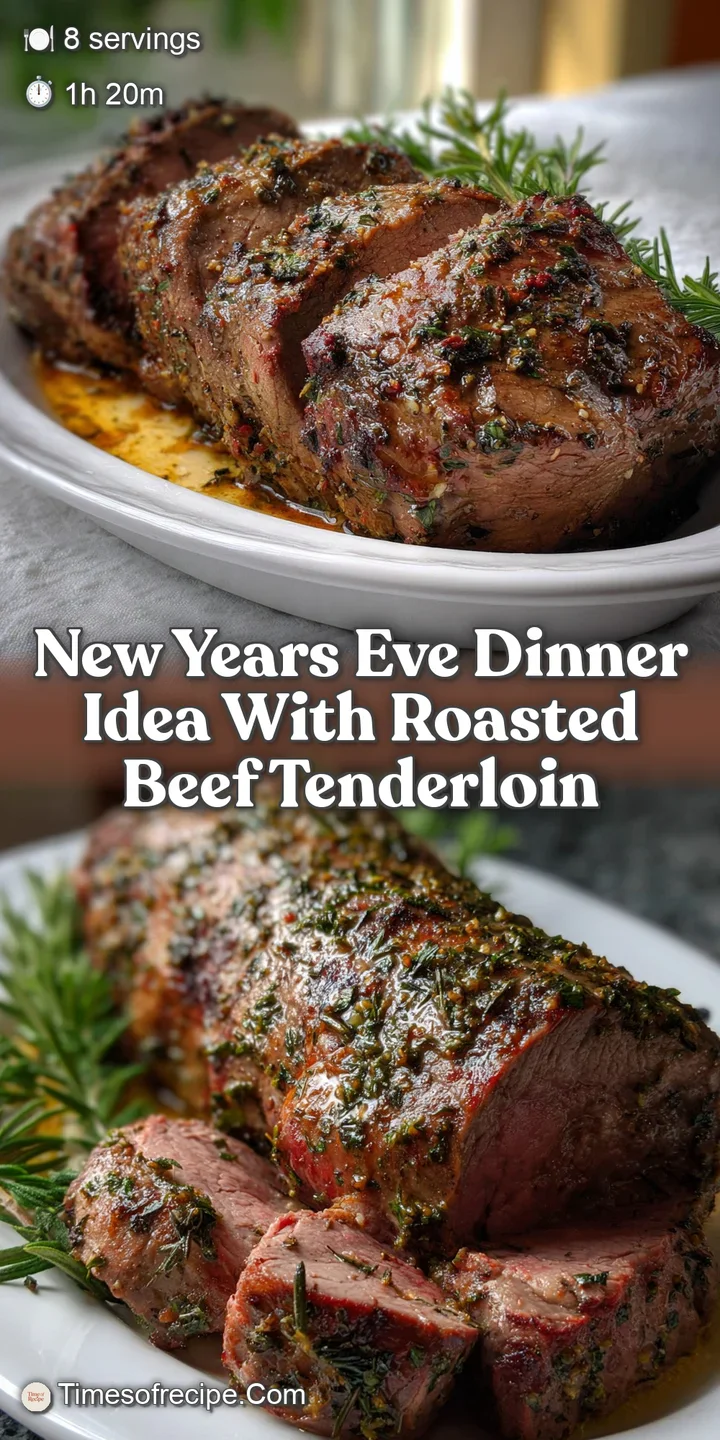
This New Years Eve Dinner Idea with Roasted Beef Tenderloin is more than just a meal; it’s a centerpiece that rewards precision and heartiness. By focusing on the thermodynamics of the roast and the chemistry of the sauce, you ensure a satisfying start to the new year.
Now, grab that cast iron and let's get to work.
Recipe FAQs
What is the absolute minimum rest time required before slicing the tenderloin?
15 minutes is crucial for juice redistribution. The residual heat continues to cook the center post oven, and resting allows contracted muscle fibers to relax and reabsorb moisture.
- Pull roast at 120°F internal
- Tent loosely with foil
- Avoid carving too early
Can I skip the high heat sear entirely to save time?
No. Searing initiates the Maillard reaction for superior flavor. Without intense, dry heat, the exterior remains dull and lacks the complex, browned amino acid compounds that define a great roast. This is the same principle required for excellent crust development on Prime Rib Roast: Ultimate Reverse Seared Perfection.
Why is my pan sauce grainy even after whisking the butter in?
Boiling the sauce too hard after adding cold butter causes emulsion breakage. The rapid increase in temperature denatures the lecithin in the butterfat, preventing it from binding evenly with the aqueous broth, resulting in separation.
- Remove pan from heat before adding butter
- Whisk vigorously off the direct flame
- Ensure the butter is rock hard and cold
Is using Kosher salt better than iodized table salt for the dry brine?
Kosher salt provides better surface adhesion for controlled seasoning. Iodized table salt contains anti caking agents and has a much smaller, denser crystal structure, leading to higher sodium density by volume.
If you switch to table salt, you must significantly reduce the quantity to avoid overly curing the meat.
Can I substitute the beef broth in the pan sauce with just water?
No. Broth provides necessary gelatin for sauce body and viscosity. Water evaporates without imparting the gelatin, collagen, and fat components that create a rich, spoon coating reduction when deglazing the fond.
Myth: Wrapping the roast in foil while cooking keeps it moist.
Myth: Wrapping the roast in foil keeps it moist. Reality: Foil traps steam, which prevents the surface from achieving the Maillard reaction crust. This results in a steamed, pale exterior rather than a mahogany sear, despite the interior moisture.
Myth: The final temperature is achieved immediately upon removal from the oven.
Myth: The final temperature is achieved immediately upon removal from the oven. Reality: The internal temperature continues to rise by 3°C to 5°C (carryover cooking) as heat migrates from the exterior to the center.
You must pull the roast early to compensate for this thermodynamic reality.
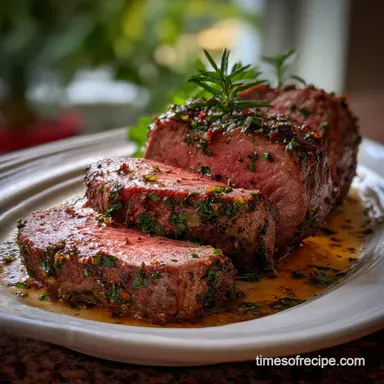
Roasted Beef Tenderloin Nye Dinner
Ingredients:
Instructions:
Nutrition Facts:
| Calories | 612 kcal |
|---|---|
| Protein | 51 g |
| Fat | 43 g |
| Carbs | 1.2 g |
| Fiber | 0.2 g |
| Sugar | 0.4 g |
| Sodium | 658 mg |
