Twice Baked Potato Casserole: the Ultimate Comfort Feast
- Why the Twice-Baked Potato Casserole is the Ultimate Comfort Dish
- Essential Ingredients and Expert Notes on Dairy Selection
- The Science of "Twice Baked": Maximizing Creaminess and Crust
- Detailed Method: Building the Ultimate Potato Casserole
- Mastering the Baked Potato Dish: Chef’s Tips and Avoiding Common Pitfalls
- Prep Ahead Strategies and Storing Leftovers Safely
- What to Serve Alongside Your Creamy Potato Bake
- Recipe FAQs
- 📝 Recipe Card
Why the Twice Baked Potato Casserole is the Ultimate Comfort Dish
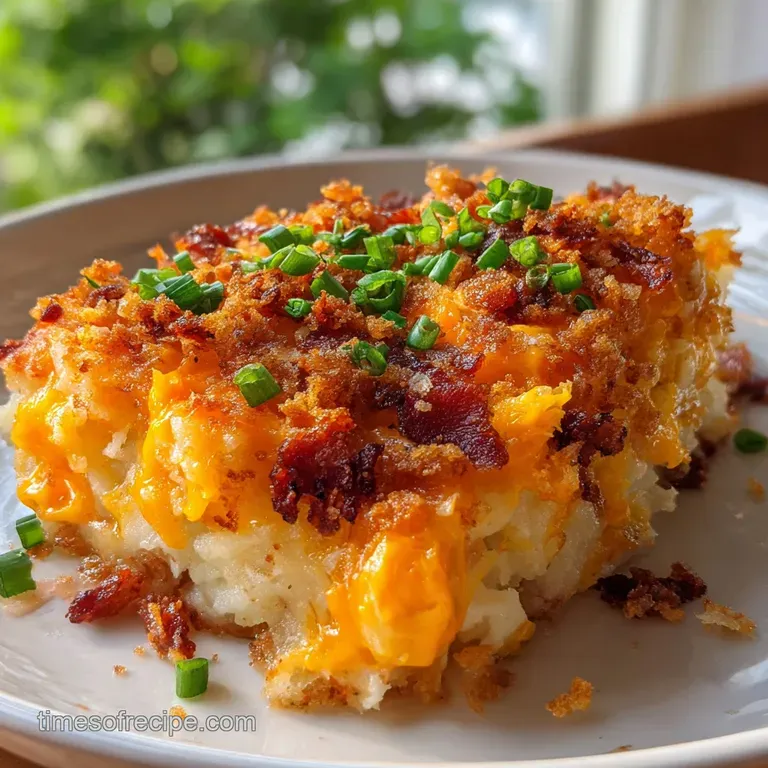
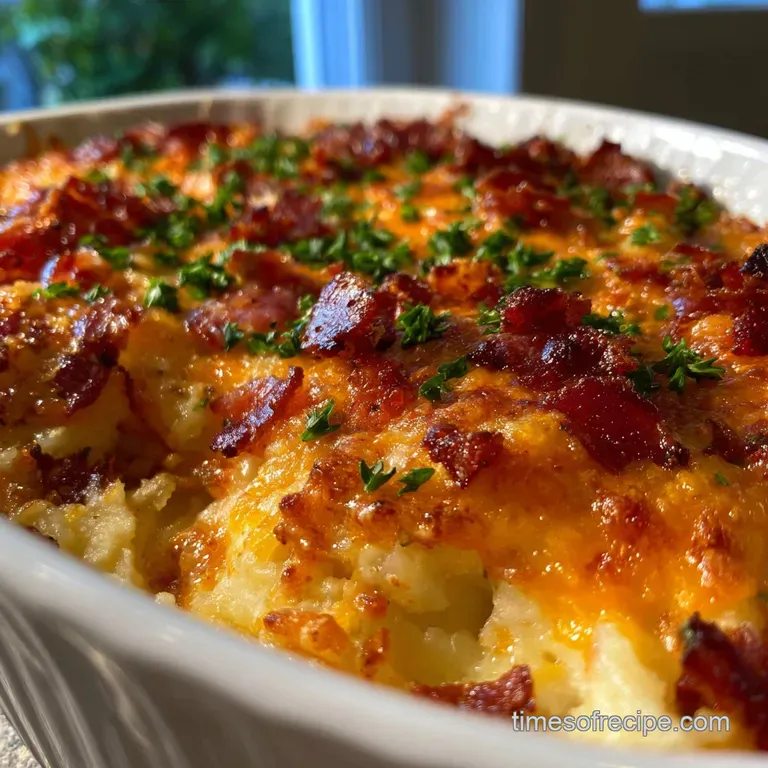
The moment this comes out of the oven, your whole kitchen smells like a glorious blend of smoked bacon, sharp cheddar, and baked earthiness. It’s that deep, satisfying, rich aroma that signals dinner is serious business tonight. That perfectly golden, crispy topping is just begging for a fork.
Trust me, the Twice Baked Potato Casserole is the only potato side dish that truly matters when you’re feeding a crowd.
Making individual twice baked potatoes is a fiddly nightmare, especially when you have 12 people coming over. Who has time to hollow out 12 tiny potato canoes? Nobody, that's who! This brilliant, scaled-up baked potato casserole recipe takes all the fluffy, creamy flavor we adore and dumps it into one simple 9x13 dish.
It’s a total lifesaver for holidays or whenever you need an easy casserole recipe that looks and tastes expensive.
I’ve spent years tweaking the ratios of butter and sour cream yes, there is science involved to ensure this version is truly decadent, never dry, and perfectly cheesy. Get ready, because once you try my method, you’ll never go back to boring mash again.
This is how we make the best Twice Baked Potato Casserole at home.
Defining the Difference: Casserole vs. Individual Potatoes
The core flavour profile remains identical, incorporating fluffy potato flesh, dairy, cheese, and salty bacon. However, the casserole version is inherently more efficient. Instead of worrying about ripping delicate potato skins while scooping, you can just attack your baked potatoes with gusto, knowing they are simply going to the discard pile.
On top of that,, consolidating all the filling means the moisture level is much easier to control, resulting in a uniformly creamy texture across the entire dish.
A History of Hearty Carbs: Why Baked Potato Dishes Endure
Potatoes are the ultimate culinary canvas, aren't they? They're cheap, they store forever, and they are universally loved. Think about the classic potato salad or even a fantastic potato side dish like Bacalhau à Brás: Creamy Salt Cod Crispy Potato Scramble ; potatoes always manage to steal the show. This Twice Baked Potato Casserole concept just proves that when you combine a simple, hearty vegetable with enough fat and cheese, the result is always going to be a nostalgic winner. It’s the ultimate comfort food tradition, scaled up.
Planning for the Feast: Yield and Preparation Time Overview
This recipe is designed to serve eight very hungry people as a hearty side dish. While the hands-on prep is quick maybe 20 minutes max you must respect the initial baking time of the potatoes.
Don't rush the first bake, or you'll end up with dense, slightly rubbery bits in your filling. Patience is key when preparing this perfect Twice Baked Potato Casserole .
Essential Ingredients and Expert Notes on Dairy Selection
To get that iconic, rich texture, you cannot skimp on the quality of your fats and starches. Everything needs to contribute flavor and creaminess. This is not a low-fat endeavor, and that’s precisely why it’s so good.
Choosing the Right Potato Variety (Russet vs. Yukon Gold)
You must use Russet potatoes for this recipe, full stop. Russets are high in starch and low in moisture, which means when baked, they become incredibly light and fluffy. Yukon Golds, while buttery, are too waxy and high in moisture; if you try to whip them into a filling, they tend to turn sticky or gluey.
We want cloud like fluff, not library paste.
Upgrading Your Cheese: Sharpness Matters
Do not buy pre-shredded cheese! I learned that lesson the hard way. Pre-shredded bags contain stabilizers (like cellulose) which prevent them from melting smoothly, making the whole Baked Potato Casserole a little less luxurious. Use a high-quality, sharp white or yellow Cheddar.
The sharpness provides the necessary tang to cut through the richness of the butter and sour cream.
Bacon Inclusion: Preparation and Quantity Notes
Thick cut, smoky bacon is essential here. You need enough to deliver a satisfying crunch and salty bite throughout the fluffy filling. Cook it until it’s crisp, not just chewy, and drain it thoroughly on paper towels. Pro Tip: Reserve the bacon fat!
You can use a teaspoon of it to grease your baking dish for an added layer of smoky flavor.
Dairy Substitutions for a Lighter Texture
Sometimes you don't have exactly what the recipe calls for, and that’s okay! Making delicious food shouldn't be stressful.
| Ingredient Needed | Viable Substitute | Notes on Texture |
|---|---|---|
| Sour Cream | Full fat Greek Yogurt or Crème Fraîche | Greek yogurt adds a sharper tang. Crème Fraîche is richer and more subtle. |
| Whole Milk | Heavy Cream (for maximum richness) | Heavy cream makes the mixture exceptionally fudgy; reduce butter slightly. |
| Whole Milk | Buttermilk (if you like tang) | Buttermilk adds a lovely acidity that brightens the flavour of the Potato Casserole . |
The Science of "Twice Baked": Maximizing Creaminess and Crust
The name says it all, doesn’t it? The magic of the Twice Baked Potato Casserole is in the two-step cooking process. The first bake dehydrates the potato, turning the starch light and airy the key to a fluffy texture.
The second bake melts the cheese, heats the dairy through, and sets that crust. You need that crunchy, bubbling top layer to contrast with the silky interior. If you skip the second bake and just reheat leftovers, you miss out on that vital textural contrast.
Crucial Insight: The potato flesh must be mixed with warm or room temperature dairy and fat. If you dump cold butter and sour cream into the mash, it immediately cools and stiffens the starch, forcing you to over mix to compensate.
This is what leads to that awful, gluey texture we all dread.
Detailed Method: Building the Ultimate Potato Casserole
Let’s crack on and get this gorgeous dish assembled. Remember to work quickly once the potatoes are out of the oven!
Achieving the Perfect Fluffy Interior Texture
This is where my previous mistake comes in. I once tried to use my stand mixer, thinking it would make the job easier. It turned the whole batch into wallpaper paste! Potatoes, especially Russets, release starch rapidly when agitated. Use a potato ricer, which gently separates the fibers.
If you don't own one, use a hand masher, but don't overwork it. We want to whip air into the filling, not beat it into submission.
How Sour Cream and Butter Create Stability
Sour cream and melted butter (or softened butter) provide necessary fat and moisture. They coat the starch granules, preventing them from linking up and becoming gluey. The butter adds richness, while the sour cream adds the slight, acidic tang that keeps the final dish from tasting flat or overwhelmingly heavy.
The warmed milk helps thin the mixture just enough to make it spreadable, achieving perfect easy twice baked potatoes inside a dish.
Phase 1: Preparing and Baking the Hulls (The First Bake)
Preheat your oven until it is screaming hot 400°F (200°C) is ideal. Scrub those Russets well, poke them a few times to allow steam to escape, and rub them with oil and salt. This process is key to getting a thick, perfectly baked shell and an incredibly dry, fluffy interior.
Bake them until the skin is wrinkled and crispy and they feel soft when squeezed gently.
Phase 2: Whipping the Filling (Maximizing Air and Volume)
Once the potatoes are cool enough to handle, slice them quickly and scoop out the flesh. Now, get that potato ricer out! Push the flesh through directly into your mixing bowl. Add the softened butter, warm milk, and room temperature sour cream.
Gently fold, incorporating the fats until the mixture looks like very thick pancake batter. Now, you can add your cheese, chives, and bacon. Season aggressively with salt and white pepper. Taste it, and don't be shy about adding more salt than you think you need.
Phase 3: Layering, Topping, and the Second Bake
Grease your baking dish (remember that bacon fat tip?). Scoop the filling in, spreading it evenly but gently don't press it down too hard, as we want to keep that air incorporated. Top with the reserved cheese and bacon. The cheese will melt beautifully, and the bacon will turn crunchy and dark.
Bake for about 30 minutes, or until you see the edges bubbling happily. The sound of the cheese sizzling is your cue that this magnificent Twice Baked Potato Casserole is nearly ready.
Mastering the Baked Potato Dish: Chef’s Tips and Avoiding Common Pitfalls
We all make mistakes, particularly when dealing with starch. Here are the big pitfalls I’ve encountered when making this Potato Casserole recipe over the years.
Preventing a Grainy or Watery Filling
This usually happens for two reasons: undercooked potatoes or cold dairy. If the potatoes aren't fully cooked during the first bake, they won't mash smoothly, leading to tiny, grainy hard bits. If your milk and sour cream are fridge cold, they stiffen the starch.
The Fix: Always ensure the potatoes are fully baked, and always warm your milk slightly before adding.
The Secret to a Golden, Crispy Topping
A perfect topping requires two things: fat and high heat. Don't skimp on the cheese on top, and make sure you use high-quality, full fat dairy in the filling. If you want next level crispness, sprinkle a few tablespoons of Parmesan cheese or Panko breadcrumbs mixed with melted butter over the Cheddar just before the second bake.
This gives that satisfying 'shatter' when your fork hits it.
Troubleshooting Undercooked Potatoes
If you cut into your finished Baked Potato Casserole and find the filling is still slightly dense or lukewarm in the center, your oven wasn't hot enough, or you baked it from cold without enough time.
The Fix: Cover the casserole loosely with foil and return it to a 375°F (190°C) oven for another 10– 15 minutes. The foil traps the steam, heating the interior without burning the crust.
Prep Ahead Strategies and Storing Leftovers Safely
Can You Assemble the Casserole the Night Before?
You absolutely can! This is one of the best easy casserole recipes for entertaining. Assemble the entire casserole (up to the point of the final bake) and cover it tightly with plastic wrap, then foil. Refrigerate for up to 24 hours.
Crucial: Add 15– 20 minutes to your final bake time if cooking from cold. You need to ensure the interior reaches 165°F (74°C) before the cheese topping burns.
Freezing the Twice Baked Potato Casserole for Future Meals
Yes, this freezes beautifully. This recipe is an ideal make-ahead dish. Assemble it in a foil pan (perfect for freezing), leave off the final layer of cheese, and wrap it tightly in multiple layers of plastic wrap and foil. It will keep for up to three months.
Thaw overnight in the fridge, then top with cheese and bacon right before the second bake.
Best Practices for Reheating Individual Portions
For the best texture, skip the microwave. Microwave reheating often results in a soggy bottom layer. Instead, scoop a portion onto an oven safe plate and bake at 350°F (175°C) for 10– 15 minutes. This ensures the topping re-crisps beautifully.
What to Serve Alongside Your Creamy Potato Bake
Because this Twice Baked Potato Casserole is so rich, you want bright, fresh, or lean partners. I always pair it with something green and sharp. A simple grilled pork tenderloin or a lean roasted chicken works wonders. If you're looking for another equally comforting side, my fluffy Carrot Souffle: The Fluffy Southern Living Casserole Recipe offers a sweet and airy counterpoint. And if you need a truly epic starter for brunch guests, I recommend preparing my Breakfast Casserole: make-ahead English Muffin Bake the night before.
This glorious, cheesy Twice Baked Potato Casserole recipe is truly the ultimate side dish. It delivers on every promise: creamy, cheesy, smoky, and utterly comforting. Enjoy the oohs and aahs when you bring this masterpiece to the table you earned them.

Recipe FAQs
Can I prepare the Twice Baked Potato Casserole ahead of time?
Absolutely, this casserole is perfect for making ahead, which is often easier when cooking for a crowd. Assemble the entire mixture in the baking dish, cover tightly with plastic wrap or foil, and refrigerate for up to 24 hours.
When ready to bake, remove it from the fridge 30 minutes prior to baking, and then add an extra 15 to 20 minutes to the total bake time since the casserole will be cold.
Why is my Twice Baked Potato Casserole dry or too crumbly?
Dryness usually stems from having insufficient moisture, either from using too few wet ingredients or over mixing the potato flesh. Over mixing releases excessive starch, leading to a gluey or dry texture.
If your mixture seems stiff, stir in an extra splash of milk or half and-half until it reaches a very creamy, loose consistency before transferring it to the baking dish for the second bake.
Can I use a potato variety other than Russet?
While you can use other potatoes, Russets are highly recommended because their high starch content yields the fluffiest, driest interior needed for this preparation. This results in an airy casserole texture.
If you opt for waxier varieties like Yukon Gold, the final casserole will be noticeably denser and creamier, but still delicious, depending on your texture preference.
How do I make this casserole vegetarian, since the standard recipe includes bacon?
Making this dish vegetarian is straightforward simply omit the bacon completely. For a smoky flavor replacement, incorporate a teaspoon of smoked paprika into the potato mixture.
Alternatively, replace the bacon texture with sautéed caramelized onions or sun-dried tomatoes, which add depth and chewiness to the filling.
Can this casserole be frozen, and how should I reheat it?
Yes, this casserole freezes exceptionally well. Once the casserole is fully baked and completely cooled, wrap it tightly in plastic wrap, followed by a layer of heavy duty aluminum foil, and freeze for up to 3 months.
To reheat, thaw the casserole overnight in the refrigerator. Remove the plastic, cover with foil, and bake at 350°F (175°C) for about 30 45 minutes, uncovering for the last 10 minutes until hot and the top is golden.
What are good substitutes for sharp Cheddar and sour cream?
You have several excellent substitutions for the creamy elements. Gruyère or Monterey Jack are great alternatives to Cheddar, as they melt beautifully and offer a nutty flavor profile.
If swapping sour cream, plain full fat Greek yogurt or cream cheese (thinned slightly with milk) will achieve the required moisture and tanginess. Ensure all substitutions are full fat for the best richness.
How can I ensure my potatoes are fluffy after the first bake?
The key to fluffiness is allowing moisture to escape during the first bake. Always pierce the potato skins multiple times and bake them directly on the oven rack, not wrapped in foil.
Wrapping them causes the potato to steam, resulting in a wet, dense interior. Baking uncovered ensures the moisture evaporates, leaving you with dry, airy flesh perfect for mixing.
Ultimate Twice Baked Potato Casserole
Ingredients:
Instructions:
Nutrition Facts:
| Calories | 1191 kcal |
|---|---|
| Protein | 56.5 g |
| Fat | 98.1 g |
| Carbs | 9.5 g |
