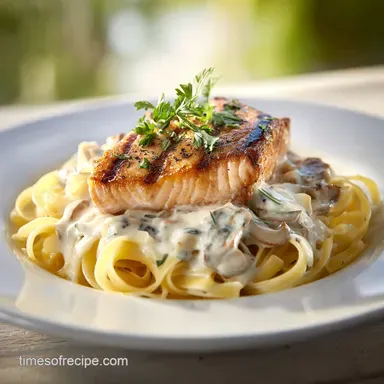
Creamy Salmon Pasta with Garlic
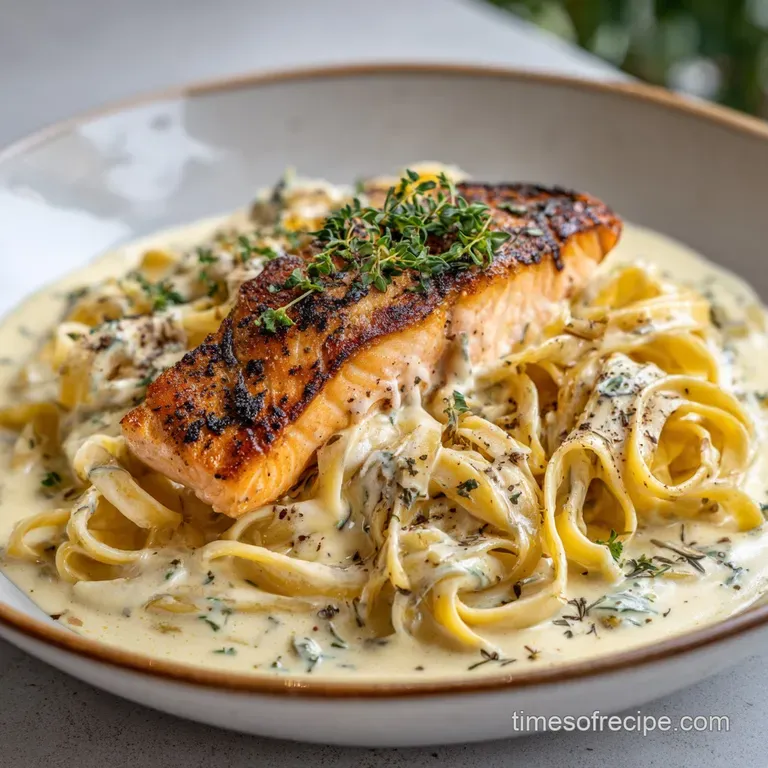
- Time: 10 min prep + 15 min cook = Total 25 minutes
- Flavor/Texture Hook: Golden crusted salmon meets a silky, zesty garlic cream
- Perfect for: A high impact weeknight dinner that feels like a date night
- Creamy Salmon Pasta Recipe Made in 25 Minutes with Garlic
- Making the Flavors Pop
- Quick Look at Details
- The Ingredient List
- Tools You'll Need
- Step by Step Method
- Avoiding Common Mistakes
- Troubleshooting Common Issues
- Different Ways to Make It
- Storage and Zero Waste
- Best Side Pairings
- Recipe FAQs
- 📝 Recipe Card
Creamy Salmon Pasta Recipe Made in 25 Minutes with Garlic
The smell of butter foaming in a pan always takes me back to my grandmother's kitchen, where the air was thick with the scent of toasted garlic and simmering cream. There is something so comforting about a rich pasta dish, but for the longest time, I struggled to get salmon and cream to play nice together.
I used to overcook the fish until it was dry, or the sauce would separate into a greasy mess the second the pasta hit the pan. It was a frustrating cycle of "almost there" that usually ended with a dinner that felt too heavy and a fish that tasted like cardboard.
But then I started paying attention to the contrast. The secret isn't just in the cream, it's in the bright, sharp hit of lemon and the sizzle of a proper sear. I remember one rainy Tuesday when I was exhausted and just wanted something hearty.
I decided to stop treating the salmon like a poached addition and instead treated it like a steak, searing it hard and letting it rest. When I folded that golden crusted fish into a zesty garlic sauce, everything clicked. Try this Creamy Salmon Pasta Recipe Made in 25 Minutes with Garlic for a fast and delicious meal.
This dish is all about the balance between the bold, savory notes of the Parmesan and the bright, acidic lift of the lemon. You get the richness of the heavy cream, but the lemon zest keeps it from feeling overwhelming.
It's the kind of meal that makes your house smell like a bistro and satisfies that craving for comfort without spending hours at the stove. Whether you're cooking for a partner or just treating yourself after a long shift, this is the one that always hits the spot.
Making the Flavors Pop
When you're rushing through a meal in under half an hour, you have to rely on a few basic rules of heat and fat to get a deep flavor profile. I've learned the hard way that if you just throw everything in a pot, you end up with a bland, mushy result. To make this really sing, we focus on building layers.
We start with the salmon, which leaves behind those flavorful oils that become the base for the garlic and butter.
- Bold
- Sautéed garlic and aged Parmesan cheese.
- Rich
- Full fat heavy cream and unsalted butter.
- Bright
- Freshly squeezed lemon juice and zest.
- Earthy
- Wilted baby spinach and a pinch of nutmeg.
The Fat Bond: Butter and cream bind together with the starch from the pasta water to create a cohesive sauce. This prevents the sauce from sliding off the noodles and instead makes it cling to every strand.
The Acid Balance: Lemon juice breaks down the heavy lipids in the cream and salmon. This brightens the overall profile, making the dish taste light despite the rich ingredients.
The Searing Effect: Cooking the salmon at a high temperature creates a browned crust. This adds a nutty, toasted depth that you just can't get from poaching or baking.
The Starch Secret: Reserved pasta water contains gelatinized starches. These act as a natural bridge between the oil based fats and the water based cream.
| Method | Time | Texture | Best For |
|---|---|---|---|
| Fast (This Recipe) | 25 minutes | Velvety and crisp | Weeknight dinners |
| Classic (Slow Simmer) | 60 minutes | Thicker and fused | Sunday feasts |
| Poached (Low Heat) | 40 minutes | Soft and delicate | Light lunches |
Quick Look at Details
I used to be terrified of making "fancy" pasta because I thought it required a degree in French cooking. Honestly, once you understand how the components interact, it's basically just timing. The key here is that we aren't cooking the salmon in the sauce. We sear it, set it aside, and then build the sauce.
This ensures the fish stays moist and doesn't break apart into tiny flakes that get lost in the cream.
According to USDA FoodData, salmon is packed with Omega-3 fatty acids, which makes it a hearty choice for a main course. When you pair that with the protein in the pasta and the calcium from the Parmesan, you've got a satisfying meal that keeps you full for hours. I've found that using a wide skillet is the most important tool choice here, as it gives the salmon enough room to sear without steaming.
The Ingredient List
I'm a big believer in using real butter and full fat cream. I've tried the low-fat versions, and trust me, the sauce just doesn't have that same silky mouthfeel. It ends up looking grainy and tasting thin.
If you're looking for something a bit different, you can always swap the spinach for kale or peas, but the baby spinach is my go to because it wilts so quickly.
- 545 g salmon fillets, skin on or skinless Why this? High fat content keeps the fish moist during a fast sear
- 15 ml olive oil Why this? High smoke point for the initial sear
- 3 g kosher salt Why this? Coarser grains are easier to distribute evenly
- 1 g cracked black pepper Why this? Freshly cracked adds a floral heat
- 42 g unsalted butter Why this? Provides a nutty base for the garlic
- 20 g garlic, minced Why this? Essential for that bold, aromatic punch
- 240 ml heavy cream Why this? Creates the velvety texture and stability
- 75 g grated Parmesan cheese Why this? Adds salty, umami depth
- 15 ml fresh lemon juice Why this? Cuts through the fat with acidity
- 2 g lemon zest Why this? Provides a bright, citrusy aroma
- 30 g fresh baby spinach (optional) Why this? Adds a pop of color and earthiness
- 1 g nutmeg (optional) Why this? Secret ingredient for depth in cream sauces
- 340 g fettuccine or linguine Why this? Flat noodles hold the cream sauce better
- 15 ml salt (for boiling water) Why this? Seasons the pasta from the inside out
- 60 ml reserved pasta water Why this? The "glue" that binds the sauce
| Original Ingredient | Substitute | Why It Works |
|---|---|---|
| Heavy Cream (240ml) | Full fat Coconut Milk (240ml) | Similar fat content. Note: Adds a tropical, nutty flavor |
| Fettuccine (340g) | Penne or Rigatoni (340g) | Holds sauce in the center. Note: Changes the mouthfeel to be chunkier |
| Parmesan (75g) | Pecorino Romano (75g) | Similar saltiness. Note: More pungent and sharp than Parmesan |
| Salmon (545g) | Trout Fillets (545g) | Similar flavor profile. Note: Slightly milder and more delicate |
Right then, let's talk about the tools. You don't need a professional kitchen, but a heavy bottomed skillet is non negotiable. If you use a thin pan, the butter will burn before the garlic softens, and you'll end up with bitter brown bits in your sauce.
I personally use a stainless steel pan, but a non stick one works fine too, though you might lose a bit of that deep golden crust on the fish.
Tools You'll Need
- Large Pot: For boiling the pasta.
- 12 inch Skillet: Stainless steel or non stick for searing.
- Tongs: To flip the salmon without breaking it.
- Whisk: To ensure the Parmesan integrates smoothly into the cream.
- Paper Towels: Crucial for drying the fish.
- Microplane or Zester: To get that fine lemon zest.
Step by step Method
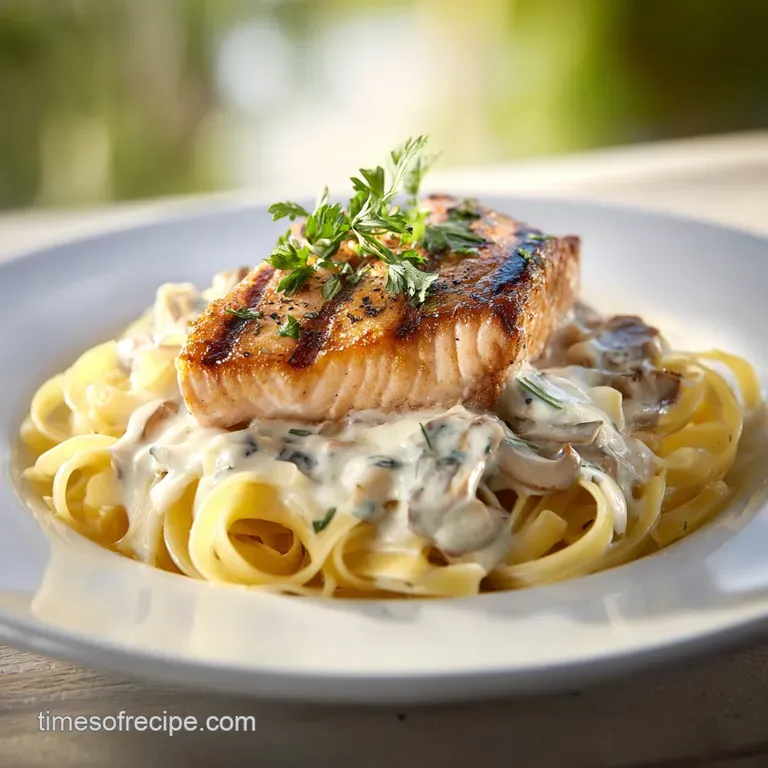
The most important part of this whole process is the timing. You want the pasta to finish right as the sauce is reaching its peak thickness. If the pasta sits too long, it gets gummy. If the sauce sits too long, it becomes a thick paste. It's a dance, but once you've done it a few times, it's second nature.
1. The Pasta Foundation
Bring a large pot of salted water to a boil. Add the 340 g of fettuccine or linguine. Cook for 1 minute less than the package instructions for 'al dente.' This is key because the pasta will finish cooking in the sauce. Before you drain the pot, scoop out 60 ml of the cloudy pasta water. Set it aside.
Note: This starchy water is the secret to a silky finish.
2. Searing the Salmon
Pat the 545 g of salmon fillets bone dry with paper towels. Season with 3 g of salt and 1 g of pepper. Heat 15 ml of olive oil in the skillet over medium high heat until it starts shimmering. Place the salmon in the pan and sear for 3-4 minutes per side until a deep golden crust forms.
Remove the salmon and let it rest on a plate. Note: Patting the fish dry prevents steaming and ensures a shatter crisp exterior.
3. Building the Garlic Cream
Reduce the skillet heat to medium. Melt 42 g of unsalted butter in the remaining salmon oils. Add 20 g of minced garlic and sauté for 30-60 seconds until it smells fragrant but hasn't browned.
Pour in 240 ml of heavy cream and bring to a gentle simmer for 2-3 minutes until it slightly thickens.
4. The Final Emulsion
Stir in 75 g of Parmesan cheese, 15 ml of lemon juice, and 2 g of lemon zest, whisking until the cheese is melted and the sauce is smooth. Fold in 30 g of baby spinach and 1 g of nutmeg until the leaves have just wilted. Toss in the cooked pasta and the reserved pasta water, stirring for 1 minute.
Note: The pasta water helps the sauce coat the noodles evenly.
5. Plating
Divide the pasta into four bowls. Place a seared salmon fillet on top of each mound of noodles. Garnish with extra zest or a sprinkle of fresh parsley if you're feeling fancy.
Chef's Tip: To get an even better sear, freeze your butter for 10 minutes before adding it to the pan. It prevents the butter from separating too quickly and gives the garlic a more consistent toast.
Also, try adding a pinch of espresso powder to the salmon seasoning for an earthy depth that complements the cream.
Avoiding Common Mistakes
Even for experienced cooks, cream sauces can be temperamental. The most common issue I see is the sauce "breaking," which is when the fat separates from the liquid and you get oily streaks on your pasta. This usually happens if the heat is too high or if the cheese isn't incorporated slowly.
If this happens, don't panic a splash of that reserved pasta water and a vigorous whisk can usually bring it back together.
Troubleshooting Common Issues
| Issue | Solution |
|---|---|
| Why Your Sauce Split | If the sauce looks curdled or oily, it's likely due to overheating. When cream hits a boiling point for too long, the emulsion breaks. You can usually fix this by removing the pan from the heat and wh |
| Why Your Salmon is Dry | Overcooking salmon is the easiest mistake to make. Salmon continues to cook even after it leaves the pan this is called carryover cooking. If you cook it until it looks "done" in the pan, it will be o |
| Why the Sauce is Bland | If the dish tastes "flat," it's usually a lack of acidity or salt. Cream and butter are heavy, and they can mask the flavors of the garlic and fish. A final squeeze of fresh lemon juice right before s |
Mistakes Checklist:
- ✓ Did you pat the salmon completely dry?
- ✓ Is the pasta slightly undercooked (al dente)?
- ✓ Did you save the pasta water before draining?
- ✓ Did you whisk the cheese in on medium heat?
- ✓ Did you let the salmon rest before plating?
Different Ways to Make It
Depending on what you have in your fridge, this recipe is surprisingly flexible. I often find myself tweaking the greens based on the season. In the winter, I'll swap the spinach for sautéed leeks or frozen peas.
If you want something with more of a punch, you can add a teaspoon of capers or some diced sun dried tomatoes to the garlic butter.
The Smoked Salmon Twist
If you don't have fresh fillets, you can use smoked salmon. In this case, skip the searing step entirely. Stir the smoked salmon ribbons into the sauce at the very end, just before the pasta. Because smoked salmon is already cured, it doesn't need heat; it just needs to be warmed through.
The Zesty Mediterranean Edge
For a brighter, more herbal version, add 5 g of chopped fresh dill and 5 g of parsley to the final toss. This gives it a fresh, garden like quality that pairs beautifully with the richness of the cream. If you enjoy this flavor profile, you might also love my Marry Me Salmon which uses a similar cream based approach.
The Low Carb Alternative
To make this keto friendly, swap the fettuccine for zoodles (zucchini noodles) or spaghetti squash. Since zoodles release a lot of water, don't use the pasta water. Instead, sauté the zoodles separately and toss them in the sauce for only 30 seconds to prevent them from becoming mushy.
The dairy-free Swap
Use a full fat coconut milk and a nutritional yeast substitute for the Parmesan. While the flavor will be different, the creamy texture remains. Note that coconut milk can separate more easily than heavy cream, so keep the heat strictly on medium.
| Goal | Change | Result |
|---|---|---|
| More Tang | Add 1 tsp Dijon mustard | Sharper, more complex sauce |
| Extra Heat | Add red pepper flakes | Subtle warmth to cut the cream |
| More Veggies | Add sliced mushrooms | Heartier, earthier meal |
Storage and Zero Waste
Pasta with cream sauce isn't always the best for leftovers because the noodles tend to absorb all the liquid as they sit in the fridge. However, if you store it correctly, it's still great the next day. The key is to add a little bit of extra cream or milk when reheating to bring back that velvety texture.
Storage Guidelines:Fridge: Store in an airtight container for up to 3 days. Freezer: I don't recommend freezing this dish. The cream sauce often splits upon thawing, and the salmon can become rubbery.
- Salmon Scraps
- If you trim your fillets, save the scraps in a bag in the freezer. Once you have enough, simmer them with water and onion to make a quick fish stock for risotto.
- Lemon Peels
- After zesting, don't toss the lemon. Use the juice for the recipe, then freeze the remaining peel in ice cube trays with a bit of water to use for future cocktails or tea.
- Pasta Water
- If you have extra starchy water, use it to thicken other sauces or even use it to water your plants (once cooled), as the starch can be beneficial.
Best Side Pairings
Since this is a rich, creamy meal, you want sides that provide a crisp or acidic contrast. A heavy side would make the meal feel too weighted down. I usually go for something green and bright to balance the palate.
- Roasted Asparagus
- A quick roast with olive oil and lemon juice mirrors the flavors in the pasta.
- Arugula Salad
- A simple mix of arugula, shaved Parmesan, and a balsamic glaze provides a peppery bite that cuts through the cream.
- Garlic Bread
- If you're feeling truly indulgent, a piece of toasted sourdough with garlic butter is a classic choice for mopping up the leftover sauce.
- Blanched Broccoli
- Steamed or blanched broccoli florets add a nice crunch and extra nutrients to the plate.
Right then, that's it! You've got everything you need to make a restaurant quality meal in your own kitchen. The Creamy Salmon Pasta Recipe Made in 25 Minutes with Garlic is all about confidence don't be afraid of the heat when searing that fish, and don't be afraid to add a bit more lemon if it needs a lift.
Happy cooking!
Recipe FAQs
Can I use a different pasta than fettuccine?
Yes, linguine is an excellent alternative. Both shapes are ideal for clinging to a heavy cream sauce without breaking.
How to keep the salmon from drying out?
Remove the fillets from the pan slightly before they look fully done. They continue to cook via carryover heat while resting, ensuring a moist center.
How to fix the sauce if it looks curdled or oily?
Remove the pan from the heat immediately. Whisk in a small amount of the reserved pasta water to help re-emulsify the fats and cream.
Can I freeze this creamy salmon pasta for later?
No, it is not recommended. The cream sauce typically splits upon thawing, and the salmon often becomes rubbery.
Is it true I should cook the salmon until it is completely opaque in the pan?
No, this is a common misconception. Cooking it to full opacity in the skillet leads to overcooking once the fish rests.
How to stop the sauce from turning into a thick paste?
Stir in the reserved pasta water during the final toss. The starch in the water thins the sauce while helping it coat the noodles evenly.
What is the best side dish for this pasta?
A crusty garlic bread or a light arugula salad pairs best. If you enjoyed the rich, creamy texture here, you can apply that same luxury to your bread with whipped butter.
Creamy Garlic Salmon Pasta