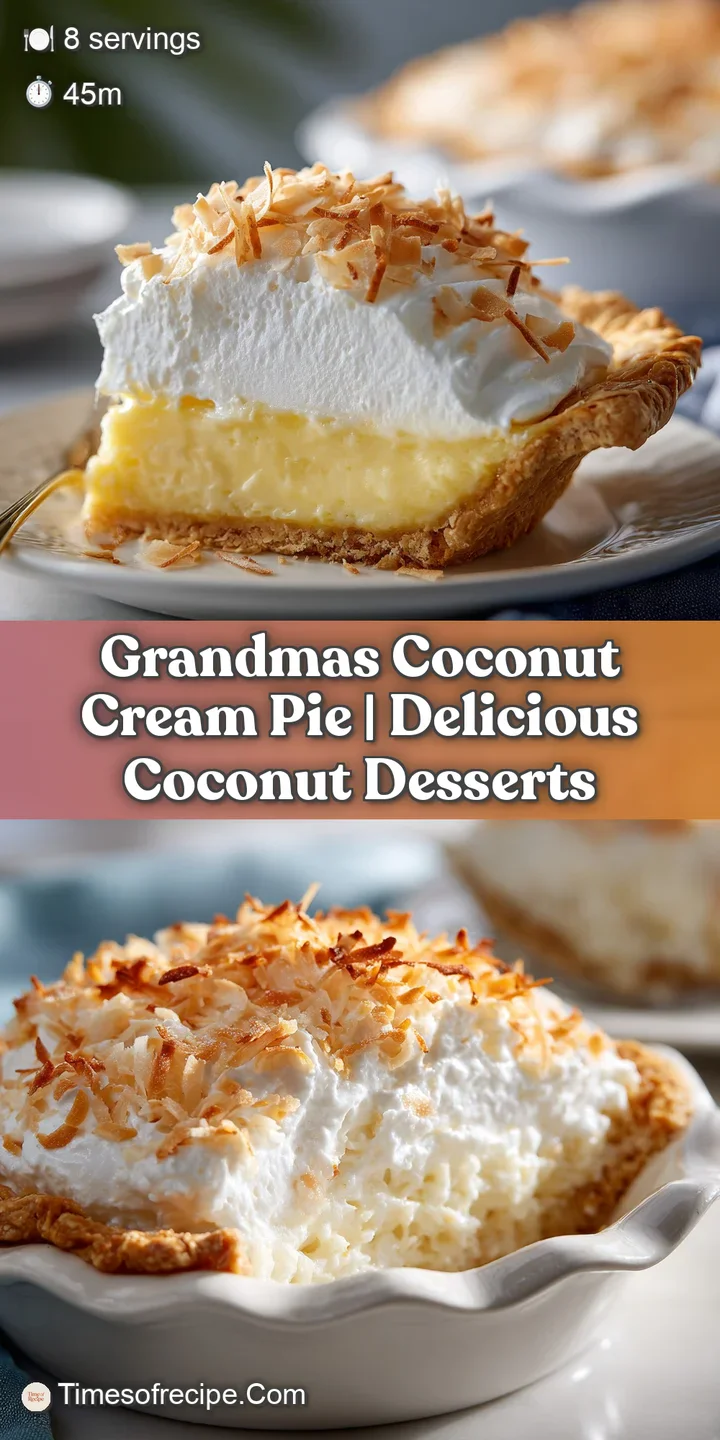
Grandmas Coconut Cream Pie
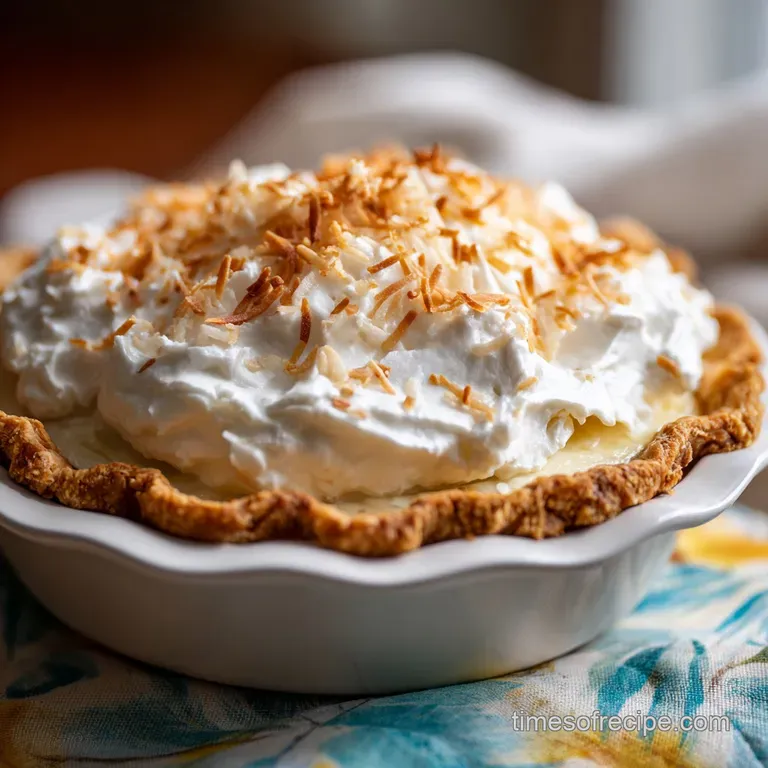
- Time: Active 25 minutes, Passive 20 minutes, Total 45 minutes
- Flavor/Texture Hook: Velvety custard paired with a crisp, buttery flake
- Perfect for: Sunday family dinners or elegant holiday gatherings
- The Secrets to Grandmas Coconut Cream Pie
- Magic Behind the Velvety Custard
- Component Analysis and Science
- Selecting Quality Elements and Swaps
- Essential Kitchen Tools Needed
- Step-by-Step Success Guide
- Troubleshooting Common Problems
- Scaling for Any Occasion
- Debunking Old Kitchen Myths
- Storage and Zero Waste Secrets
- Elegant Presentation Techniques
- Recipe FAQs
- 📝 Recipe Card
The Secrets to Grandmas Coconut Cream Pie
The moment you pull this pie from the oven, the kitchen fills with the scent of toasted coconut and browned butter, a fragrance that instantly pulls me back to my grandmother’s sun drenched breakfast nook.
I remember watching her hands move with a rhythmic grace, tossing cubes of frozen butter into flour until they looked like coarse crumbs, her eyes always fixed on the texture rather than the clock. It wasn't just about baking; it was about creating a moment of pure, sugary magic that could stop time.
We often think of heritage baking as something complicated or out of reach, but the truth is, this grandmas coconut cream pie relies on simple physics and high-quality elements. The contrast between the cold, crisp crust and the warm, billowy meringue is what makes it unforgettable.
We've all had those grocery store pies that are gummy or tasteless, but once you experience the shatter of a homemade crust against a velvety, egg rich filling, there's absolutely no going back.
Magic Behind the Velvety Custard
- Starch Gelatinization
- Cornstarch granules must reach 175°F to fully hydrate and swell, creating the thick, stable structure needed for a clean slice.
- Emulsification Stability
- Tempering the room temperature egg yolks prevents them from curdling, ensuring the fat and liquid bond into a smooth, seamless texture.
- Water Evaporation
- Using frozen butter in the crust creates steam pockets during baking, which physically lift the dough into distinct, flaky layers.
| Method | Prep Time | Difficulty | Best For |
|---|---|---|---|
| Traditional Scratch | 25 mins | Moderate | Authentic flavor and texture |
| Pre made Crust | 10 mins | Easy | Quick weeknight cravings |
| No Bake Variation | 20 mins | Easy | Hot summer days (no oven) |
When you are deciding which route to take, remember that the scratch method provides a depth of flavor that shortcuts simply cannot replicate. The way the grass fed butter interacts with the flour creates a foundation that is both sturdy and delicate.
This attention to detail is what separates a standard dessert from a true showstopper.
Component Analysis and Science
| Ingredient | Science Role | Pro Secret |
|---|---|---|
| Unsalted Butter (0.5 cup) | Creates steam for flakiness | Cube and freeze for 20 mins before mixing |
| Egg Yolks (4 large) | Provides lecithin for emulsification | Ensure they are room temp to avoid shocking the milk |
| Cornstarch (0.25 cup) | Thickens through starch swelling | Whisk into cold sugar first to prevent lumps |
| Whole Milk (2 cups) | Acts as the primary hydration base | Use full fat for the most luxurious mouthfeel |
Understanding these components allows you to manipulate the final result to your liking. For instance, the ratio of fat in the whole milk is crucial; if you were to swap it for skim, you'd lose that characteristic richness that makes the filling feel so indulgent. Similar to the creamy base used in our Boston Cream Cheesecake Recipe, the custard here relies on the slow cook to reach its potential.
Selecting Quality Elements and Swaps
To achieve the best results, you need 1.5 cups of all purpose flour and 0.5 cup of unsalted grass fed butter for the crust. The filling demands 2 cups of whole milk, 0.5 cup of granulated cane sugar, and exactly 0.25 cup of cornstarch for the set.
Don't forget the 1.5 cups of unsweetened shredded coconut using unsweetened is key to controlling the sugar levels. For the crowning glory, you'll need 4 large egg whites and 0.25 cup of superfine sugar to create those iconic peaks.
| Original Ingredient | Substitute | Why It Works |
|---|---|---|
| Whole Milk | Full fat Coconut Milk | Adds a tropical punch; same fat content. |
| All purpose Flour | 1 to-1 GF Flour Blend | Works well for crusts, though slightly more fragile. |
| Granulated Sugar | Coconut Sugar | Adds a caramel like depth; darkens the filling color. |
| Unsalted Butter | Shortening | Higher melting point; yields a very flaky but less flavorful crust. |
Using high-quality vanilla and almond extracts (1 tsp and 0.5 tsp respectively) adds an aromatic layer that bridges the gap between the coconut and the dairy. If you are looking for a different kind of sweet project after this one, the Mackinac Island Fudge recipe offers a wonderful lesson in sugar crystallization.
Essential Kitchen Tools Needed
You don't need a professional kitchen to make a stunning pie, but a few specific items make the process much smoother. A heavy bottomed saucepan is vital for the custard to ensure even heat distribution and prevent scorching.
You will also want a glass or ceramic pie dish, as these materials hold heat better than thin metal tins, helping the crust bake through evenly without burning the edges.
A wire whisk is your best friend here it’s essential for both the custard and the meringue. For the crust, a pastry cutter is helpful, but I actually prefer using two forks or even my fingertips to feel the texture of the butter.
Finally,, an offset spatula helps you swirl the meringue into those beautiful, cloud like peaks that look so elegant on the cooling rack.
step-by-step Success Guide
- Prepare the dough. Combine 1.5 cups flour and 0.5 tsp salt, then cut in 0.5 cup frozen butter until crumbs form. Note: Keeping everything cold is the secret to a shattering crust.
- Hydrate and chill. Add 4 tbsp ice water one tablespoon at a time until the dough just holds together, then chill for 30 minutes.
- Blind bake foundation. Roll the dough, fit it into the pan, and bake until the edges are golden and the bottom is dry.
- Whisk the base. In your saucepan, combine 0.5 cup sugar, 0.25 cup cornstarch, and 0.25 tsp salt.
- Temper the yolks. Slowly whisk 2 cups of warm milk into the 4 egg yolks, then return the whole mixture to the heat.
- Thicken the custard. Cook over medium heat, whisking constantly, until the mixture bubbles and coats the back of a spoon.
- Infuse the flavor. Remove from heat and stir in 2 tbsp butter, 1.5 cups shredded coconut, and the vanilla and almond extracts.
- Whip the meringue. Beat 4 egg whites with 0.25 tsp cream of tartar, gradually adding 0.25 cup superfine sugar until stiff, glossy peaks form.
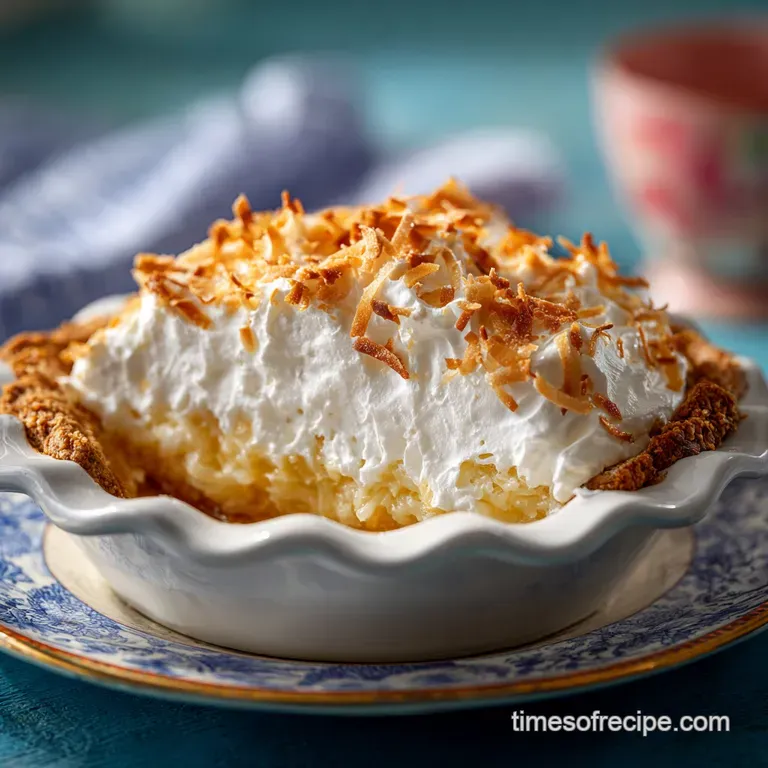
- Assemble and brown. Pour the warm filling into the crust, top with meringue, and bake until the peaks are toasted a light mahogany.
- Garnish and set. Sprinkle 0.5 cup toasted large flake coconut on top and cool completely before slicing.
Troubleshooting Common Problems
The Filling Slumps Over
If your pie doesn't hold its shape when sliced, the cornstarch likely didn't reach a full boil. The enzymes in the egg yolks can actually break down the starch if it's not heated enough to neutralize them. Always wait for that first big "glup" bubble in the center of the pan before removing it from the stove.
| Problem | Root Cause | Solution |
|---|---|---|
| Weeping Meringue | Sugar not dissolved | Use superfine sugar or add sugar more slowly. |
| Soggy Bottom | Underbaked crust | Blind bake until the pastry looks matte and opaque. |
| Lumpy Custard | Heat too high | Whisk vigorously and strain through a mesh sieve. |
Common Mistakes Checklist
- ✓ Never use warm butter for the crust; it must be icy to create layers.
- ✓ Don't skip the tempering step; adding cold eggs to hot milk creates sweet scrambled eggs.
- ✓ Ensure your whisking bowl is grease free for the meringue to rise properly.
- ✓ Allow the pie to cool at room temperature before refrigerating to prevent the crust from toughening.
Scaling for Any Occasion
If you are hosting a larger crowd, you can easily double this recipe to make two pies. When doing so, I recommend making the crusts in two separate batches to ensure the butter stays cold.
For the filling, you can cook it all in one large pot, but you may need to increase the cooking time by about 10 minutes to reach the proper thickening point.
For a smaller household, you can cut the ingredients in half and use a 6 inch pie tin. If you have a bit of egg white left over, it's a great excuse to bake a Sour Cream Coffee recipe the next morning. When scaling down, remember that the custard will thicken much faster, so stay vigilant at the stove.
Debunking Old Kitchen Myths
One common myth is that you must use a food processor for the perfect crust. In reality, the heat from the motor can often melt the butter before it even hits the oven. Hand mixing might take a minute longer, but it gives you far more control over the "pea sized" butter chunks that are essential for a flaky result.
Another misconception is that you should only use fresh coconut for the best flavor. While fresh is lovely, the moisture content is highly unpredictable. high-quality unsweetened shredded coconut provides a consistent texture and a more concentrated flavor that won't throw off the hydration levels of your velvety custard.
Storage and Zero Waste Secrets
This pie is best enjoyed within 24 hours, but it will keep in the fridge for up to 3 days. To prevent the meringue from shrinking, try to spread it all the way to the edges of the crust to "anchor" it.
If you have leftover egg yolks from another project, they can be frozen with a pinch of sugar for future custard making.
For a zero waste approach, don't throw away those butter wrappers use the residue on them to grease your pie dish. If you have extra crust scraps, toss them in cinnamon sugar and bake them alongside the pie for a quick snack.
Leftover toasted coconut makes a fantastic topping for morning oatmeal or yogurt bowls.
Elegant Presentation Techniques
The visual appeal of this dessert comes from the contrast of the snowy meringue and the golden, toasted flakes. Use the back of a spoon to create deep swirls and "valleys" in the meringue before baking; these peaks will catch the heat and turn a beautiful amber color while the valleys stay pale.
It creates a stunning architectural look that feels very professional.
When it's time to serve, use a sharp knife dipped in hot water for the cleanest slices. A sprinkle of flaky sea salt over the toasted coconut right before serving can highlight the sweetness of the cream and the nuttiness of the crust.
This simple touch adds a modern, sophisticated edge to a classic heritage dish, making it feel fresh and exciting for any guest.
Recipe FAQs
Is it true that using room temperature egg yolks guarantees a smoother custard?
Yes, room temperature yolks emulsify better. Cold yolks shock when added to hot liquid, leading to scrambling and a lumpy final texture.
How to ensure the pie crust is flaky and not tough?
Keep the butter frozen solid before cutting it into the flour. The larger, colder fat pieces melt slowly, releasing steam that physically lifts the dough layers during baking.
Why does my meringue weep or separate from the filling after cooling?
No, this is usually due to undissolved sugar. Ensure you slowly incorporate the superfine sugar until the meringue is stiff and glossy, indicating a stable structure.
How to prevent the bottom crust from becoming soggy during baking?
Blind bake the crust until the bottom appears matte and dry. If you mastered controlling spread in a cookie recipe, the principle of pre-baking applies here to set the foundation before adding the wet filling.
What is the minimum internal temperature the cornstarch needs to reach?
The custard must hit 175°F to fully activate the cornstarch. This is the necessary step for starch gelatinization, which creates the stable structure needed for a clean slice.
Can I substitute the whole milk with skim milk for a lighter pie?
No, you should stick with whole milk or a high fat alternative. The fat in the whole milk is crucial for the luxurious, velvety mouthfeel; using skim results in a thin, unsatisfying custard base.
How do I achieve perfectly toasted, non-burnt meringue peaks?
Bake briefly at a high temperature until the tips are golden. Create deep swirls in the meringue before baking so the peaks brown quickly while the valleys remain pale for visual contrast.
Grandmas Coconut Cream Pie
Ingredients:
Instructions:
Nutrition Facts:
| Calories | 480 kcal |
|---|---|
| Protein | 9 g |
| Fat | 31 g |
| Carbs | 48 g |
| Fiber | 2 g |
| Sugar | 23 g |
| Sodium | 260 mg |
