No Bake Butterscotch Haystacks: Silky and Crispy
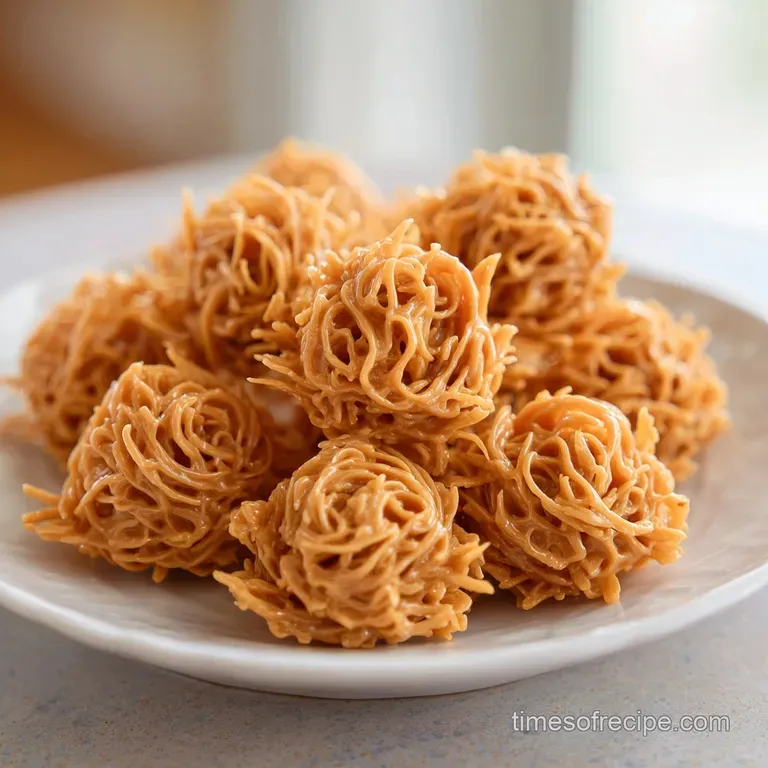
- Time: Active 15 minutes, Passive 30 minutes, Total 45 minutes
- Flavor/Texture Hook: Velvety butterscotch finish with a dramatic, crispy shatter
- Perfect for: Elegant holiday gifting or a quick, impressive weeknight treat
- Vital Stats for Your Sweet Treat Success
- Component Analysis
- Selecting High Quality Ingredients for Velvety Results
- Essential Kitchen Tools for a Seamless Melt
- Crafting Your Stunning Butterscotch Bird Nest Treats
- Navigating Common Roadblocks for a Flawless Finish
- Creative Variations for Every Seasonal Celebration
- Maintaining That Signature Shatter and Crunch
- Elegant Presentation Ideas for Your Golden Mounds
- Recipe FAQs
- 📝 Recipe Card
Vital Stats for Your Sweet Treat Success
To get the results we’re looking for, we have to look at how these ingredients behave when they meet heat. This isn't just about mixing things together; it's about managing a delicate emulsion.
When we melt those chips with the peanut butter, we are creating a suspension that needs to be thick enough to coat the noodles but thin enough to settle into those beautiful, craggy shapes.
Fat Stabilization: The addition of peanut butter and a small amount of unsalted butter introduces different types of fats that prevent the butterscotch from becoming brittle once it cools.
Moisture Control: Using dry roasted peanuts ensures we don't introduce extra oils that could cause the butterscotch to slide off the noodles rather than clinging to them.
Structural Integrity: Folding the noodles in at the very last second prevents them from absorbing moisture from the warm mixture, which is the secret to that signature "shatter" when you take a bite.
Setting Dynamics: Allowing the haystacks to set at room temperature initially helps the sugars crystallize slowly, leading to a much better mouthfeel than a "shocked" fridge set version.
Cook Method Comparison
| Method | Time | Texture | Best For |
|---|---|---|---|
| Microwave (Low Power) | 15 minutes | Silky and Glossy | Quick results with minimal cleanup |
| Double Boiler | 25 minutes | Extremely Smooth | Maximum control to prevent scorching |
| Stovetop (Direct Heat) | 10 minutes | Risk of Grainy | Not recommended for beginners |
The microwave method is brilliant because it heats from the inside out, but you have to be disciplined with that 50% power setting. If you rush it, the sugar in the butterscotch will burn and turn bitter before the fat even has a chance to melt. It's a tragedy I've seen too many times.
If you are ever in doubt, the double boiler is your safest bet for keeping things elegant.
Component Analysis
| Ingredient | Science Role | Pro Secret |
|---|---|---|
| Butterscotch Chips (11 oz) | Primary Structural Base | Use chips with real cocoa butter or high-quality fats for a better melt |
| Creamy Peanut Butter (0.5 cup) | Emulsifier and Softener | Choose a standard brand; natural "oil on-top" varieties can break the emulsion |
| Chow Mein Noodles (5 oz) | Textural Foundation | Sift the noodles slightly before adding to remove "noodle dust" for a cleaner look |
Using high-quality butterscotch is the difference between a treat that tastes like wax and one that tastes like a gourmet caramel. Since there are so few ingredients here, each one has to carry its weight.
The unsalted butter (0.5 tbsp) might seem like a small addition, but it adds a level of shine that makes these look like they came from a professional confectionery shop.
Selecting high-quality Ingredients for Velvety Results
When you head to the store for this no bake butterscotch haystacks recipe, keep your eyes peeled for the best versions of these staples. For the butterscotch chips, look for a brand that lists "sugar" and "palm kernel oil" or "cocoa butter" early on this ensures they will melt smoothly without turning into a clumpy mess.
If you find the butterscotch a bit too sweet on its own, the salted peanuts and the flaky salt finish will be your best friends for balancing that sugar.
- 11 oz high-quality butterscotch chips: This is the backbone of the flavor.
- 0.5 cup creamy peanut butter: Acts as the "glue" that keeps things chewy rather than hard.
- 0.5 tbsp unsalted butter: Adds a luxurious sheen and a hint of richness.
- 5 oz crunchy chow mein noodles: These provide the volume and the essential crunch.
- 0.5 cup dry roasted salted peanuts: For a secondary layer of texture and a hit of salt.
- 0.5 tsp flaky sea salt: The magical finishing touch that wakes up all the other flavors.
Substitution Table
| Original Ingredient | Substitute | Why It Works |
|---|---|---|
| Butterscotch Chips | Peanut Butter Chips | Similar fat content but doubles down on the nutty flavor profile. |
| Chow Mein Noodles | Pretzel Sticks (Broken) | Provides a similar crunch and saltiness. Note: Results in a denser, heavier haystack. |
| Roasted Peanuts | Toasted Almond Slivers | Offers a more delicate, elegant nuttiness. |
If you find yourself wanting to experiment, you could even try a Haystacks recipe version by swapping the butterscotch for semi sweet chocolate chips. It’s a completely different vibe but just as addictive. The beauty of this recipe is how adaptable it is once you understand the basic "melt and fold" technique.
Essential Kitchen Tools for a Seamless Melt
You don't need a lot of gear, but the right tools make the process feel effortless. A large, microwave safe glass bowl is my go to. Glass retains heat better than plastic, which helps with that residual melting process we’re going to use. You’ll also want a high-quality silicone spatula.
Metal spoons can sometimes be too "sharp" and break the noodles into tiny fragments, whereas a flexible spatula allows you to fold them gently.
Don't forget the parchment paper! Nothing is more frustrating than making a beautiful batch of cookies only to have them fused to your baking sheet. A silicone mat also works perfectly here. If you want every haystack to look uniform and stunning, a small cookie scoop (about 1.5 tbsp size) is a lifesaver.
It keeps your hands clean and ensures that the "nests" all set at the same rate.
- Large glass mixing bowl: For even heat distribution.
- Silicone spatula: To fold without crushing the structure.
- Baking sheet: To hold the treats while they set.
- Parchment paper: To prevent sticking and ensure easy cleanup.
- Cookie scoop (1.5 tbsp): For consistent sizing and presentation.
Crafting Your Stunning Butterscotch Bird Nest Treats
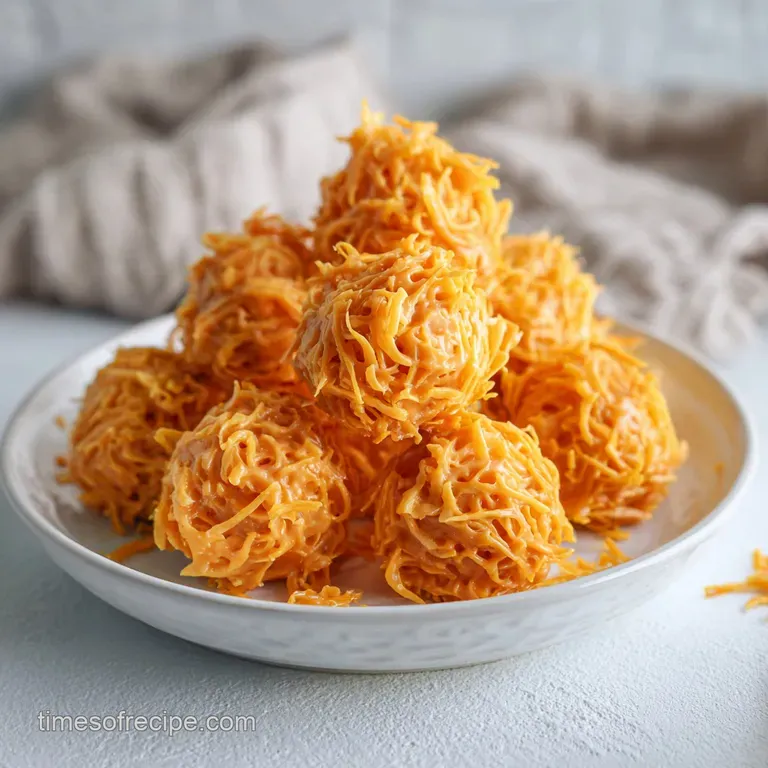
- Prepare the surface. Line a large baking sheet with parchment paper or a silicone baking mat. Note: It is vital that all bowls and utensils are completely dry, as even a drop of water can cause butterscotch to seize.
- Combine the base. In your microwave safe glass bowl, add the 11 oz butterscotch chips, 0.5 cup creamy peanut butter, and 0.5 tbsp unsalted butter.
- Start the melt. Microwave the mixture at 50% power for 60 seconds. Remove the bowl and stir gently. It won't look melted yet, but you're distributing the heat.
- Pulse and stir. Continue microwaving in 15 second intervals at 50% power. Stir between every single interval. Stop when it is 90% melted.
- Finish with residual heat. Stir the mixture for a minute or two until the remaining lumps disappear. This gives you a glossy, smooth finish without overheating the sugar.
- Add the crunch. Gently fold in the 5 oz chow mein noodles and 0.5 cup roasted peanuts. Work slowly to ensure every noodle is coated in that velvety gold.
- Scoop the mounds. Use your 1.5 tbsp cookie scoop to drop mounds of the mixture onto your prepared sheet. Work quickly before the mixture begins to firm up.
- Add the sparkle. While the haystacks are still "wet," sprinkle a tiny pinch of the 0.5 tsp flaky sea salt over each one.
- Set the structure. Allow the haystacks to sit at room temperature for 30 minutes. If your kitchen is very warm, you can refrigerate them for 15 minutes instead.
- Final check. Once the haystacks feel firm to the touch and don't leave a residue on your finger, they are ready to be moved to a platter.
Navigating Common Roadblocks for a Flawless Finish
Even with a simple recipe, things can go sideways if you're not paying attention to the temperature. The most common issue people face with a butterscotch haystacks recipe is "seizing." This happens when the sugar in the chips gets too hot or comes into contact with moisture, turning the silky liquid into a gritty, dry paste.
If this happens, don't panic you can usually save it with a tiny bit more fat (like a teaspoon of vegetable oil), but it's better to avoid it by using low power.
Another thing to watch for is "sweating." If you move your haystacks from a very cold fridge to a very hot, humid kitchen, they might develop little beads of moisture on the surface. This doesn't ruin the taste, but it does affect the "shatter." Try to let them set at room temperature whenever possible to avoid this.
Troubleshooting the Base
| Problem | Root Cause | Solution |
|---|---|---|
| Mixture is Thick and Grainy | Overheated sugar (Seizing) | Add 1 tsp of neutral oil and stir vigorously off the heat. |
| Noodles are Sinking | Base was too hot/thin | Let the melted mixture sit for 2 minutes before folding in noodles. |
| Haystacks Won't Set | Too much peanut butter/oil | Refrigerate for 20 minutes to force the fats to solidify. |
Common Mistakes Checklist
- ✓ Never use the "High" power setting on your microwave; it’s too aggressive for butterscotch.
- ✓ Ensure your peanuts are fresh; stale nuts will ruin the entire flavor profile.
- ✓ Don't skip the butter; it provides the professional shine that makes these look "stunning."
- ✓ Avoid crushing the noodles too much; you want those "haystack" layers to be visible.
- ✓ Let the mixture cool slightly before scooping to prevent the mounds from flattening out.
Creative Variations for Every Seasonal Celebration
One of the reasons I love this recipe is how easy it is to dress up for different occasions. If you want to lean into the "bird nest" theme, you can press a few small candy eggs into the center of each mound while they are still soft. It’s an adorable way to make these for a spring brunch.
For a more sophisticated twist, try adding a half teaspoon of espresso powder to the butterscotch melt it deepens the flavor and cuts through the sweetness beautifully.
If you’re looking for a different texture, you could replace half of the chow mein noodles with crispy rice cereal. This creates a denser, crunchier haystack that holds up incredibly well in lunchboxes.
For those who need to avoid certain ingredients, creating butterscotch haystacks without peanut butter is as simple as using a seed butter (like sunflower butter) or even just using a bit more unsalted butter and a splash of vanilla extract to maintain that creamy consistency.
If you are planning a full dessert spread, these pair wonderfully with something savory like an Easy Baked Ravioli recipe for dinner. The contrast between a salty, cheesy meal and these sweet, crunchy treats is the ultimate comfort food experience.
Decision Shortcut
- If you want a more "caramel" flavor: Brown the 0.5 tbsp of butter in a pan before adding it to the microwave bowl.
- If you want a lighter crunch: Replace 1 oz of noodles with 1 oz of shredded sweetened coconut.
- If you want a "Sweet & Spicy" kick: Add a tiny pinch of cayenne pepper to the melted butterscotch base.
Maintaining That Signature Shatter and Crunch
Storing your haystacks properly is the key to making sure that first bite is just as magical three days later as it was on day one. Because this is a no bake treat, it is sensitive to heat and humidity. I always recommend an airtight container.
If you stack them, put a piece of parchment paper between the layers so they don't stick together and ruin those beautiful, craggy edges.
- Room Temperature: They will stay fresh for up to 5 days in a cool, dry place.
- Refrigeration: You can keep them in the fridge for up to 2 weeks. Just be aware that they will be much firmer when cold.
- Freezing: These freeze beautifully! Place them in a freezer safe bag for up to 2 months. To eat, let them thaw on the counter for 15 minutes.
Zero Waste Tip
If you have a few broken noodles at the bottom of the bag, don't throw them away! Toss them into a small jar and use them as a crunchy topping for vanilla ice cream or yogurt. You can even stir them into your morning oatmeal for a surprising textural contrast.
Elegant Presentation Ideas for Your Golden Mounds
When it comes to serving these, I like to lean into their natural, rustic beauty. Placing them on a dark ceramic platter makes the golden butterscotch color really pop. If you're giving them as a gift, a simple brown paper box lined with parchment and tied with a gold ribbon looks incredibly elegant.
Since they are so rich, you don't need to serve a huge portion two or three haystacks per person is usually plenty.
For a fun party idea, you can create a "Haystack Bar." Set out a few different versions maybe some with dark chocolate drizzle, some with the traditional butterscotch, and some with extra peanuts. It’s a simple way to make a low effort dessert feel like a curated experience.
No matter how you serve them, that combination of velvety sweetness and the dramatic "shatter" of the noodles is guaranteed to have people asking for the recipe. It's the kind of magic that only happens when you treat simple ingredients with a little bit of love and the right technique.
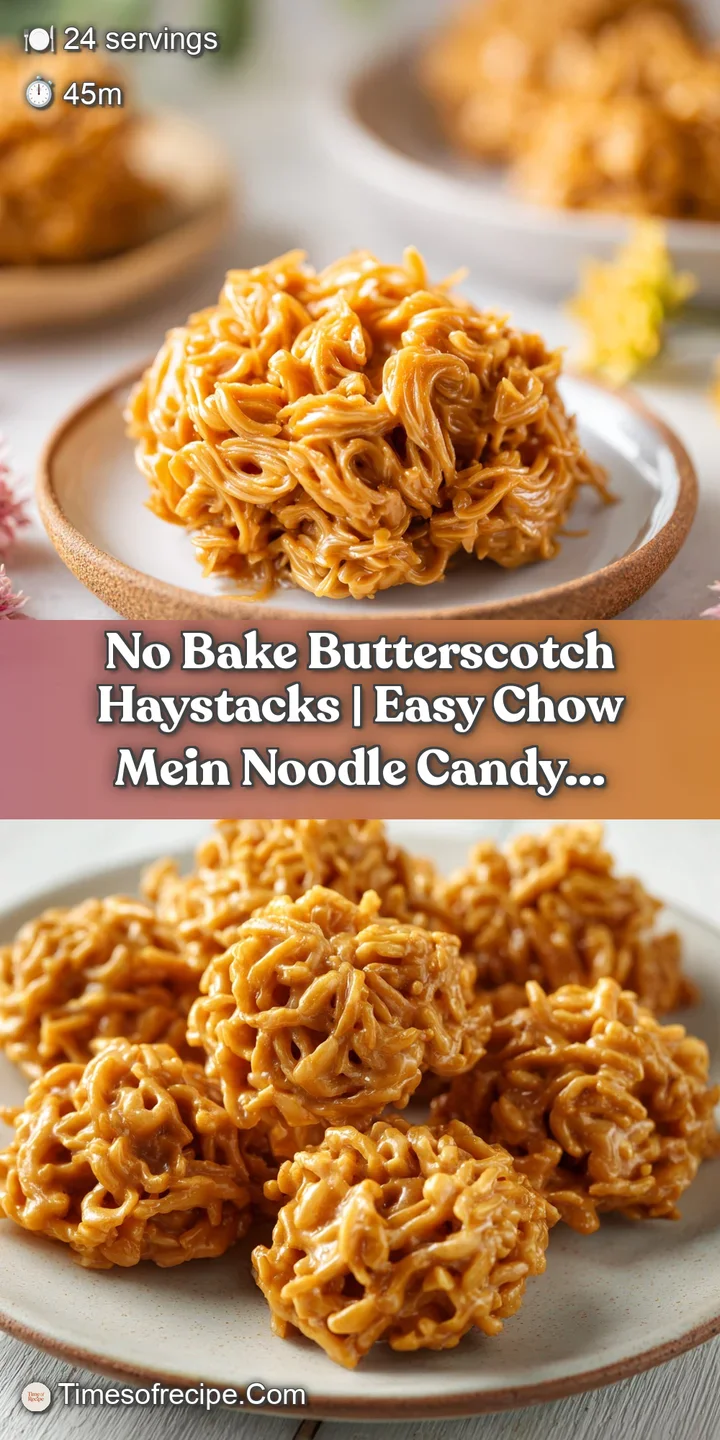
Recipe FAQs
Why is my butterscotch mixture thick and grainy?
This happens because the sugar overheated and seized. To fix it, remove the bowl from the heat and stir in one teaspoon of neutral oil vigorously until the texture becomes smooth again.
How to prevent the chow mein noodles from sinking to the bottom of the bowl?
Let the melted mixture sit for two minutes before folding in the noodles. This cooling period thickens the base just enough to hold the weight of the noodles and peanuts in suspension.
Is it true I can use pretzel sticks instead of chow mein noodles?
Yes, this is a great variation. Broken pretzels provide a similar crunch and saltiness, though keep in mind that the final result will be a denser, heavier haystack compared to the original.
How to ensure the haystacks set firmly?
Refrigerate them for 20 minutes to force the fats to solidify. If they remain soft at room temperature, it usually means the ratio of peanut butter or oil was slightly too high for the base to set on its own.
Can I substitute the roasted peanuts for other nuts?
Yes, toasted almond slivers are an excellent alternative. They offer a more delicate, elegant nuttiness that pairs beautifully with the butterscotch flavor profile.
How to achieve a perfectly smooth and glossy finish?
Microwave in 15-second intervals at 50% power until only 90% melted. Stir gently between each interval, and let the residual heat finish melting the remaining lumps. If you enjoy achieving this type of professional texture control, you can apply the same chewy classic logic to our other cookie recipes.
Is it necessary to use a double boiler to melt the chips?
No, this is a common misconception. A microwave set to 50% power is the most efficient way to melt the chips without scorching them, provided you stir regularly between intervals.
No Bake Butterscotch Haystacks
Ingredients:
Instructions:
Nutrition Facts:
| Calories | 141 calories |
|---|---|
| Protein | 2.4g |
| Fat | 8.1g |
| Carbs | 15.7g |
| Fiber | 0.8g |
| Sugar | 10.4g |
| Sodium | 118mg |
