Peanut Butter and Jelly Cheesecake
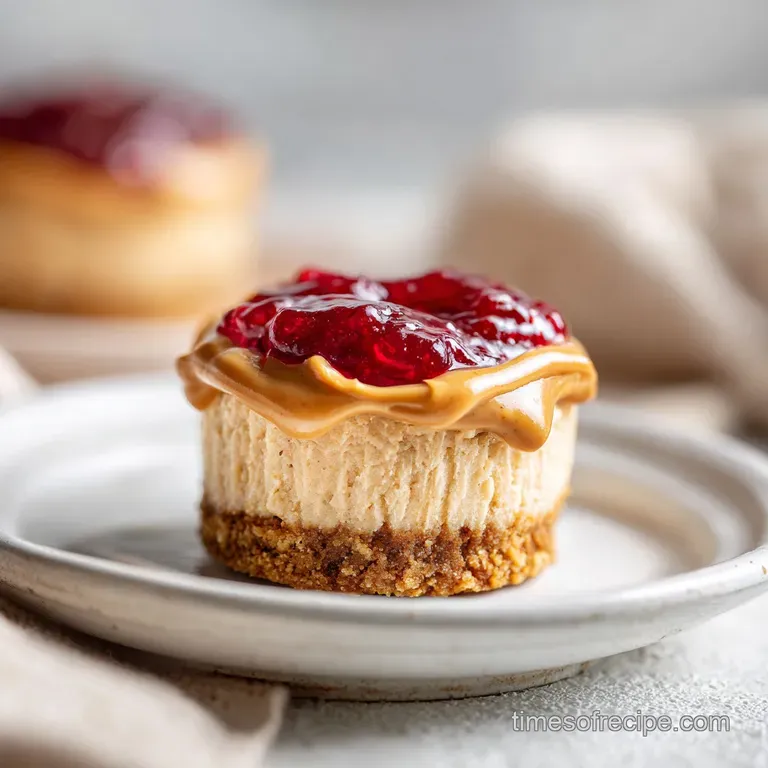
- Time: Active 40 minutes, Passive 1 hours 15 mins, Total 1 hours 55 mins
- Flavor/Texture Hook: Velvety peanut butter base with a shatter crisp honey crust and tangy raspberry swirls
- Perfect for: Nostalgic dinner parties or a stunning weekend baking project
- Master the Peanut Butter and Jelly Cheesecake
- Achieving Velvety PB&J Swirls
- Essential Elements for Balanced Flavor
- Gear for a Flawless Bake
- Detailed Steps for Success
- Troubleshooting the PB&J Base
- Adjusting the Recipe Size
- Debunking Common Baking Myths
- Storage and Zero Waste
- Serving and Pairing Suggestions
- Recipe FAQs
- 📝 Recipe Card
Master the Peanut Butter and Jelly Cheesecake
Imagine pulling a springform pan out of the oven and being met with the scent of toasted peanuts and the sharp, bright aroma of bubbling raspberries. The first time I made this was for a friend's housewarming, and honestly, the kitchen smelled like a high end bakery within ten minutes.
We usually think of PB&J as a quick snack, but when you swirl that tart fruit into a dense, creamy base, it becomes something truly elegant.
This version is all about contrast. You have the saltiness from the peanut butter meeting the floral notes of honey and the acidity of fresh berries. It's a sophisticated play on flavors that doesn't feel like a sugar bomb.
We're skipping the jarred jam here because making your own reduction allows the fruit's natural tang to cut through the heavy cream cheese.
You can expect a cheesecake that is incredibly smooth but has enough structure to hold those beautiful, deep red swirls. It’s a bit of a process, but watching the colors marble together is pure magic. Let's get into how we make this happen without any cracks or soggy bottoms.
Achieving Velvety PB&J Swirls
- Fat Emulsification: Mixing the cream cheese and peanut butter first creates a stable fat in-water emulsion that prevents the batter from breaking.
- Acid Balance: Lemon juice in the raspberry reduction provides pectin like structure, ensuring the "jelly" doesn't just sink to the bottom.
- Protein Coagulation: Using a whole egg plus an extra yolk increases the lecithin content, which results in a more custardy, silky mouthfeel.
- Moisture Control: Greek yogurt adds acidity that softens the protein bonds in the cheese, preventing a rubbery texture.
| Component | Fresh Reduction | Jarred Jam | Outcome Difference |
|---|---|---|---|
| Texture | Thick but fluid | Gelatinous | Fresh swirls marble better without clumps |
| Flavor | Tart and bright | Very sweet | Fresh cuts through the fat of the peanut butter |
| Moisture | Controlled | High sugar/water | Fresh prevents the top from becoming sticky |
The key to that vibrant fruit layer is the quick reduction of fresh berries. While store-bought jam is convenient, it often contains too much pectin and sugar, which can create a gummy texture when baked at high heat. Using fresh raspberries ensures the aroma stays sharp and the color remains a stunning ruby red.
Essential Elements for Balanced Flavor
| Ingredient | Science Role | Pro Secret |
|---|---|---|
| Cream Cheese | Primary Structure | Use full fat for the best structural stability |
| Peanut Butter | Flavor & Fat | Natural creamy versions prevent an oily finish |
| Coconut Sugar | Sweetener | Adds a deep, toasted caramel note to the base |
| Greek Yogurt | Texture Softener | Brings a tangy lift that mimics traditional sour cream |
Gear for a Flawless Bake
You really want a 9 inch springform pan for this. It’s the only way to get those clean edges without mangling the crust. A high speed blender or food processor is a must for the graham crackers to ensure the crust is fine enough to pack tightly.
For the filling, a stand mixer with the paddle attachment (like a KitchenAid) is your best friend. It incorporates less air than a whisk, which is exactly what we want to avoid those pesky surface bubbles.
Grab a small saucepan for the raspberry swirl too. You’ll want a fine mesh sieve if you’re like me and prefer a seedless jelly, though leaving a few seeds in adds a nice rustic touch. Finally, a large roasting pan is vital for the water bath.
This creates a humid environment that protects the delicate proteins from drying out.
Detailed Steps for Success
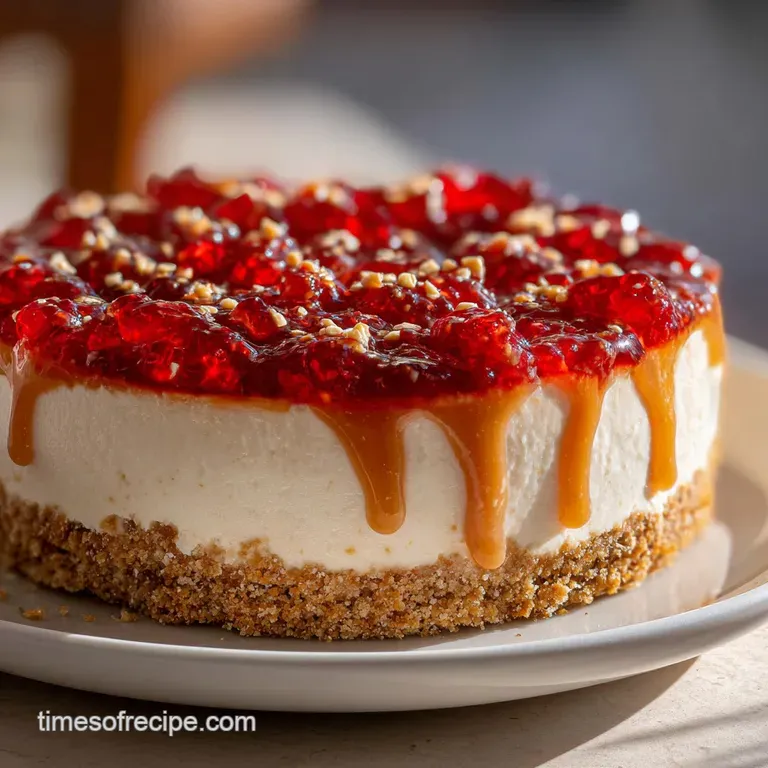
Phase 1: The Stabilized Fruit Reduction
- Combine 1 cup fresh raspberries, 1 tsp lemon juice, and 1 tbsp maple syrup in a saucepan.
- Simmer over medium heat for 8 minutes until the berries break down and the liquid coats the back of a spoon. Note: This concentrates the flavor and removes excess water.
- Strain through a sieve to remove seeds, then set aside to cool completely.
Phase 2: Constructing the Shattering Crust
- Pulse 1.5 cups graham cracker crumbs, 2 tbsp melted butter, 1 tbsp honey, and 0.5 tsp sea salt.
- Press the mixture firmly into the bottom of your pan and bake at 350°F for 10 minutes until the scent of toasted honey fills the room.
- Remove the crust and let it cool while you prepare the filling.
Phase 3: The Emulsified Filling
- Beat 24 oz cream cheese and 0.75 cup coconut sugar on medium speed for 3 minutes until the mixture looks like soft serve ice cream.
- Add 0.75 cup peanut butter and 0.5 cup Greek yogurt, mixing until the color is a uniform light tan.
- Add 3 eggs and 1 yolk one at a time, followed by 1 tbsp vanilla, mixing on the lowest speed. Note: Overbeating here will cause the cake to rise and then collapse.
Phase 4: The Swirl and the Bake
- Pour the batter over the cooled crust.
- Drop teaspoons of the raspberry reduction onto the top, then use a toothpick to swirl until you see elegant, marble like patterns.
- Bake in a water bath at 325°F for 1 hours 15 mins until the edges are set but the center still wobbles like Jell O.
Troubleshooting the PB&J Base
Why Your Cheesecake Cracked
Cracks usually happen because of sudden temperature changes or too much air in the batter. When the cake cools too fast, the edges pull away from the pan while the center is still expanded, causing a split. If you overbeat the eggs, the trapped air bubbles expand in the oven and then pop, leaving a crater.
| Problem | Root Cause | Solution |
|---|---|---|
| Surface Cracks | Cooling too fast | Leave the oven door ajar for 1 hour before removing |
| Grainy Texture | Cold ingredients | Ensure cheese and eggs are at room temperature |
| Soggy Crust | Water bath leak | Use three layers of heavy duty foil around the pan |
If you enjoy the nutty profile of this bake, you might also like my Peanut Butter Cookies recipe which uses a similar balance of fats for a chewy finish.
Common Mistakes Checklist
- ✓ Ensure all refrigerated ingredients sit out for 2 hours before mixing.
- ✓ Avoid opening the oven door during the first 60 minutes of baking.
- ✓ Tap the filled pan on the counter five times to release trapped air bubbles.
- ✓ Check that your springform pan is completely watertight with extra foil.
- ✓ Allow the cake to chill in the fridge for at least 6 hours before slicing.
Adjusting the Recipe Size
Downsizing the Batch
If you're baking for a smaller group, you can halve the recipe and use a 6 inch springform pan. You’ll only need 2 eggs and a slightly shorter bake time start checking at 45 minutes. For the crust, use a small 4 inch tart tamper to get into the corners of the smaller pan.
Doubling for Crowds
For a large gathering, it's better to make two separate cakes rather than one giant one to ensure even heat distribution. If you must use a larger pan, increase the bake time by 20% but keep the temperature the same. Remember that the sugar and salt only need to be increased by 1.5x to avoid overwhelming the palate.
| Group Size | Pan Recommended | Total Batter | Cooling Time |
|---|---|---|---|
| 4-6 people | 6 inch round | 1.5 lbs | 4 hours |
| 12 people | 9 inch round | 3 lbs | 6-8 hours |
| 20+ people | 9x13 rectangle | 6 lbs | 12 hours |
Debunking Common Baking Myths
One big misconception is that you need a lot of butter to make a graham cracker crust stay together. Actually, the honey in this recipe acts as a secondary binder. As the honey cools, it hardens slightly, giving you that satisfying "shatter" when you dig in with a fork.
Another myth is that you can't overmix cheesecake batter. You actually can! Once the eggs go in, stop as soon as they are incorporated. Too much mixing introduces air, which makes the cake rise like a souffle. Since cheesecake is essentially a custard, we want density, not lift. If you're looking for something with a different texture, my Banana Pudding Cheesecake recipe is a great way to see how fruit affects the structure of the bake.
Storage and Zero Waste
Storage Guidelines: Keep the Peanut Butter and Jelly Cheesecake in the fridge, tightly covered, for up to 5 days. For long term storage, you can freeze individual slices. Wrap each slice in plastic wrap and then foil; they’ll stay fresh for 2 months.
Thaw in the fridge overnight for the best texture.
Zero Waste Tips: If you have leftover raspberry reduction, whisk it with a little olive oil and balsamic vinegar for a stunning salad dressing. Any extra graham cracker crumbs can be toasted in a pan with a bit of sugar and used as a crunchy topping for yogurt or oatmeal the next morning.
Serving and Pairing Suggestions
This cake is quite rich, so I love serving it with a dollop of unsweetened whipped cream to cut through the density. A few fresh raspberries on the side add a nice pop of color and extra acidity.
If you're serving this at a dinner party, a small glass of dessert wine or even a cold glass of almond milk provides a lovely contrast to the creamy peanut butter.
Chef's Tip: For those perfect, clean slices you see in bakeries, dip your knife in hot water and wipe it dry between every single cut. The heat slices through the cold fats like butter.
If you want a more casual vibe, you can bake this in a square pan to create Peanut Butter and Jelly Cheesecake Bars. They are much easier to transport for potlucks. Simply line the pan with parchment paper so you can lift the entire block out once it's chilled.
Just make sure the bars are completely cold before you attempt to cut them, or the jam swirl will smear.
Recipe FAQs
Can I substitute jarred jelly for the fresh raspberry reduction?
No, stick with the reduction. Jarred jam often contains too much pectin and sugar, which creates a gummy layer when baked into the cheesecake batter.
How to prevent the cheesecake from cracking during baking?
Bake the cheesecake in a water bath. The steam created by the bath insulates the sides, ensuring the filling cooks gently and evenly, preventing sudden expansion and cracking.
How to ensure the peanut butter and cream cheese blend smoothly?
Beat the cream cheese and sugar for a full 3 minutes first. This creates a stable fat emulsion before adding the peanut butter, preventing the mixture from separating or becoming grainy.
Is it true that you should use room temperature eggs for the best texture?
Yes, room temperature eggs are essential for texture. Cold eggs cause the cream cheese mixture to seize up when added, which traps air and results in a less silky, more porous final product.
How long must this cheesecake chill before slicing?
Chill for a minimum of 6 hours, but overnight is best. This extended cooling time allows the proteins to fully set and stabilize the structure, ensuring clean slices without smearing the swirls.
What is the purpose of adding Greek yogurt to the filling?
Greek yogurt introduces necessary acidity and moisture. The acid helps soften the structure, resulting in a lighter, tangier mouthfeel that balances the richness, similar to techniques used in our Red Velvet Strawberry recipe.
How to get perfect, seedless swirls in the finished cheesecake?
Strain the cooked raspberry reduction through a fine mesh sieve. This removes all seeds and tough fruit pieces, leaving behind only a vibrant, smooth, and easily marble able liquid.
Pb J Cheesecake Recipe
Ingredients:
Instructions:
Nutrition Facts:
| Calories | 455 kcal |
|---|---|
| Protein | 11.1 g |
| Fat | 32.1 g |
| Carbs | 30.7 g |
| Fiber | 1.7 g |
| Sugar | 20.2 g |
| Sodium | 266 mg |
