Peaches and Cream Cake: Silky and Velvety
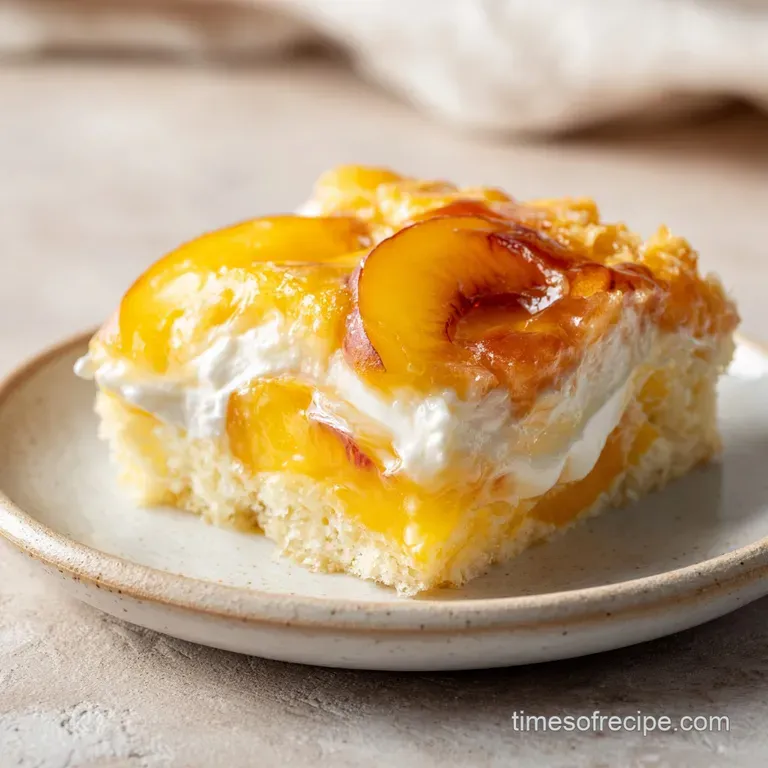
- Time: Active 30 minutes, Passive 45 minutes, Total 75 minutes
- Flavor/Texture Hook: Velvety crumb with juicy peach bursts and a cloud like frosting
- Perfect for: Summer garden parties, heirloom family gatherings, or a weekend treat
- How to Actually Nail This Peaches and Cream Cake
- Essential Specs for Your Summer Baking Success
- The Alchemy of Fruit and Silk: Choosing Ingredients
- The Right Tools for a Velvet Crumb
- A Step-by-Step Guide to Baking Magic
- Rescuing Your Cake from Common Baking Blunders
- Creative Twists to Personalize Your Dessert
- Keeping Your Cake Fresh and Vibrant
- Styling Your Creation for a Stunning Reveal
- Recipe FAQs
- 📝 Recipe Card
How to Actually Nail This Peaches and Cream Cake
Peaches and cream isn't just a flavor profile, it's a cultural staple that has hummed through Southern kitchens and European summer estates for centuries. I remember my grandmother telling me that in the heat of July, there was nothing more elegant than a cold bowl of sliced fruit drowned in heavy cream.
It was simple magic. This recipe takes that nostalgia and transforms it into a structured, elegant cake that actually holds its own. We aren't just tossing fruit into batter here, we're building a crumb that is sturdy enough to support juicy peaches but soft enough to melt away the moment it hits your tongue.
The real secret to making this work lies in the cultural tradition of the "pudding cake." Back in the mid-20th century, home cooks discovered that adding a packet of instant mix changed the molecular structure of the sponge, giving it a professional, tight crumb that stays moist for days.
When you combine that vintage trick with fresh, modern ingredients like vanilla bean paste and hand cubed fruit, you get something that feels both historic and fresh. It's the kind of cake that makes people stop talking the moment they take a bite because the texture is so unexpectedly silky.
But let's be real, peaches are finicky. They are full of water, and if you don't treat them right, they'll turn your beautiful cake into a soggy mess. I've spent plenty of afternoons staring at a sunken center before I realized that the "coat and toss" method is non negotiable.
By treating our fruit with a little lemon and starch, we lock in that floral aroma and prevent the juice from leaking out and ruining the crumb. We're going for a cake that smells like a sun drenched orchard and looks like a dream.
Secret Starch: The cornstarch in the pudding mix and the extra teaspoon used to coat the peaches act as a moisture stabilizer, preventing the cake from becoming soggy.
Acidic Balance: Sour cream provides acidity that breaks down long gluten strands, ensuring the texture remains velvety rather than bready or tough.
Aeration Control: Creaming the butter for exactly 5 minutes builds a microscopic bubble structure that supports the weight of the heavy fruit pieces.
Fat Saturation: Using full fat dairy creates a tenderizing barrier around the flour proteins, which is why we never use low-fat versions for this specific crumb.
| Method | Prep Time | Texture | Best For |
|---|---|---|---|
| Traditional Oven | 30 minutes | Even, plush crumb with a golden top | Classic texture and height |
| Stovetop (Water Bath) | 45 minutes | Dense, pudding like, very moist | High humidity environments |
| Convection Bake | 25 minutes | Crispy edges, lighter interior | Quick serving and deeper color |
Choosing the right method depends on your kitchen's personality, but for this specific recipe, the oven is king. The dry heat helps the top set while the interior stays lush. If you find yourself craving a different fruit profile later, you might find that this technique works wonderfully with other berries too. For instance, the way the cream cheese frosting anchors the fruit reminds me a lot of how the layers work in an easy fruit pizza sugar cookie, where the dairy provides the perfect canvas for the acidity of the fruit.
Essential Specs for Your Summer Baking Success
When we talk about baking, we have to talk about precision. I used to be a "measure with your heart" kind of cook until I realized that hearts are terrible at calculating the hydration of a cake. This Peaches and Cream Cake relies on a specific ratio of fats to starches.
We're looking at a yield of 12 generous servings, which is perfect for a standard 9x13-inch pan. If you're using a kitchen scale, you'll find that 315g of flour is exactly what's needed to hold up those 450g of peaches without the cake collapsing under its own weight.
The timing is just as critical. You're looking at 30 minutes of active prep, mostly involving the creaming of the butter and the careful peeling of those peaches. Don't rush the peeling! The skin can become leathery in the oven, and we want every bite to be uniform and soft.
The 45 minutes in the oven is the "sweet spot" where the sugars caramelize just enough to release that floral peach scent without drying out the edges.
| Ingredient | Science Role | Pro Secret |
|---|---|---|
| Instant Pudding Mix | Modified starch for moisture | Use vanilla for a floral, aromatic base |
| Vanilla Bean Paste | Intense flavor and visual "specks" | Rub into sugar first to release oils |
| Sour Cream | Fat and acid for tenderizing | Always use room temperature to prevent curdling |
| Fresh Peaches | Natural moisture and sugar | Choose fruit that yields slightly to thumb pressure |
The interaction between the pudding mix and the sour cream is where the magic happens. While the sour cream is doing the heavy lifting on the tenderness front, the pudding mix provides a "cushion" of starch that captures the steam during baking. This prevents the large holes you often see in boxed cakes and gives you that high end, professional finish. It’s a similar logic to how a carrot cake roll uses moisture rich ingredients to keep the sponge flexible enough to move without cracking.
The Alchemy of Fruit and Silk: Choosing Ingredients
Let's talk about the stars of the show. For the fruit, you want 450g of fresh peaches. Look for ones that smell like a perfume counter when you walk past them. If they don't have a scent, they don't have flavor. Peel them carefully, and cube them into 1/2 inch pieces.
This size is intentional; any larger and they sink to the bottom; any smaller and they disappear into the batter. Toss them with 1 tablespoon of lemon juice and 1 teaspoon of cornstarch immediately.
The lemon stops them from turning a muddy brown, and the starch acts like a little raincoat, keeping the juices inside the fruit.
For the batter, the 225g of unsalted butter must be softened, but not greasy. If your kitchen is hot, 15 minutes on the counter is enough. For the "cream" part of the cake, we are using 225g of brick style cream cheese and 360ml of heavy whipping cream.
Please, for the love of all that is holy, do not use the spreadable cream cheese in a tub. It has too much water and will turn your frosting into a soup. You want that sturdy, brick style cheese that can be whipped into stiff peaks.
- All purpose flour (315g): Substitute with 1:1 gluten-free flour blend if needed. Why this? Provides the structural framework for the heavy peach inclusions.
- Vanilla bean paste (2 tsp): Substitute with 2 tsp pure vanilla extract. Why this? Adds those beautiful black specks and a deeper, more complex aroma.
- Sour cream (120g): Substitute with full fat Greek yogurt. Why this? The fat content ensures the crumb remains velvety after cooling.
- Fresh Peaches (450g): Substitute with well drained canned peaches. Why this? Fresh offers the best floral notes, but canned works year round.
Chef Tip: If your peaches are slightly underripe, toss them with a teaspoon of extra sugar and let them sit for 10 minutes before adding the starch. This "macerating" process coaxes out the flavor that the sun didn't finish.
The Right Tools for a Velvet Crumb
You don't need a professional laboratory, but a few specific tools will make your life much easier. A stand mixer with a paddle attachment is your best friend here. We need to cream that butter and sugar for a full 5 minutes. Doing that by hand is a workout I wouldn't wish on anyone.
The paddle attachment incorporates just enough air without over beating, which is the key to preventing a tough cake.
A 9x13-inch baking pan is the standard, but make sure it's a light colored metal or glass. Dark pans absorb too much heat and will turn your edges into a crusty wall before the middle is even set.
I also highly recommend a high-quality vegetable peeler or even a "serrated" peeler specifically for soft skinned fruits like peaches and tomatoes. It saves so much fruit meat that usually gets lost with a knife.
- Digital Scale: Essential for the 315g flour measurement to avoid a dry cake.
- Rubber Spatula: For the final "fold" of the peaches; you must be gentle to keep the air in.
- Fine Mesh Sieve: For dusting that final pinch of cinnamon with elegance.
- Offset Spatula: This makes spreading the cream cheese frosting look like a professional bakery job.
A step-by-step Guide to Baking Magic
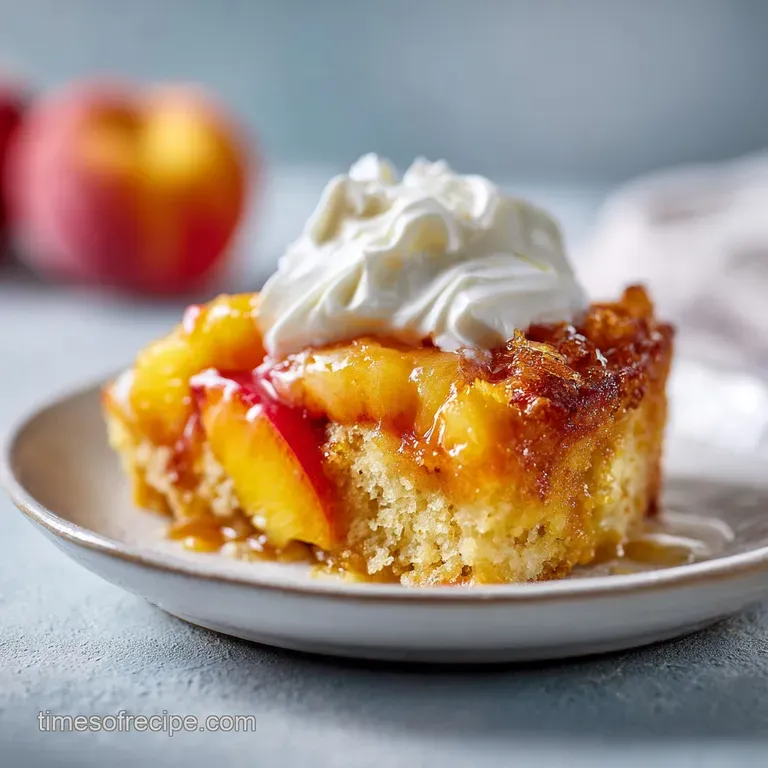
1. Preparing the Peach Foundation
Start by peeling your 450g of fresh peaches. Cut them into 1/2 inch cubes. In a small bowl, toss them with 1 tablespoon of lemon juice and 1 teaspoon of cornstarch. The aroma here is bright and citrusy. Set these aside so the starch can begin to bond with the fruit's surface.
2. Creaming for Aeration
Place your 225g of softened butter and 350g of granulated sugar into your mixer. Beat on medium high speed for 5 minutes. Note: You are looking for the mixture to turn almost white and look like fluffy clouds.You'll smell the sweet, nutty scent of aerated butter.
3. Incorporating the Dry and Wet
Whisk together the 315g flour, 96g pudding mix, 1 tbsp baking powder, and 0.5 tsp salt. Add the 4 eggs one at a time to the butter mixture, then the vanilla bean paste. Alternately add the dry ingredients and 120g sour cream, beginning and ending with the flour. Mix until no streaks of white remain.
4. Folding and Baking
Gently fold the prepared peaches into the batter using a rubber spatula. Do not use the mixer for this! Pour into your greased 9x13-inch pan. Bake at 350°F (175°C) for 45 minutes until the top is golden and a toothpick comes out clean.
The kitchen will now smell like a warm, sugary orchard.
5. Whipping the Cream Cheese Topping
While the cake cools (it must be completely cold!), beat 225g cream cheese and 120g powdered sugar until smooth. Slowly pour in 360ml cold heavy cream and whisk until the mixture holds stiff, architectural peaks. The aroma is tangy, fresh, and slightly floral from the cream.
6. The Final Assembly
Spread the cream cheese frosting over the cooled cake. I like to use an offset spatula to create little "swooshes" and "peaks" across the surface. Dust with a tiny pinch of cinnamon. Serve immediately or chill for 30 minutes to let the flavors meld.
Rescuing Your Cake from Common Baking Blunders
Preventing a Sunken Center
If your cake looks like a crater in the middle, it's usually because the oven door was opened too early or the leavening agents were old. The peaches add weight, so the structure needs that full 45 minutes of undisturbed heat to set the proteins. Trust your timer and only check at the very end.
Fixing a Grainy Frosting
If your frosting feels gritty, it's likely the powdered sugar didn't fully integrate or the cream cheese was too cold and left tiny lumps. You can usually fix this by letting the mixture sit for 5 minutes and then giving it one more high speed whip.
The sugar will eventually dissolve into the moisture of the cream.
| Problem | Root Cause | Solution |
|---|---|---|
| Soggy fruit layers | Peaches weren't tossed in starch | Always use 1 tsp cornstarch on fruit |
| Tough, bready crumb | Overmixing after adding flour | Mix on low speed only until combined |
| Frosting is too runny | Heavy cream was added too fast | Add cream in a slow, steady stream while whisking |
Common Mistakes Checklist
- ✓ Ensure eggs are at room temperature to prevent the butter from seizing and curdling.
- ✓ Never skip the 5 minute creaming step; this is your only source of natural lift.
- ✓ Pat the peaches dry if they seem excessively juicy before tossing with starch.
- ✓ Let the cake cool completely in the pan; if it's even slightly warm, the frosting will melt into a puddle.
- ✓ Use "brick" cream cheese, never the whipped or tub varieties.
Creative Twists to Personalize Your Dessert
If you want to take this Peaches and Cream Cake to another level, there are several ways to tweak the flavor profile without ruining the chemistry. I love adding a splash of bourbon maybe 1 tablespoon into the peach mixture.
The oaky, caramel notes of the bourbon play beautifully with the natural sweetness of the fruit. It gives the whole cake a "Southern porch at sunset" vibe that is hard to beat.
Another fantastic variation is adding a crunch. You could fold in 50g of toasted pecans to the batter at the same time as the peaches. The earthy, buttery flavor of the nuts provides a sharp contrast to the velvety crumb. Or, if you're feeling adventurous, swap the vanilla pudding mix for a cheesecake flavored one.
It deepens the "cream" aspect of the cake and makes the whole thing taste like a deconstructed peach cheesecake.
If you want X, do Y:
- Extra Spiced: Add 1/2 tsp of cardamom to the dry ingredients for a Scandinavian twist.
- Alcohol Infused: Macerate the peaches in 2 tbsp of peach schnapps for 15 minutes before baking.
- Crunchy Texture: Sprinkle 1/4 cup of turbinado sugar over the batter before it goes into the oven for a "shatter" crust.
Keeping Your Cake Fresh and Vibrant
Because this cake contains both fresh fruit and a heavy cream based frosting, storage is not something you can ignore. This cake belongs in the fridge. The cool temperature keeps the cream cheese frosting stable and prevents the peaches from fermenting.
I find that it actually tastes even better on day two because the peach juices have a chance to migrate slightly into the crumb, making it even more moist.
For zero waste enthusiasts, don't throw away those peach skins! If you have a lot of them, you can simmer them with a bit of sugar and water to create a peach simple syrup. This syrup is incredible in iced tea or drizzled over a bowl of vanilla ice cream.
Even the peach pits can be used; if you roast them and then steep them in cream, they impart a faint, almond like flavor that is absolutely ethereal.
- Fridge: Store in an airtight container for up to 4 days.
- Freezer: You can freeze the unfrosted cake base for up to 3 months. Wrap tightly in plastic wrap and foil. Frost only after thawing.
- Reheating: This cake is best served chilled or at room temperature. If you must warm it, do so in 10 second bursts, but be warned that the frosting will lose its structure.
Styling Your Creation for a Stunning Reveal
Presentation is the final "ingredient" that turns a home cooked cake into a masterpiece. Since this is a 9x13-inch cake, you can cut it into neat squares or even use a round biscuit cutter for individual plated desserts.
I love to save a few thin slices of fresh peach to fan out on top of the frosting right before serving. It signals to your guests exactly what's inside.
A tiny dusting of cinnamon is classic, but a few sprigs of fresh mint can add a pop of color that makes the orange of the peaches really stand out. If you want to go the extra mile, serve each slice with a small spoonful of peach preserves that has been warmed up and strained.
It creates a "gloss" on the plate that looks like it came straight out of a high end bistro. Remember, we eat with our eyes first, so take those extra two minutes to make it look as magical as it tastes.
One final myth to debunk: many people think you have to use a "flour based" frosting for fruit cakes. That's simply not true. While a roux based frosting is traditional in some circles, the cream cheese and heavy cream combination provides a much needed lactic tang that cuts through the sugar of the peaches.
It doesn't "seal" the cake, but rather integrates with it. Searing the air out of your cream isn't the goal whipping it into a stable, fluffy cloud is. Now, let's get into the kitchen and make some magic happen.

Recipe FAQs
Can I add canned peaches to a box cake mix?
No, avoid canned peaches. They contain excess syrup that alters the batter consistency and can result in a soggy, dense cake that fails to bake through properly.
What is the most delicious cake in the world?
Flavor is subjective, but this peaches and cream cake is a top contender. The combination of a tender, pudding enriched crumb and a stable, whipped cream cheese frosting creates a balanced dessert that feels sophisticated yet nostalgic.
What is the 1234 cake rule?
This refers to a classic ratio of 1 cup butter, 2 cups sugar, 3 cups flour, and 4 eggs. While this recipe uses a specific pudding enriched formula, if you enjoyed mastering the precise creaming and aeration required here, the same principle of emulsifying fat and sugar is essential for achieving a perfect Pecan Upside Down Bundt Cake.
What type of cream is used in peaches and cream?
Use only cold heavy whipping cream. It provides the necessary fat content to achieve stiff peaks when whisked with the cream cheese, ensuring the frosting remains stable on the cake.
How to prevent the cake from sinking in the middle?
Cream the butter and sugar for the full five minutes. This aeration creates the structural framework for the cake; under creaming prevents the batter from rising correctly, leading to a sunken center.
How to tell when the peaches and cream cake is finished baking?
Insert a toothpick into the center of the cake. It is fully baked when the toothpick comes out clean after 45 minutes in a 350°F oven.
How to keep the frosting from melting?
Cool the cake completely in the pan before applying the topping. If the cake retains any residual heat, the temperature will break the emulsion of the heavy cream and turn your frosting into a liquid glaze.
Peaches And Cream Cake
Ingredients:
Instructions:
Nutrition Facts:
| Calories | 642 kcal |
|---|---|
| Protein | 7.6 g |
| Fat | 36.8 g |
| Carbs | 73.4 g |
| Fiber | 1.8 g |
| Sugar | 52.1 g |
| Sodium | 342 mg |
