Pistachio Panna Cotta: Silky Italian Custard
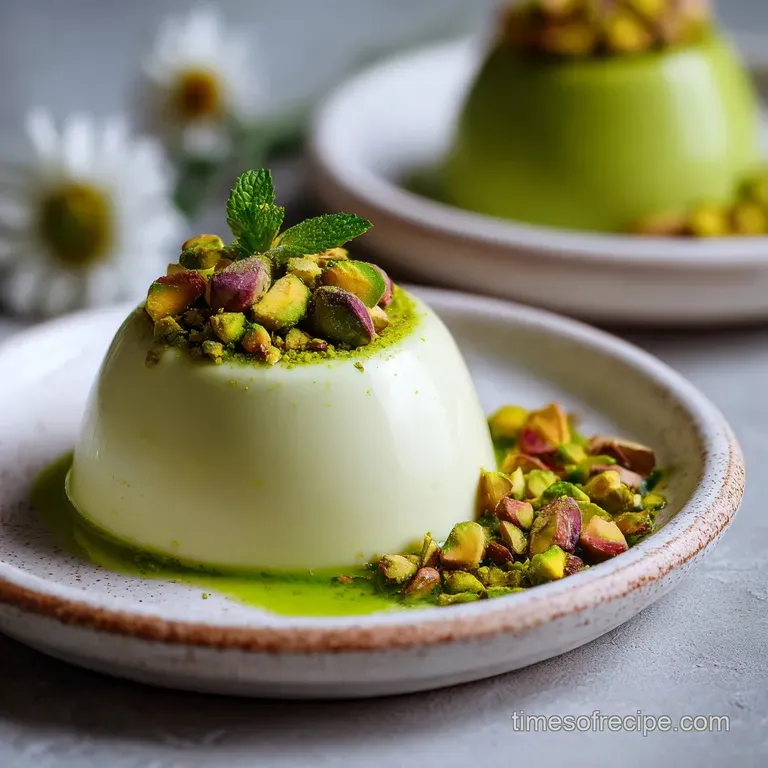
- Time: Active 15 minutes, Passive 6 hours 10 mins, Total 6 hours 25 mins
- Flavor/Texture Hook: Nutty, velvety, and perfectly wobbling
- Perfect for: Dinner parties or a special weekend treat
- Key Techniques for Silky Results
- The Science of Nut Infusion
- Precision Details for Successful Setting
- Essential Tools for Silkier Results
- Step-by-Step Method for Success
- Fixing Common Texture Problems
- Adapting the Recipe for Groups
- Simple Ways to Customize Flavors
- Best Practices for Fresh Storage
- Elegant Pairings for Better Serving
- Recipe FAQs
- 📝 Recipe Card
Key Techniques for Silky Results
Protein Lattice: Gelatin creates a flexible web that traps liquid, giving us that signature "wobble" without becoming a hard block.
Emulsion Stability: Pure pistachio paste contains natural oils that must be whisked into warm cream slowly to prevent separation during the cooling phase.
Thermal Control: Keeping the mixture below a boil prevents the delicate dairy proteins from denaturing, which would result in a grainy mouthfeel.
| Method | Time | Texture | Best For |
|---|---|---|---|
| Traditional Chill | 6 hours | Superior silkiness | Best flavor development |
| Ice Bath Quick Set | 2 hours | Slightly denser | When you're in a rush |
| Freezer Flash | 45 mins | Risk of icy edges | Only as a last resort |
Choosing the right setting method depends entirely on your patience. While the ice bath technique works in a pinch, the slow dance of a refrigerator chill allows the pistachio oils to fully meld with the cream. If you have leftover paste after making this, you should try my Pistachio Martini recipe for a fun liquid twist.
The Science of Nut Infusion
| Ingredient | Science Role | Pro Secret |
|---|---|---|
| Heavy Cream (1.5 cups) | Provides fat for mouthfeel | Use at least 36% fat content |
| Pistachio Paste (0.5 cup) | Adds flavor and thickens | Warm it slightly before adding |
| Gelatin (2.25 tsp) | Structural setting agent | Bloom in cold water first |
The relationship between the heavy cream and the pistachio paste is what determines the final success of your custard. High fat content is non negotiable here because it coats the tongue and carries the nutty aroma longer than milk alone would.
Precision Details for Successful Setting
To get that "shatter" of toasted nuts against the soft cream, you need to follow the measurements exactly. We are using a 100% pure pistachio paste, which behaves very differently than a sweetened pistachio butter or a cheap spread filled with palm oil.
- 1/2 cup (125g) unsweetened 100% pure pistachio paste Why this? Essential for deep, authentic flavor without artificial coloring.
- 1.5 cups (360ml) heavy cream Why this? Creates the necessary velvety base for a rich dessert.
- 1/2 cup (120ml) whole milk Why this? Thins the cream just enough to keep it light.
- 3 tbsp (45ml) honey Why this? Offers a floral sweetness that complements the nuts.
- 1 tsp vanilla bean paste Why this? Adds visual flecks and a concentrated aromatic profile.
- 1 pinch sea salt Why this? Cuts through the fat and highlights the nuttiness.
- 2.25 tsp (7g) unflavored gelatin powder Why this? The precise amount for a perfect wobble.
- 2 tbsp (30ml) cold water Why this? Necessary for blooming the gelatin properly.
- 1/2 cup (120ml) fresh raspberry sauce
- 2 tbsp toasted and salted crushed pistachios
| Original Ingredient | Substitute | Why It Works |
|---|---|---|
| Honey (3 tbsp) | Maple Syrup (3 tbsp) | Adds a woodsy sweetness. Note: Changes the flavor profile significantly. |
| Whole Milk (0.5 cup) | Coconut Milk (0.5 cup) | Maintains fat content. Note: Adds a subtle tropical undertone. |
| Raspberry Sauce | Balsamic Glaze | Provides acidity. Note: Use sparingly as it is very intense. |
For those who love Middle Eastern profiles, this Pistachio Panna Cotta pairs beautifully with an Iranian Dessert with recipe if you are planning a themed dinner party. The rosewater and pistachio combination is a classic for a reason.
Essential Tools for Silkier Results
You don't need a high tech kitchen to pull this off, but a few specific items make a massive difference. A heavy bottomed saucepan is your best friend because it prevents the honey from scorching at the bottom of the pot.
You also really want a fine mesh sieve. No matter how smooth your pistachio paste looks, there might be tiny fibrous bits that ruin the "velvety" experience. Straining the mixture as it goes into the ramekins is the hallmark of a professional grade dessert.
Chef's Tip: Freeze your metal mixing bowl for 10 minutes before whisking the paste and cream. Keeping everything cool as you combine the final elements helps the gelatin set more evenly.
step-by-step Method for Success
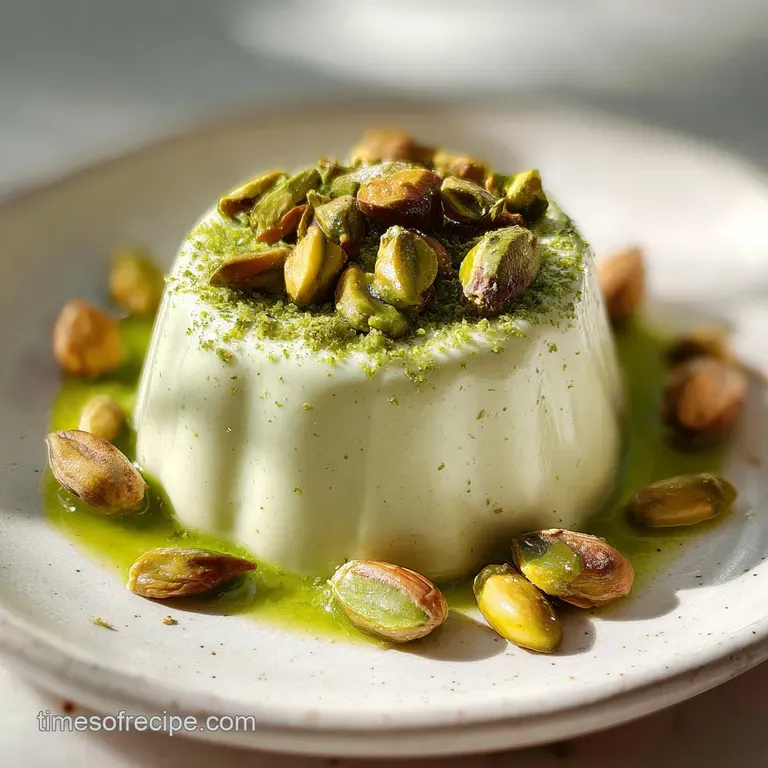
- Place the cold water in a small bowl and sprinkle the gelatin over the top. Note: This is called blooming and ensures no lumps later.
- Combine the heavy cream, whole milk, honey, and sea salt in a saucepan over medium heat.
- Warm the mixture until small bubbles form around the edges but do not let it boil.
- Whisk in the pistachio paste and vanilla bean paste until the liquid is a uniform pale green.
- Remove from heat and add the bloomed gelatin to the warm cream.
- Whisk vigorously until the gelatin is completely dissolved and invisible.
- Pour the mixture through a fine mesh sieve into a clean pitcher.
- Divide the liquid between 6 ramekins or small glasses.
- Chill in the refrigerator for at least 6 hours until the center jiggles slightly when tapped.
- Top with raspberry sauce and crushed nuts just before serving.
Fixing Common Texture Problems
Solving the Lumpy Paste
If your pistachio paste isn't integrating, it's usually because it was too cold when added to the cream. The fats in the nuts seize up and form tiny beads that are impossible to whisk out.
Fixing a Weak Set
If your custard is still liquid after four hours, the gelatin might have been old or you might have boiled it. High heat can destroy the thickening power of gelatin proteins.
Unmolding Without Breaking
Getting the panna cotta out of the ramekin can be terrifying. If it won't budge, the vacuum seal is too strong or the sides are stuck.
| Problem | Root Cause | Solution |
|---|---|---|
| Grainy texture | Unstrained paste | Pour through a fine mesh sieve before chilling. |
| Rubbery consistency | Too much gelatin | Reduce gelatin by 1/4 tsp next time; use more cream. |
| Separated layers | Slow cooling | Whisk the mixture over an ice bath until slightly thickened. |
Common Mistakes Checklist
- ✓ Always bloom gelatin in cold water, never warm or hot.
- ✓ Avoid boiling the cream as it ruins the gelatin's setting power.
- ✓ Use a heavy bottomed pan to prevent the honey from burning.
- ✓ Strain the final mixture through a sieve for a professional finish.
- ✓ Let the ramekins set on a flat surface in the fridge to avoid tilted tops.
Adapting the Recipe for Groups
When scaling this recipe down for a romantic dinner for two, use exactly one third of the ingredients. Since 2.25 tsp of gelatin is hard to divide perfectly, I recommend whisking a whole packet into a larger amount of water and then measuring out a third of that bloomed mass.
Reduce the chilling time by about an hour since smaller batches cool faster.
For a large party of 12 or more, you can double the recipe easily. However, do not double the salt or vanilla bean paste; instead, use 1.5 times the amount to keep the flavors balanced.
When working in large batches, it is better to set the panna cotta in a single large glass trifle bowl and scoop it out for a more rustic, family style presentation.
Simple Ways to Customize Flavors
"Panna cotta" literally translates to "cooked cream," which is the ultimate blank canvas for your imagination. While I love the classic nuttiness, you can easily change the vibe of this dish with a few small tweaks.
- The Citrus Twist: Add the zest of one lemon to the cream while it heats to brighten the heavy nut flavor.
- The Mocha Version: Swap the honey for brown sugar and add a teaspoon of instant espresso powder to the warm milk.
- The Vegan Option: Use full fat coconut milk and replace the gelatin with 1 teaspoon of agar agar powder.
One myth I hear constantly is that you can't use fresh pineapple or kiwi in panna cotta. This is actually true! These fruits contain enzymes called bromelain and actinidain which eat the protein in gelatin, preventing it from ever setting.
If you want a tropical version, you must cook the fruit first to deactivate those enzymes.
Best Practices for Fresh Storage
You can keep your Pistachio Panna Cotta in the fridge for up to 3 days. It's actually better on day two because the pistachio flavor deepens and permeates the cream more thoroughly. Always cover the ramekins with plastic wrap pressed directly onto the surface to prevent a "skin" from forming.
I don't recommend freezing this dessert. The delicate protein structure of the gelatin doesn't handle the expansion of ice crystals well. When it thaws, it tends to "weep" liquid and lose that signature velvety texture, becoming grainy and unpleasant.
For a zero waste tip, don't throw away the bits of pistachio left in your sieve. Mix them into your morning oatmeal or fold them into some softened butter for a quick nutty spread. If you have extra raspberry sauce, it freezes beautifully in ice cube trays for future smoothies.
Elegant Pairings for Better Serving
This dessert is rich, so it needs something sharp or crunchy to balance the palate. I almost always serve it with a crisp almond biscotti or a thin lace cookie to provide a textural "shatter" against the soft cream.
If you aren't a fan of raspberry, a simple drizzle of high-quality olive oil and a few flakes of Maldon sea salt on top can make this feel incredibly modern and sophisticated. The salt makes the nuttiness of the pistachio explode.
For a drink pairing, a small glass of chilled Vin Santo or a light Moscato d'Asti works wonders to cut through the fat of the heavy cream.
Recipe FAQs
What is the ideal chilling time for Pistachio Panna Cotta?
At least 6 hours is best for superior silkiness. While a quicker ice bath set is possible in about 2 hours, the slow chill allows the pistachio flavors to fully meld and develop for the best taste.
Can I substitute honey in Pistachio Panna Cotta?
Yes, maple syrup is a viable substitute. Use the same quantity, but be aware it will significantly alter the flavor profile, adding a woodsy sweetness rather than the floral notes of honey. If you're looking for other unique sweet treats, check out this Liquid Maria Juana Drink Recipe - Quick Mamajuana in 5 Minutes.
What causes a grainy texture in Pistachio Panna Cotta?
Unstrained pistachio paste is the main culprit for graininess. Even if the paste looks smooth, tiny fibrous bits can remain; always pour the mixture through a fine mesh sieve before chilling to ensure a professional, velvety finish.
Is it true that fresh pineapple and kiwi cannot be used in panna cotta?
No, this is correct and a crucial point for fruit based custards. These fruits contain enzymes that break down gelatin, preventing it from setting; you must cook them first to deactivate these enzymes if you want to use them.
How long can Pistachio Panna Cotta be stored?
Up to 3 days in the refrigerator. The flavor actually deepens and improves on the second day, so it's a great make-ahead dessert. Always cover tightly to prevent a skin from forming.
What is the best way to unmold Pistachio Panna Cotta?
Briefly dip the bottom of the ramekin in hot water. This loosens any sticky edges without melting the panna cotta. Then, run a thin knife around the rim if needed and invert onto a plate. If you’re looking for a delightful savory appetizer, try our Pickle Martini Recipe - Vodka & Pickle Juice Cocktail.
Can Pistachio Panna Cotta be frozen?
No, freezing is not recommended. Freezing damages the delicate protein structure of the gelatin, causing it to weep liquid upon thawing and resulting in a grainy texture.
Pistachio Panna Cotta
Ingredients:
Instructions:
Nutrition Facts:
| Calories | 412 calories |
|---|---|
| Protein | 7.9 g |
| Fat | 32.9 g |
| Carbs | 21.2 g |
| Fiber | 2.3 g |
| Sugar | 17.5 g |
| Sodium | 55 mg |
