Perfect Prime Rib Recipe Oven Reverse Sear
- Time: Active 20 minutes, Passive 4 hours 10 mins, Total 4 hours 30 mins
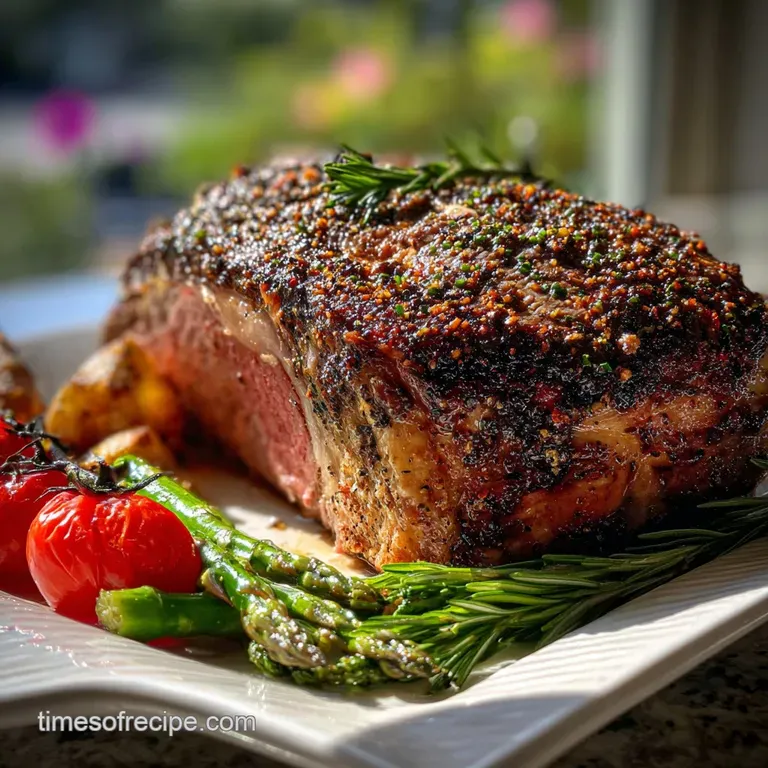
- Flavor/Texture Hook: Velvety, edge to edge pink center with a salty, rosemary infused crust.
- Perfect for: A crowded holiday table or a hearty Sunday family dinner.
- The Best Prime Rib Recipe
- Science of the Slow Roast
- Key Details for Perfect Beef
- Components for a Hearty Meal
- Essential Tools for Meat Success
- Cooking Your Roast to Perfection
- Expert Tricks and Beef Blunders
- Tasty Twists on Classic Roast
- Storing Beef and Using Scraps
- Hearty Sides for Your Table
- Planning Your Holiday Roast Schedule
- Recipe FAQs
- 📝 Recipe Card
The Best Prime Rib Recipe
Picture this: the house smells like roasting garlic and sizzling beef fat, and your guests are already hovering near the kitchen with empty plates. There is something about a massive rib roast that just screams "family" and "comfort," right? I remember the first time I tried to make a prime rib recipe for Christmas.
I was so nervous I’d ruin an expensive piece of meat that I pulled it out too early, and it was basically blue in the middle. We ended up microwaving slices, which is a kitchen sin I’m still repenting for today.
Since then, I have experimented with every method under the sun. I’ve tried the over high heat blast, the "closed oven" trick, and the classic sear. What I have found is that the reverse sear is the absolute king of beef.
It’s the only way to get that professional, uniform color from the very edge of the fat cap all the way to the bone. No more thick bands of overcooked meat around the outside. Just tender, juicy goodness that makes the whole room go quiet once you start carving.
We are going for bold, hearty flavors here. We want a crust that has a crunch and an interior that feels like butter. I’m going to walk you through exactly how I do it now, with all the little tricks I’ve picked up so you don’t have to make the same mistakes I did.
Trust me, once you see that mahogany crust and smell the thyme hitting the hot juices, you’ll never go back to any other way of cooking this.
Science of the Slow Roast
Protein Denaturation: Low heat prevents muscle fibers from contracting too quickly, which squeezes out moisture and leaves the meat tough. By keeping the temperature steady and low, we allow the enzymes to naturally tenderize the beef as it warms.
Surface Desiccation: Leaving the roast uncovered in the fridge allows the surface moisture to evaporate, which is the secret to a crust that crackles. A dry surface undergoes the Maillard reaction much faster than a damp one, giving us that deep, savory flavor without overcooking the inside.
Maillard Reaction: This chemical dance between amino acids and reducing sugars creates hundreds of different flavor compounds during the final over high heat blast. It is what transforms a grey piece of meat into a satisfying, brown masterpiece that smells like heaven.
Carryover Cooking: Large roasts hold a massive amount of thermal energy, continuing to cook even after they leave the heat. Understanding this heat momentum is the difference between a pink center and a medium well disappointment.
Key Details for Perfect Beef
| Component | Science Role | Pro Secret |
|---|---|---|
| Standing Rib Roast | Fat Marbling | Choose "Choice" or "Prime" with a thick fat cap for self basting. |
| Diamond Crystal Kosher Salt | Moisture Extraction | Salt draws out juices, then re absorbs them to season the deep muscle. |
| Fresh Garlic Paste | Aromatic Foundation | Mincing into a paste releases more oils than chopping, coating the meat better. |
| Fresh Rosemary | Volatile Oil Release | These oils withstand long cook times, infusing the fat with woodsy notes. |
Components for a Hearty Meal
To get started, you will need a few staples. For the beef itself, we are looking for quality and fat content. This is not the time to be shy with the salt or the herbs.
- 8 lb standing rib roast (3-4 bones): Look for "Prime" grade if your budget allows, but a well marbled "Choice" roast from a local butcher is often just as satisfying. Why this? Bones act as an insulator, keeping the meat closest to them incredibly tender.
- 3 tbsp Diamond Crystal Kosher Salt: This is our primary seasoning. Why this? Coarser grains are easier to distribute evenly than fine table salt.
- 2 tbsp coarsely cracked black pepper: For that signature bite.
- 4 tbsp unsalted butter, softened: This helps our herb rub stick to the cold meat.
- 4 cloves garlic, minced into a paste: Use a microplane or the side of your knife to get it smooth.
- 1 tbsp fresh rosemary, finely chopped: Rosemary and beef are a match made in heaven.
- 1 tbsp fresh thyme, finely chopped: Adds a subtle, earthy layer.
- 2 cups beef bone broth: This is for our jus. Why this? Bone broth has more collagen, giving the sauce a velvety mouthfeel.
- 0.5 cup dry red wine: Something like a Cabernet or Merlot works wonders.
- 1 shallot, minced: Adds a mild onion sweetness to the pan sauce.
Ingredient Substitutions
| Original Ingredient | Substitute | Why It Works |
|---|---|---|
| Dry Red Wine | Beef Broth + 1 tsp Balsamic | Adds the necessary acidity without the alcohol content. |
| Fresh Rosemary | Dried Rosemary (1 tsp) | Concentrated flavor. Note: Soak in oil first to prevent burning. |
| Shallot | Yellow Onion | Similar sweetness, though slightly more pungent in the final sauce. |
Essential Tools for Meat Success
You don't need a professional kitchen, but a few specific items make this whole process a lot less stressful. I swear by my Lodge Cast Iron Skillet for the final sear if I’m doing a smaller roast, but for an 8 lb monster, you need a heavy duty roasting pan.
- Heavy Roasting Pan with Rack: This lifts the meat up so air can circulate underneath. If the meat sits on the bottom, the bottom gets soggy.
- Digital Leave In Thermometer: Honestly, don't even try this without one. Guessing the temperature of an expensive roast is a recipe for heartbreak. I use a ThermoPro or a Meater probe.
- Sharp Carving Knife: A long, thin blade makes those beautiful, clean slices possible.
- Small Mixing Bowl: For the herb butter rub.
Cooking Your Roast to Perfection
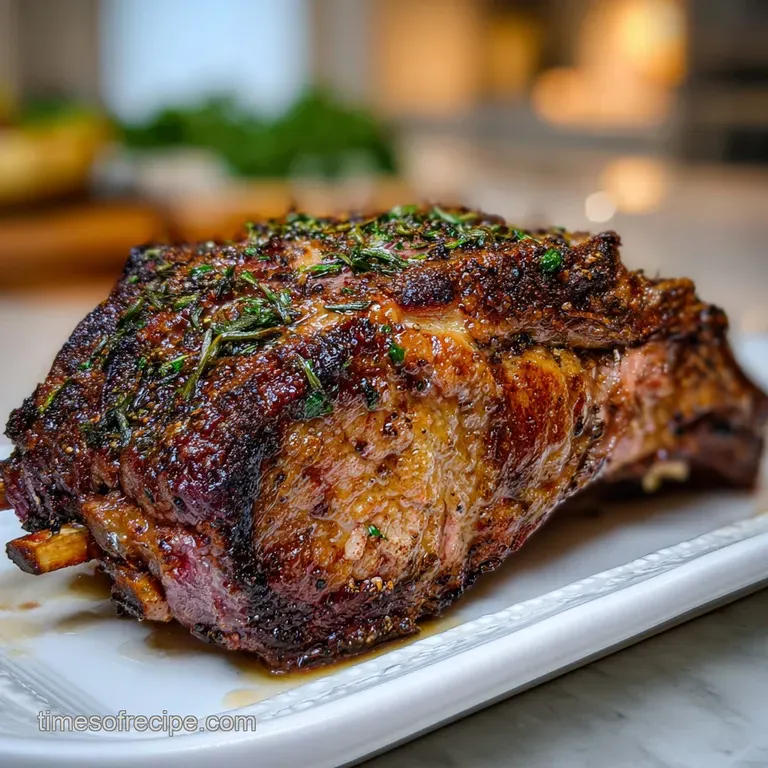
- Tempering the beef. Remove the 8 lb standing rib roast from the fridge 2 hours before you plan to cook it. Note: This ensures the center isn't an ice cube when the outside starts to brown.
- Preparing the rub. Combine the 4 tbsp softened butter, 4 cloves garlic paste, 1 tbsp rosemary, and 1 tbsp thyme in a bowl.
- Seasoning the meat. Rub the 3 tbsp salt and 2 tbsp pepper all over the roast, then coat it with the herb butter mixture.
- Setting the oven. Preheat your oven to 250°F.
- Inserting the probe. Place the roast on the rack in your pan, bone side down, and insert your thermometer into the thickest part.
- Executing the slow roast. Slide the pan into the oven and cook until the internal temperature reaches 115°F for medium rare. Note: This usually takes about 3.5 to 4 hours depending on your oven's quirks.
- Mastering the rest period. Remove the roast and tent it loosely with foil for at least 30 minutes. Note: Do not skip this; the fibers need to relax so the juices don't run out.
- Creating the jus. While the meat rests, sauté the shallot in the roasting pan, then deglaze with 0.5 cup red wine and 2 cups beef broth.
- Finishing with the flash sear. Crank the oven up to 500°F and put the rested roast back in for 6 to 10 minutes until the fat is golden and crackling.
- Slicing the beef. Cut along the bones to remove the entire rack, then slice the meat into thick, hearty portions.
Chef's Note: If you want a bit more char, you can skip the oven finish and sear the roast in a massive cast iron pan with a bit of oil. Just be ready for some smoke in the kitchen!
If you’re looking for a slightly different approach for your next dinner party, check out this Prime Rib Roast recipe which goes even deeper into the reverse sear technique.
Expert Tricks and Beef Blunders
The biggest mistake I see people make is trusting the clock over a thermometer. Every oven is a liar. My old oven used to run 25 degrees hot, which would have ruined this prime rib recipe if I hadn't checked the internal temp. Also, watch out for "bone in" vs "boneless" timing.
Boneless roasts often cook faster because there is more surface area exposed to the heat.
Avoiding the Bone Probe
When you’re sticking that thermometer in, make sure you aren't hitting the bone. Bone conducts heat differently than meat, so if your probe is touching it, you’ll get a false high reading. Your meat will look done on the screen but be cold in the middle. Aim for the very center of the largest muscle.
Managing Carryover Heat
A big roast like this will climb about 5 to 7 degrees while it rests. If you want your final temp to be 130°F (perfect medium rare), you have to pull it at 123-125°F before the final sear.
If you wait until it hits 130°F in the oven, it will end up closer to medium by the time you eat.
| Problem | Cause | Fix | Pro Tip |
|---|---|---|---|
| Tough Meat | Oven too hot | Lower temp to 250°F | Use a secondary oven thermometer |
| Grey Ring | Not resting | Rest for 30-45 mins | Tent loosely with foil to retain heat |
| No Crust | Surface too wet | Pat dry before seasoning | Dry brine in fridge overnight |
Tasty Twists on Classic Roast
If you're feeling adventurous, you can definitely move away from the traditional garlic and herb profile. Sometimes I like to go with a "Texas style" rub, using heavy black pepper and a touch of smoked paprika to give it a bit of a BBQ vibe.
- Applying a Horseradish Crust: Mix 0.25 cup prepared horseradish with your herb butter. It adds a sinus clearing zing that cuts through the rich fat.
- Incorporating Smoked Paprika and Cumin: For a more savory, smoky depth, swap the rosemary for 1 tbsp smoked paprika and a teaspoon of toasted cumin.
- Serving with Creamy Horseradish Sauce: Whip some heavy cream until stiff, then fold in horseradish, salt, and a splash of lemon juice. It's a classic for a reason.
If you find yourself with leftovers which is a rare but wonderful problem you absolutely have to try this Leftover Prime Rib recipe. It uses garlic and herbs to bring the meat back to life without drying it out.
Storing Beef and Using Scraps
Leftover prime rib is basically a gift from the food gods. Keep it in an airtight container in the fridge for up to 4 days. If you want to freeze it, wrap it tightly in plastic wrap and then foil; it’ll stay good for about 2 months. To reheat, don't use the microwave!
Put the slices in a pan with a splash of beef broth, cover with foil, and warm them in a 300°F oven until they just reach 120°F.
Zero Waste Tip: Never, ever throw away those rib bones. They make the most incredible beef stock you’ve ever tasted. Simmer them with some carrots, celery, and onions for 6 hours, and you'll have a base for soup that beats anything in a carton.
Also, any fat you trim off can be rendered down into tallow for roasting the best potatoes of your life.
Hearty Sides for Your Table
When serving something this grand, you need sides that can hold their own. I usually go for the "big three": something starchy, something green, and something bright to cut the fat.
- Matching with Garlic Mashed Potatoes: Use plenty of butter and cream. You want them to be velvety so they can soak up that red wine jus.
- Roasted Brussels Sprouts: Toss them with some balsamic vinegar and honey. The char on the sprouts complements the crust on the beef beautifully.
- Yorkshire Pudding: Use the drippings from your roasting pan to make these airy, crispy pops of joy. They are the traditional companion for a rib roast.
If you're looking to turn those leftovers into a Monday lunch that everyone will envy, this The Leftover Prime recipe for a sandwich is exactly what you need. It turns the cold beef into something truly special.
Planning Your Holiday Roast Schedule
Timing for Success
Start your prep early. If your roast is frozen, it needs at least 3 days in the fridge to thaw completely. On the day of, give yourself a 5 hour window. It is better to have the meat resting on the counter for an hour while you finish the sides than to have a house full of hungry people waiting on a roast that’s still raw in the middle.
Searing Myths and Beef Truths
You might have heard that you need to sear the meat first to "lock in the juices." That is a total myth. Searing creates flavor through the Maillard reaction, but it doesn't create a waterproof seal.
In fact, searing first often leads to that thick grey ring because the high heat penetrates too deep before the roast even hits the oven. By searing at the very end, we get the best of both worlds: a great crust and a perfectly pink interior.
Decision Shortcut
- If you want Maximum Crust: Dry brine with salt in the fridge for 48 hours.
- If you want Easiest Cleanup: Use a disposable foil pan (though heat distribution won't be as even).
- If you want Fastest Results: Buy a boneless roast, but be aware you'll lose a bit of that "standing" presentation.
| Feature | Fresh Grade Beef | Shortcut/Select Grade | Why It Matters |
|---|---|---|---|
| Marbling | High intramuscular fat | Leaner, less marbling | Fat equals flavor and juice. |
| Texture | Velvety and soft | Can be slightly chewy | Higher grades have more tender muscle fibers. |
| Price | Premium / Expensive | Budget friendly | It's a trade off between cost and "melt in-mouth" feel. |
Cooking this prime rib recipe is really about patience and paying attention to the details. It's about that moment when you pull the roast out of the oven and the whole family gathers around, eyes wide, waiting for that first slice. It's a hearty, satisfying meal that truly brings people together.
Just remember: watch your temps, give it time to rest, and don't be afraid to get a little messy with that herb butter. You've got this!
Recipe FAQs
How to make prime rib?
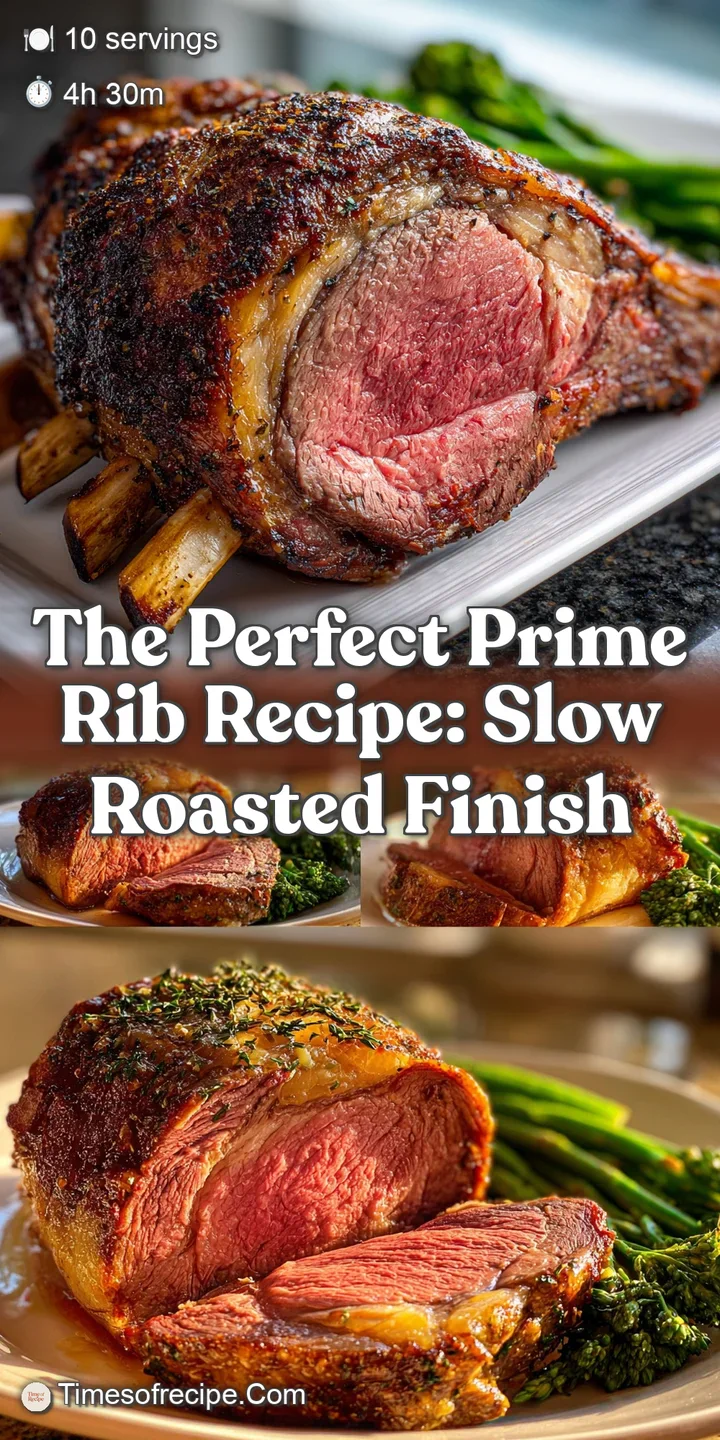
Reverse sear is best. Start the roast low (around 250°F) until it reaches an internal temperature of 115°F, then finish it with a blast of very high heat (500°F) to develop the crust. This technique ensures an even, edge-to-edge pink center.
How to make prime rib roast?
Use a probe thermometer and dry brine. Season the roast heavily with kosher salt 24 to 48 hours ahead of time and leave it uncovered in the refrigerator. This draws out surface moisture, which is critical for achieving a deeply flavorful, crisp exterior during cooking.
How to make prime rib at home?
Yes, low temperature roasting makes it easy. The key to home success is patience; cooking low and slow (around 250°F) minimizes muscle contraction, preventing the meat from becoming tough and dry.
If you enjoyed controlling the slow heat in this recipe, see how the same principle works in our New Years Eve Easy Dinner Idea with Garlic Butter Steak for smaller cuts.
How to make prime rib au jus?
Use the drippings and high-quality broth. After removing the roast, sauté minced shallots in the roasting pan drippings, then deglaze the pan with red wine before adding beef bone broth. Simmer this mixture until slightly reduced for a rich, concentrated jus.
How to make prime rib gravy?
Use a roux or reduction method for a thicker sauce. While au jus is thin and relies on natural reduction, gravy requires thickening; whisk flour or cornstarch into the rendered fat before adding your liquid (drippings/broth).
This mimics the thickening process used when building flavor layers for dishes like our Creamed Onions Recipe: Velvety British Pearl Onions for Sunday Roast.
What temperature should I pull prime rib?
Pull it early to account for carryover cooking. For a final medium rare result (130°F), you should pull the roast from the heat when the thermometer reads between 120°F and 125°F before resting. The temperature will climb another 5 7 degrees while it sits covered.
Should I cook prime rib standing on the bones or flat?
Stand it on the bones whenever possible. The bones act as natural insulation, helping to shield the meat directly above them from the intense heat. This results in a more evenly cooked roast with less risk of an overdone band near the bottom.
Prime Rib Recipe Oven Sear
Ingredients:
Instructions:
Nutrition Facts:
| Calories | 824 kcal |
|---|---|
| Protein | 57.6 g |
| Fat | 63.8 g |
| Carbs | 2.1 g |
| Fiber | 0.3 g |
| Sugar | 0.7 g |
| Sodium | 1845 mg |
