Royal Icing Recipe: Easy & Professional Finish
- Time: Active 10 mins, Passive 30 mins, Total 40 mins
- Flavor/Texture Hook: Shatter crisp exterior with a velvety, melt away finish
- Perfect for: Holiday sugar cookies, wedding favors, or structural gingerbread builds
- Achieve A Satin Finish With This Royal Icing Recipe
- Reasons To Love This Sweet Finish
- The Physics Of The Hard Set
- Essential Numbers For Sweet Success
- Analyzing The Elements Of Elegant Icing
- Ingredients & Substitutes
- Tools For Creating Stunning Decorations
- The Step By Step Piping Process
- Resolving Common Icing Consistency Issues
- Smart Swaps For Different Results
- Kitchen Tales: The Great Icing Myth
- Keeping Your Sugar Art Fresh
- Simple Tricks For Beautiful Presentation
- Common Questions About Royal Icing
- Troubleshooting Common Issues
- Recipe FAQs
- 📝 Recipe Card
Achieve A Satin Finish With This Royal Icing Recipe
The first time I tried decorating with a traditional royal icing recipe, I ended up with a kitchen that looked like a powdered sugar explosion and cookies that were more "cloudy" than "glossy." I remember the frustration of watching my intricate lines bleed into a puddle of sweet soup.
But then, I heard that specific crack when biting into a professionally decorated cookie, a sound that signaled the ultimate balance of sugar and air.
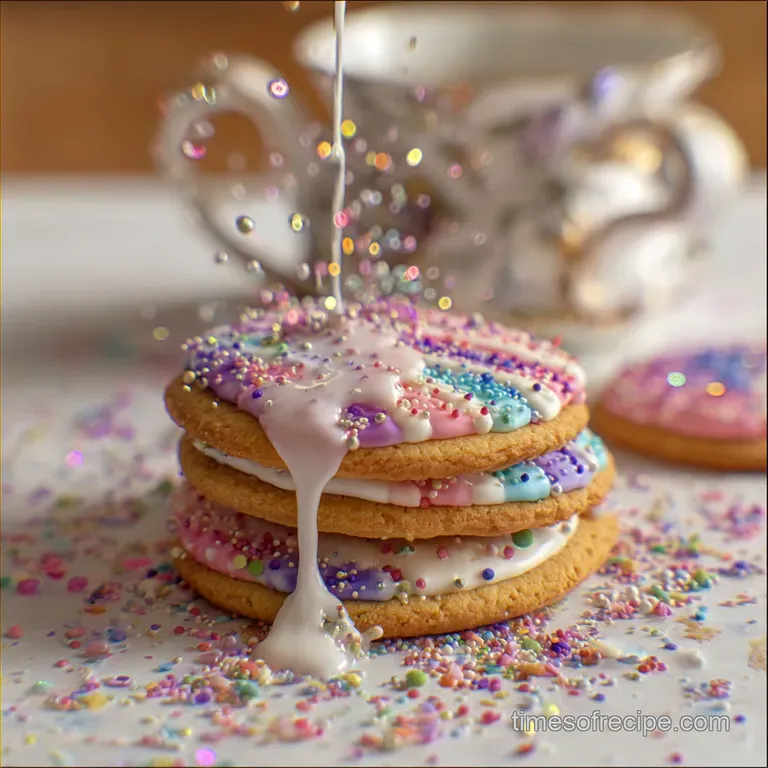
That shatter crisp texture is pure magic. It creates a stunning contrast between the soft, buttery crumb of a shortbread and the brittle, sweet shell of the icing. When you get the consistency right, the icing flows like liquid silk across the cookie, self leveling into a mirror like surface that looks almost too elegant to eat.
We're aiming for a finish that is bright and clean. By using a clear vanilla extract and a specific whipping technique, we can ensure the white remains snowy and the colors stay vibrant.
This isn't just about making things look pretty; it's about creating a sensory experience where the snap of the icing leads directly into a rich, sweet reward.
Reasons To Love This Sweet Finish
- Structural Integrity: The protein in the meringue powder creates a microscopic web that holds its shape, allowing for sky high peaks or delicate lace patterns.
- Rapid Dehydration: Unlike buttercream, this mixture loses moisture quickly to the air, forming a protective crust that makes treats stackable and gift ready.
- Customizable Viscosity: With just a few drops of water, you can transform this from a thick "caulk" for gingerbread houses to a thin "flood" for smooth backgrounds.
- Shelf Stability: Because it relies on dried egg proteins, the finished product is stable at room temperature, making it a reliable choice for favors that need to sit out.
- Flavor Map:
- Sweet: Concentrated 10x sugar base.
- Bright: Clear vanilla floral notes.
- Tangy: Subtle acidity from the meringue powder.
- Crisp: Brittle, glass like snap upon biting.
The Physics Of The Hard Set
The secret to the success of this royal icing recipe lies in the denaturation and subsequent realignment of proteins found in the meringue powder. As you whip the mixture, you're physically stretching these protein strands and trapping tiny air bubbles, which provides the initial volume and "grip" needed for piping.
Once the icing is applied to a cookie, the water begins to evaporate, causing the sugar crystals to lock together within that reinforced protein framework. This creates a solid, glass like structure that is incredibly strong yet thin enough to shatter easily when under pressure.
Consistency Comparison: Mixer Performance
| Mixing Method | Texture Result | Best Use Case | Effort Level |
|---|---|---|---|
| Stand Mixer | Maximum aeration, very fluffy and stiff | Flowers, borders, and structural gluing | Low (Hands free) |
| Hand Mixer | Controlled aeration, smoother finish | Flooding and general decorating | Medium |
| Manual Whisk | Minimal air, very dense and glossy | Small batches or fine detail work | High |
Essential Numbers For Sweet Success
When you are aiming for a professional result, guessing is your enemy. I've found that precision in temperature and timing is what separates a grainy icing from a silky one. The water must be warm enough to dissolve the sugar without cooking the proteins.
- Temperature Check: Ensure your 10 tbsp of water is exactly 100°F; too cold and the meringue won't hydrate, too hot and it will clump.
- Whipping Window: For stiff peaks, use a stand mixer on medium high for exactly 7 minutes until the gloss turns matte.
- The 10 Second Rule: For flooding, the icing should take exactly 10 seconds to disappear back into itself when a knife is dragged through it.
Analyzing The Elements Of Elegant Icing
Selecting the right components is the first step toward a stunning result. Don't just grab any bag of sugar off the shelf; the quality of your "dust" matters more than you think. Using a high-quality Sugar Cookie Frosting recipe as your base guide can help you understand the importance of these ratios.
| Ingredient | Science Role | Pro Secret |
|---|---|---|
| Confectioners' Sugar | Provides bulk and sweetness | Sift it twice to remove every single lump for a nozzle friendly flow. |
| Meringue Powder | Acts as the structural binder | Keep it in a cool, dry place; moisture in the jar ruins its lifting power. |
| Warm Water | Hydrates proteins and dissolves sugar | Use filtered water to prevent mineral spots or "pitting" in the final finish. |
| Clear Vanilla | Adds aroma without tinting | Real vanilla bean paste is lovely but will turn your white icing a muddy ivory. |
Ingredients & Substitutes
- 4 cups (500g) Confectioners' Sugar: 10x finely sifted. Why this? Essential for a smooth, non gritty texture that won't clog fine tips.
- Substitute: Standard powdered sugar, but you must sift it at least three times.
- 3 tbsp Meringue Powder: The structural backbone. Why this? Safer and more stable than fresh egg whites for long term storage.
- Substitute: 3-4 large egg whites (adjust water accordingly), but it won't be as shelf stable.
- 10 tbsp Warm Water (100°F): The solvent. Why this? Heat helps the sugar integrate with the proteins for a glossy finish.
- Substitute: Warm lemon juice for a tart, bright flavor profile.
- 1 tsp Clear Vanilla Extract: The flavor. Why this? Provides classic flavor while maintaining a snow white appearance.
- Substitute: Almond extract or lemon extract for a sophisticated twist.
Tools For Creating Stunning Decorations
To get that velvety finish, you'll want a stand mixer with a whisk attachment, or a very sturdy hand mixer. While you can do this by hand, your forearms will definitely feel the burn before you reach the necessary stiff peak stage. I always recommend using grease free bowls stainless steel or glass is best.
Plastic bowls can harbor hidden oils that deflate the proteins, leaving you with a runny mess that never truly dries.
You'll also need high-quality piping bags and a variety of tips. For a beginner, a #2 tip is the "goldilocks" size not too thick for outlines, and not so thin it clogs every five seconds. If you're looking for a simpler approach, check out my Cookie Icing recipe for a base that is a bit more forgiving for new bakers.
The step-by-step Piping Process

- Sift sugar. Pour your 4 cups of sugar into a large bowl through a fine mesh sieve. Note: This prevents tiny lumps from clogging your piping tips later.
- Combine dry. Add the 3 tbsp of meringue powder to the sugar and whisk briefly to distribute.
- Add liquids. Pour in the 10 tbsp of warm water and 1 tsp of clear vanilla extract.
- Slow start. Use the whisk attachment on low speed until the powder is fully moistened.
- Whip high. Increase the speed to medium high and whip for 5-7 minutes until the mixture forms stiff, glossy peaks.
- Check consistency. Lift the whisk; the icing should stand up straight without drooping.
- Divide portions. Move smaller amounts into separate bowls if you plan on adding gel colors.
- Add color. Use a toothpick to add gel color and stir slowly until the hue is perfectly uniform.
- Thin down. For flooding, add water 1/2 teaspoon at a time until the icing reaches a honey like flow.
- Pop bubbles. Let the icing sit for 30 minutes, then stir gently with a spatula to remove trapped air.
Resolving Common Icing Consistency Issues
The most frustrating part of a royal icing recipe is the environmental factor. Humidity can be a real villain in the kitchen. If it's a rainy day, your icing might take twice as long to dry, or worse, it might stay tacky forever.
I once made three dozen cookies for a garden party, only to have the humidity melt the colors right off the edges.
Why Your Icing Is Pitting
This usually happens when there are too many air bubbles trapped in the mixture. When the icing dries, those bubbles collapse, leaving tiny craters on your beautiful surface. It looks like the surface of the moon rather than a smooth lake.
| Problem | Root Cause | Solution |
|---|---|---|
| Dull Finish | Over whipping or high humidity | Whip on lower speeds and use a fan to dry cookies quickly. |
| Color Bleed | Adding too much liquid color | Switch to concentrated gel pastes and dry in a cool, low humidity area. |
| Clogged Tips | Sugar lumps or dried bits | Sift sugar twice and keep tips covered with a damp cloth when not in use. |
Common Mistakes Checklist
- ✓ Using a plastic bowl that might have residual oil (oil kills the meringue).
- ✓ Adding water too quickly when thinning (it only takes a few drops to change the texture).
- ✓ Forgetting to sift the sugar (even if the bag says it's pre sifted).
- ✓ Using liquid food coloring instead of gel (liquid ruins the consistency).
- ✓ Not covering the bowl with a damp cloth while working (it will crust over in minutes).
Smart Swaps For Different Results
If you're making a large batch for a crowd, you might want to consider the cost and availability of your ingredients. While meringue powder is the gold standard for stability, it can be expensive.
| Premium Ingredient | Budget Alternative | Flavor Impact | Savings |
|---|---|---|---|
| Meringue Powder | Fresh Egg Whites | More traditional flavor, less stable | Save $10 per batch |
| Clear Vanilla | Imitation Vanilla | Slightly more "candy" like aroma | Save $5 per bottle |
| Gel Paste Color | Powdered Food Color | No change in texture | Save $2 per color |
Adjusting Your Batch Size
- Cutting the batch: If you only need a small amount, you can easily halve this. Use 2 cups of sugar, 1.5 tbsp powder, and 5 tbsp water. Reduce the whipping time by 2 minutes.
- Going big: For a massive holiday bake, double the recipe. Keep the salt/extract at 1.5x to avoid overpowering the sugar, and ensure you use a 5 quart or larger mixer bowl.
- Baking adjustments: If you use this icing on a cake that needs refrigeration, be aware that the moisture in the fridge will soften the icing. It's best used on room temperature treats.
Kitchen Tales: The Great Icing Myth
One of the biggest misconceptions in the baking world is that you need to use corn syrup to get a glossy finish. Many people believe that without it, the icing will be matte and dull. The truth is, high speed whipping and proper hydration of the meringue powder are what create that sheen.
Adding corn syrup can actually make the icing softer and stickier, which is fine for some, but it ruins that classic "snap" that a pure royal icing recipe provides.
Another myth is that you must use lemon juice to "set" the icing. While the acidity can help stabilize the proteins, it's not strictly necessary for the icing to harden. The evaporation of water is the primary driver of the hardening process. The lemon juice is mostly for flavor balance!
Keeping Your Sugar Art Fresh
Storage Guidelines: You can store the prepared icing in an airtight container at room temperature for up to 2 weeks. Just make sure to press a piece of plastic wrap directly onto the surface of the icing before sealing the lid; this prevents a crust from forming.
If the icing separates (which is natural), just give it a gentle stir with a spoon to bring it back together. Do not re whip it, as this can introduce too many air bubbles. For long term storage, you can freeze the icing in heavy duty freezer bags for up to 2 months.
Thaw it in the fridge overnight and bring it to room temperature before stirring.
Zero Waste Tips: If you have leftover icing, don't toss it! Pipe small "royal icing drops" or "sprinkles" onto parchment paper. Let them dry completely, then peel them off and store them in a jar. They make beautiful, crunchy decorations for future cupcakes or ice cream sundaes.
You can also use leftover stiff icing as "glue" for gingerbread houses or even to secure paper liners to a cupcake tray.
Simple Tricks For Beautiful Presentation
To make your cookies look like they came from a high end boutique, focus on the "wet on-wet" technique. While your flood icing is still wet, pipe dots of a contrasting color into it. The dots will sink in and become level with the background.
You can then take a toothpick and drag it through the dots to create hearts or marble patterns. It’s a simple way to add elegance without needing master level piping skills.
Always let your cookies dry for at least 12 hours before packaging them. Even if the surface looks dry, the underside near the cookie might still be soft. A little patience ensures that your beautiful designs don't get smudged or stuck to the packaging.
If you're looking for more ways to use this finish, it works beautifully for fine details on cakes or even as a dainty border on a platter of petit fours.
Comparison: Fresh vs Shortcut Icing
| Feature | This Recipe (Meringue Base) | Shortcut (Corn Syrup/Milk) |
|---|---|---|
| Drying Time | 6-12 hours (Hard) | 24+ hours (Soft) |
| Stackability | High (Will not smudge) | Low (Dents easily) |
| Finish | Matte to Semi Gloss | High Gloss |
Common Questions About Royal Icing
Troubleshooting Common Issues
| Issue | Solution |
|---|---|
| How long does it take for royal icing to dry completely | Under normal conditions, the surface will crust over in about 30 minutes, but it needs 6 to 12 hours to dry hard enough for stacking or packaging. If you live in a very humid climate, it could take up |
| Make royal icing without a stand mixer | Yes, you can use a hand mixer, but be prepared to spend a few extra minutes whipping. It is difficult to achieve the true "stiff peak" stage by hand whisking alone, as the protein structure needs high |
| Why did my royal icing turn out runny | Runny icing is usually caused by an incorrect water to sugar ratio or under whipping. Ensure you are measuring your sugar by weight if possible (500g), as volume measurements can vary wildly. If it’s |
| Is royal icing safe to eat if it contains meringue powder | Yes, meringue powder is made from pasteurized dried egg whites, making it perfectly safe to consume without further cooking. This is one of the main reasons it is preferred over fresh egg whites for c |
| Stop my colors from bleeding into each other | Color bleed is often caused by the icing being too wet or the environment being too humid. Ensure your "flood" icing isn't overly thin and allow the first color to dry for at least 20-30 minutes (unti |
Recipe FAQs
What are the ingredients of royal icing?
Confectioners' sugar, meringue powder, warm water, and clear vanilla extract. Meringue powder provides structure and shelf stability, while confectioners' sugar gives it sweetness and bulk. Warm water helps dissolve the sugar and hydrate the proteins.
What are the three types of royal icing?
Piping/Detailing, Flooding, and Stiff/Structural. Piping icing is thick for lines and borders, flooding icing is thinner for filling areas, and stiff icing is very dense for building structures.
How to make royal icing for a Christmas cake?
Use a recipe with meringue powder and whip to stiff peaks. For a Christmas cake, you'll want a stable icing that dries hard, so a standard recipe using meringue powder (not fresh egg whites) is ideal. Ensure it's whipped until it forms stiff, glossy peaks that hold their shape for decorating.
How to get royal icing to set hard?
Ensure proper meringue powder hydration and allow sufficient drying time. Whipping the meringue powder with warm water until stiff peaks form is crucial. Then, letting the icing dry in a low-humidity environment for at least 6-12 hours will result in a hard, shatter crisp finish. This technique is also key for achieving a crisp exterior in recipes like our Cutest Valentines Day Sugar Cookie You ll Love To Make | Crisp Edges.
Can I make royal icing with egg whites instead of meringue powder?
Yes, but it's less stable. You can substitute 3-4 large pasteurized egg whites for the meringue powder, but the icing won't be as shelf stable or as reliable for intricate work. It's best for immediate use.
Why is my royal icing not drying hard?
Likely due to humidity or an improper ratio. High humidity prevents the water from evaporating effectively, which is essential for hardening. Also, too much water in your initial mixture or adding too much water when thinning can prevent it from ever setting completely.
How should I store leftover royal icing?
In an airtight container at room temperature for up to two weeks. Press plastic wrap directly onto the surface of the icing before sealing the container to prevent a crust from forming. If it separates, just gently stir it back together.
Royal Icing Recipe

Ingredients:
Instructions:
Nutrition Facts:
| Calories | 43 kcal |
|---|---|
| Protein | 0.2 g |
| Fat | 0 g |
| Carbs | 10.8 g |
| Fiber | 0 g |
| Sugar | 10.4 g |
| Sodium | 1 mg |
