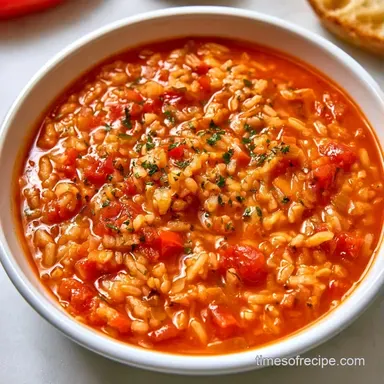
Tomato Rice Vegetable Soup in 40 Minutes
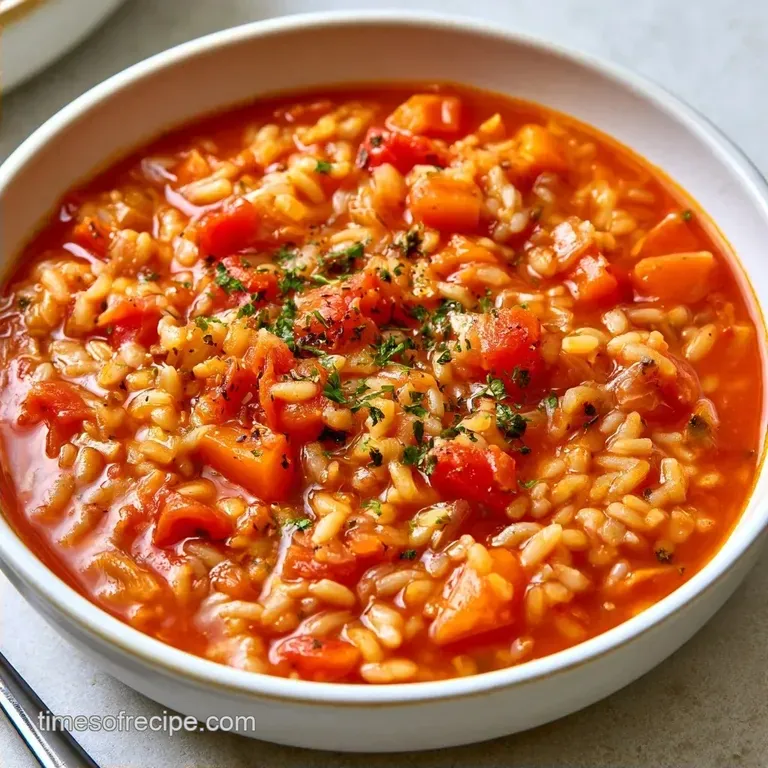
- Time: 10 min active + 30 min cook
- Taste & Texture: Zesty acidity balanced by tender rice and soft garden vegetables
- Perfect for: Gloomy weeknights or prepping cozy work lunches
The scent of onions and carrots sizzling in olive oil always brings me back to my grandmother's kitchen. The way she tended to her vegetable soup felt like a quiet ritual of affection.
In many Eastern European cultures, this rice style soup is the ultimate comfort food, often used to soothe sick children or served as a gentle, warming start to a large Sunday meal.
It's all about the balance: the bright, sharp zing of tomatoes meeting the earthy sweetness of carrots and celery. The rice adds a welcome density to the liquid, turning a light broth into a truly satisfying meal.
I hope you find that same sense of warmth. This Tomato Rice Vegetable Soup doesn't rely on complex techniques; it's about letting the vegetables soften and the rice absorb the savory depths of the broth. It is honest, simple fare that celebrates pure comfort.
Why These Steps Work
- Sautéing the Rice: Toasting the grains in oil before adding broth creates a barrier. This stops the rice from releasing too much starch, so the soup stays clear and the rice stays distinct.
- Browning the Paste: Cooking the tomato paste until it darkens removes the raw, metallic taste. This adds a deeper, more concentrated savoriness to the base.
- The Acid Finish: A squeeze of lemon juice at the very end wakes up all the other flavors. It cuts through the starch of the rice and the richness of the oil.
The Gear You'll Need
Professional equipment isn't necessary for this recipe. The most critical tool is a large, heavy bottomed pot, which helps distribute heat evenly. In a thinner pot, the rice may scorch on the bottom before the soup is finished.
I generally use a thick stockpot or a Dutch oven. You will also need a sharp chef's knife for dicing and a spoon for stirring. To rinse the rice until the water runs clear, a fine mesh strainer works best.
The Full Ingredient List
First, let's review the components. I recommend long grain white rice as it maintains its structure better than short grain options, which can become overly gummy.
| Ingredient | What It Does | Best Swap |
|---|---|---|
| Long grain white rice | Creates a hearty structure | Brown rice (increase cook time by 15 mins) |
| Tomato paste | Enriches the hue and umami | More crushed tomatoes (less intensity) |
| Vegetable broth | Acts as the flavorful liquid foundation | Water mixed with bouillon |
| Fresh lemon juice | Adds a zesty brightness | Apple cider vinegar |
The Grocery List:
- 2 tbsp extra virgin olive oil
- 1 medium yellow onion, finely chopped Why this? Adds a sweet, aromatic base
- 2 medium carrots, diced
- 2 stalks celery, diced
- 3 cloves garlic, minced
- 2 tbsp tomato paste Why this? Thickens the soup while adding punchy flavor
- 28 oz (approx. 794g) crushed tomatoes
- 1 tsp dried oregano
- 1 tsp dried basil
- 3/4 cup (approx. 150g) long grain white rice, rinsed Why this? Stays firmer than arborio rice
- 6 cups (1.4 liters) low sodium vegetable broth
- 1 cup (150g) frozen peas
- 1 bay leaf
- 1 tbsp fresh lemon juice
- 1/2 tsp salt
- 1/4 tsp cracked black pepper
- 2 tbsp fresh parsley, chopped
Quick Substitutions:
Should you be missing celery, try substituting it with extra carrots or diced fennel. Any low sodium stock you have available can be used in place of vegetable broth. To achieve a more intense tomato taste, consider the methods in this homemade ketchup recipe to bring similar concentrated fruitiness to the pot.
The Quick Stats
This is a straightforward one pot meal. I've tested it on the stovetop, and while some people try to do this in the oven, the stovetop is far superior for controlling the rice texture.
| Method | Heat Control | Texture Result |
|---|---|---|
| Stovetop | High/Low precision | Rice stays distinct |
| Oven | Indirect/Slow | Risk of overcooking veg |
- 1. Sauté Time
- Onions and carrots should be translucent at exactly 7 minutes.
- 2. Paste Color
- The tomato paste should turn a deep brick red after 2 minutes of stirring.
- 3. Simmer Window
- Stop the main simmer at 18 minutes to avoid mushy grains.
Step-by-step Cooking Guide
Time to start cooking. Have all your ingredients prepped and on hand, as the process moves fast once you start.
Phase 1: Sautéing the Aromatics
Warm the olive oil in a heavy bottomed pot over medium heat. Add the celery, carrots, and diced onion. Cook for 5–7 minutes until the onions are translucent and fragrant. Stir in the minced garlic for about 60 seconds, being careful not to brown it to avoid a bitter taste.
Phase 2: Building the Tomato Base
Move the vegetables toward the edges of the pot to make space in the center. Add the tomato paste and stir constantly for 2 minutes until it darkens in color. Mix in the rinsed rice along with the dried basil and oregano.
Toss for another 2 minutes until the rice grains look slightly translucent at the edges.
Phase 3: Simmering to Perfection
Add the vegetable broth and crushed tomatoes, then tuck in the bay leaf. Once the mixture reaches a boil, lower the heat to a simmer. Cover with a lid and cook for 15–18 minutes. After 15 minutes, stir in the frozen peas.
Continue cooking for 5 more minutes until the rice is tender but still has a slight bite.
Phase 4: The Finishing Touch
Remove the pot from the burner. Stir in the salt, black pepper, chopped parsley, and fresh lemon juice. The acidity of the lemon brightens the Tomato Rice Vegetable Soup, ensuring it tastes light rather than overly starchy.
Chef Note: Always rinse your rice in a fine mesh sieve until the water is clear. Serious Eats' testing shows that removing excess surface starch prevents the soup from becoming a thick sludge.
Fixing Common Soup Issues
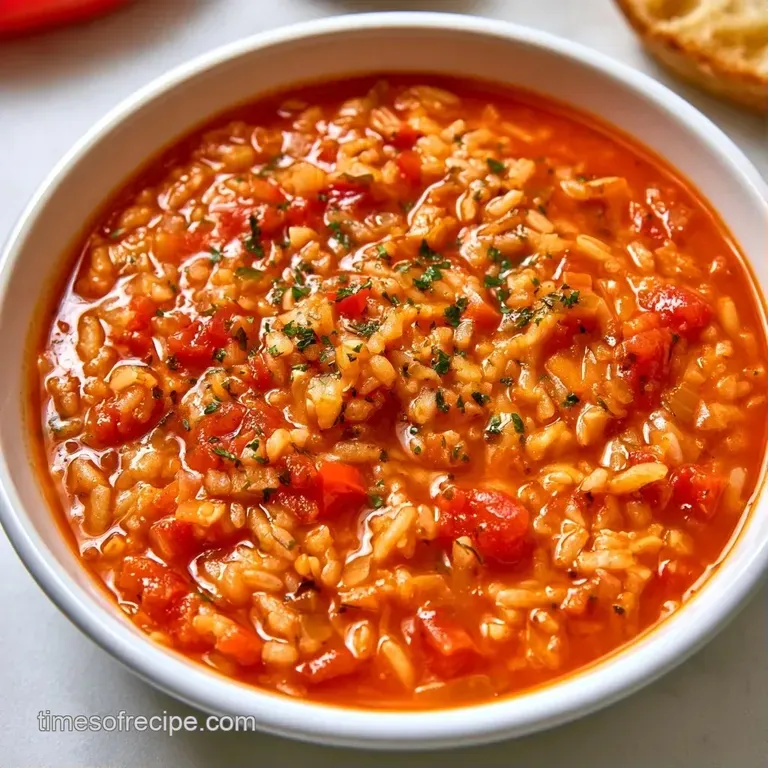
Even straightforward recipes can have hiccups, typically caused by heat control or liquid balance.
If the Soup Becomes Too Thick
Rice acts as a sponge, continuing to soak up moisture even after the heat is off. If the soup sits in the pot, it will naturally thicken. This is expected. Simply stir in a bit of warm water or broth right before serving to restore a pourable consistency.
If the Rice is Still Hard
This typically occurs if the lid didn't seal properly or the heat was too low to maintain a steady simmer. If your rice is still crunchy but the vegetables are ready, stir in 1/2 cup of broth, cover the pot, and simmer for an additional 5 minutes.
If the Tomato Flavor is Too Acidic
The acidity of canned tomatoes varies by brand. Instead of adding sugar to balance a sharp taste, try stirring in a tiny pinch of baking soda (around 1/8 tsp). This neutralizes the acidity without making the soup taste sweet.
| Problem | Fix |
|---|---|
| Rice is gummy | Sauté rice longer in oil next time |
| Broth is too thin | Simmer 5 mins without the lid |
| Bland flavor | Add extra lemon juice or salt |
Keeping Leftovers Fresh
This Tomato Rice Vegetable Soup actually tastes better the next day because the flavors have more time to meld. Store it in glass containers in the fridge for up to 4 days.
When you reheat it, do it gently on the stove. Since the rice has likely absorbed most of the liquid, add a bit of water or vegetable broth to the pan. Heat it over medium low until it bubbles again.
For zero waste, don't toss your onion skins and carrot ends. Put them in a freezer bag. Once the bag is full, simmer them with water to make a quick, homemade veggie stock for your next batch of soup.
Swapping Ingredients Out
You can easily tweak this recipe to fit your mood or what's in the pantry. If you want something with a bit more punch, you can add a pinch of red pepper flakes during the garlic stage.
Decision Shortcuts: Extra heartiness? → Add a diced potato during Phase 1. More greens? → Stir in a handful of spinach at the very end. Protein boost? → Add a can of rinsed chickpeas or cannellini beans.
If you enjoy this kind of rich, tomato based comfort, you might also like the creamy depth of Butter Chicken, though that's obviously a much heavier meal. For those wanting a grain free version, you can swap the rice for cauliflower florets, though you'll need to reduce the simmer time to about 10 minutes so the cauliflower doesn't disintegrate.
What to Serve Alongside
Since this is a hearty meal on its own, you don't need much. But a bit of crunch on the side makes a huge difference.
I love serving this with a thick slice of toasted sourdough rubbed with a raw garlic clove. The crunch of the bread against the tender rice is a great contrast. A side of roasted broccoli or a simple arugula salad with a lemon vinaigrette also works well to balance the richness of the tomato broth.
If you're serving this to kids, a dollop of Greek yogurt or a swirl of heavy cream on top can mellow out the acidity of the tomatoes and make it feel even more indulgent.
Busting Soup Myths
Myth: You must sear vegetables to get flavor. Not necessarily. Sautéing onions and carrots until translucent creates a sweet, mellow base. Searing them until they're brown would add a charred, nutty flavor, which actually clashes with the bright acidity of a tomato based soup.
Myth: Adding rice at the end prevents mushiness. Actually, adding rice at the end often means the rice stays raw while the vegetables overcook. The key isn't when you add it, but how you prepare it. Sautéing the rice first is what actually protects the grain.
Myth: Canned tomatoes are always inferior to fresh. For soups, canned crushed tomatoes are often better. They provide a consistent thickness and a deep, cooked down flavor that takes hours to achieve with fresh tomatoes. Just look for brands with no added sugar.
High in Sodium
980 mg 980 mg of sodium per serving (43% 43% of daily value)
The American Heart Association recommends a limit of 2,300mg of sodium per day for most healthy adults to reduce the risk of cardiovascular disease.
Tips to Reduce Sodium
-
Switch to No-Salt Broth-30%
Replace the low-sodium vegetable broth with a no-salt added version or a homemade vegetable stock to significantly lower the base sodium level.
-
Omit the Added Salt-25%
Remove the 1/2 tsp of salt completely; the natural sodium in the vegetables and canned tomatoes provides enough seasoning.
-
Use No-Salt Added Tomatoes-20%
Choose no-salt added crushed tomatoes and tomato paste to eliminate hidden sodium often found in canned products.
-
Increase Fresh Vegetables-10%
Add more zucchini or carrots to the pot to increase the bulk of the meal, which reduces the sodium concentration per serving.
-
Enhance with Aromatics
Increase the fresh parsley and lemon juice to provide a bright, zesty flavor that compensates for the reduction in salt.
Recipe FAQs
Does rice go well in tomato soup?
Yes, it adds heartiness. The grains soak up the acidity of the crushed tomatoes and vegetable broth for a filling meal.
Can I add rice to my vegetable soup?
Yes, it works as a natural thickener. Rinsing the long grain white rice first ensures the broth stays clear rather than becoming gummy.
What is the secret ingredient in tomato soup?
Fresh lemon juice. Adding it at the very end brightens the heavy flavors of the tomato paste. If you enjoyed balancing these flavors here, see how the same principle works in our savory marinade.
How to stop rice from overcooking in soup?
Simmer for exactly 15 18 minutes. Stirring in frozen peas or diced zucchini only in the final 5 minutes prevents the rice from breaking down too much.
Is it true that skipping the tomato paste browning ruins the depth?
This one's false: While stirring the paste for 2 minutes until it darkens adds richness, the soup remains delicious without this step.
Will using brown rice work instead?
Surprisingly, no. Brown rice requires a significantly longer simmer time than the 15 18 minutes used here, which would overcook the vegetables.
Tomato Rice Vegetable Soup