Wine and Dessert: Molten Chocolate Fusion
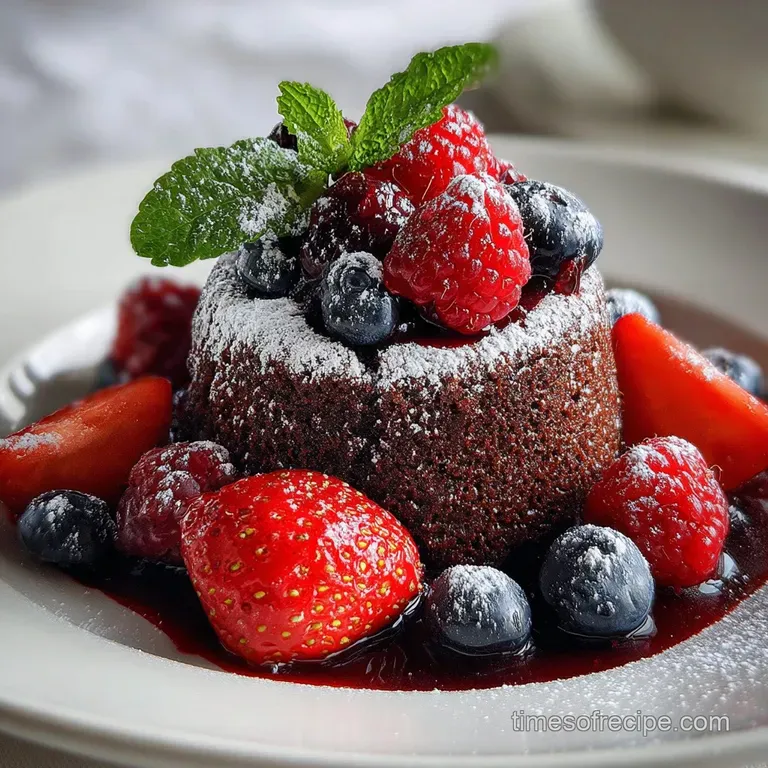
- Time: Active 20 minutes, Passive 12 minutes, Total 32 minutes
- Flavor/Texture Hook: A velvety, dark chocolate core with a fragile, sugary crust that offers a satisfying shatter when your spoon hits it.
- Perfect for: Romantic dinners or a high end dinner party where you want a stunning finish without hours of labor.
- Elegant Pairings for the Ultimate Wine and Dessert
- The Alchemy of Why This Works
- Ingredient Science and Component Analysis
- The Essential Elements for Your Chocolate Creation
- Selecting the Proper Tools for Success
- Executing the Method with Precision
- Correcting Mistakes for a Velvety Finish
- Adapting the Recipe to Your Taste
- Preserving Quality During Storage and Reheating
- Styling Your Dessert for Visual Impact
- Kitchen Wisdom and Myths
- Wine and Dessert FAQs
- 📝 Recipe Card
Elegant Pairings for the Ultimate Wine and Dessert
The kitchen currently smells like a dream - that heavy, heady mix of melting 70% cacao and the dark, jammy notes of a Zinfandel. I still remember the first time I tried to whisk red wine directly into a chocolate cake batter. I was terrified it would curdle or turn the whole thing into a soggy mess.
Instead, the kitchen filled with an aroma so complex it felt like I’d stepped into a Parisian pâtisserie. The wine doesn't just add liquid; it acts as a flavor magnifier, pulling out the hidden fruity notes in the dark chocolate that you usually only notice if you're a professional taster.
We are aiming for that specific, magical moment where the outer shell of the cake is set just enough to hold its shape, but the inside remains a warm, flowing river of ganache like goodness. This isn't just a chocolate cake; it's a sensory experience that plays with temperature and depth.
The tartness of the port reduced berries cuts through the heavy cocoa butter, making sure every bite feels balanced rather than cloying.
By the time you pull these out of the oven, the tops will have a slight dullness that hides the molten secret beneath. It is a simple technique once you understand the timing, but it looks like you’ve spent all day tempering chocolate and balancing acids.
Trust me, once you see that first pour of red wine hitting the melted butter and chocolate, you’ll never want to go back to a standard lava cake again.
The Alchemy of Why This Works
- Alcohol Volatility: The ethanol in the wine evaporates quickly in the heat, carrying the complex aromatic compounds of the cocoa directly to your olfactory senses.
- Tannin Integration: The polyphenols in red wine mirror the structure of those in dark chocolate, creating a seamless flavor bridge that tastes more "expensive."
- Protein Coagulation Control: The acidity of the wine slightly weakens the egg protein bonds, ensuring the center stays liquid even as the outer walls set.
| Servings | Ingredient Adjustments | Pan Size | Cook Time |
|---|---|---|---|
| 2 People | Halve all ingredients exactly | 2 Ramekins (175ml) | 10-11 minutes |
| 4 People | Use 115g chocolate, 2 eggs | 4 Ramekins (175ml) | 12 minutes |
| 8 People | Double everything; 1.5x salt | 8 Ramekins (175ml) | 14-15 minutes |
Choosing the right serving size is mostly about your ramekin volume. If you use larger dishes, the "lava" will be thinner and cook faster, so stick to the 175ml (6oz) standard for that towering, elegant look.
Ingredient Science and Component Analysis
| Ingredient | Science Role | Pro Secret |
|---|---|---|
| 115g Dark Chocolate (70%) | Provides structure and fat | Use high-quality bars rather than chips to avoid stabilizers. |
| 2 Large Eggs + 2 Yolks | Emulsifies the fat and air | Extra yolks provide the velvety, custard like flow in the center. |
| 60ml Red Wine | Adds acidity and fruit notes | Use a wine you’d actually drink; the flavor concentrates as it bakes. |
| 80ml Ruby Port | Creates a syrupy reduction | Ruby port is younger and fruitier than Tawny, which pairs better with berries. |
The Essential Elements for Your Chocolate Creation
- 115g dark chocolate, 70% cacao, chopped: The backbone of the flavor. Why this? High cacao percentage ensures a rich, bittersweet profile that balances the sugar.
- Substitute: 60% cacao chocolate (the cake will be sweeter and slightly softer).
- 115g unsalted butter, cubed: Provides the luxurious mouthfeel. Why this? Cubing allows it to melt evenly with the chocolate without scorching.
- Substitute: Salted butter (omit the additional 2g of sea salt).
- 60ml red wine (Zinfandel, Syrah, or Malbec): The "secret" liquid. Why this? These varieties have the "backbone" to stand up to intense chocolate.
- Substitute: Pomegranate juice for a non alcoholic version with similar acidity.
- 100g granulated sugar: Sweetens and helps create the crust.
- Substitute: Caster sugar for a finer texture.
- 2 large eggs & 2 large egg yolks (room temperature): The binding agents.
- Substitute: For a denser cake, use 3 whole eggs instead of the yolk split.
- 30g all purpose flour: Just enough to hold the walls together.
- 10g Dutch process cocoa powder: Deepens the color and flavor.
- 2g fine sea salt: Enhances the chocolate's complexity.
- 150g fresh blackberries or raspberries: The tart contrast.
- 80ml Ruby Port: For the reduction sauce.
- 15g light brown sugar: Adds a hint of caramel to the berries.
- 1 cinnamon stick: Infuses a warm, woody aroma.
Selecting the Proper Tools for Success
You don't need a professional pastry kitchen for this, but a few specific items make the difference between a cake that unmolds beautifully and one that collapses into a heap. First, grab four 175ml ceramic ramekins.
These are the classic choice because they distribute heat evenly, ensuring the edges cook while the center stays fluid.
A small heavy bottomed saucepan is vital for the port reduction. You want something that can handle a simmer without creating "hot spots" that might burn the sugar. I also highly recommend a silicone whisk.
It helps you incorporate the eggs into the chocolate without whipping in too much air we want a dense, fudgy texture, not a fluffy sponge. If you have a kitchen scale, use it. Baking is chemistry, and 115g is much more precise than a "scant cup."
Executing the Method with Precision
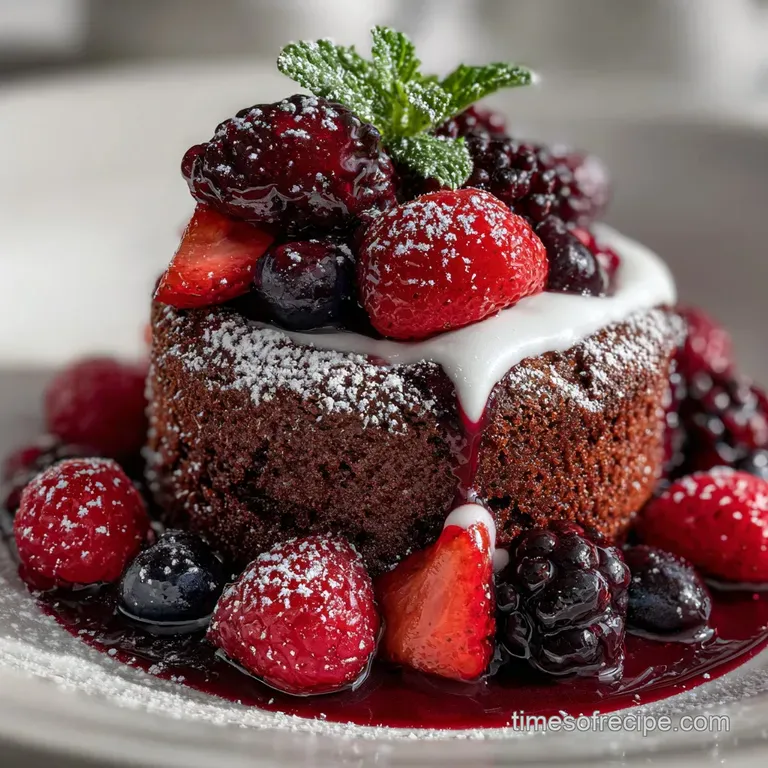
Preparing the Ramekins and Reduction
- Preheat your oven to 200°C. Thoroughly grease four 175ml ramekins with butter and dust them with cocoa powder, tapping out the excess until no white ceramic shows. Note: This creates a non stick barrier that helps the cake slide out later.
- In a small saucepan, combine 150g fresh berries, 80ml Ruby Port, 15g light brown sugar, and 1 cinnamon stick.
- Simmer over medium low heat for 10 minutes until the liquid is thick and syrupy. Set aside to cool slightly.
Creating the Wine Chocolate Base
- Melt 115g dark chocolate and 115g cubed butter together in a heatproof bowl over a pot of simmering water.
- Once smooth, whisk in 60ml red wine until the mixture is glossy and dark. Note: The aroma will be very sharp at first but will mellow as it integrates.
- In a separate bowl, whisk 2 eggs, 2 yolks, and 100g granulated sugar for about 2 minutes until the mixture is pale and slightly thickened.
Aerating and Folding
- Gently fold the chocolate mixture into the egg mixture using a spatula.
- Sift in 30g all purpose flour, 10g Dutch process cocoa, and 2g fine sea salt, folding until just combined with no streaks.
Achieving the Perfect Bake
- Divide the batter evenly between the prepared ramekins.
- Bake for 12 minutes until the edges are firm but the center still jiggles. Note: Precision checkpoint at 12 minutes, the internal temp of the "wall" should be roughly 70°C.
- Let them rest for 2 minutes, then run a thin knife around the edge and invert onto plates. Spoon the port reduced berries over the top immediately.
Correcting Mistakes for a Velvety Finish
Why Your Cake Collapsed
This usually happens if the "structural" wall of the cake didn't have enough time to set. If you pull them out and they immediately slump, the oven temp might have been too low. Ensure you've preheated for at least 15 minutes before the ramekins go in.
| Problem | Root Cause | Solution |
|---|---|---|
| Grainy Texture | Overheated chocolate | Melt chocolate slowly; never let the bowl touch the simmering water. |
| No Molten Center | Overbaked by 2-3 mins | Reduce bake time. The center must look slightly "underdone" when pulled. |
| Cake Sticking | Improper greasing | Use butter AND cocoa powder; don't skip the "tap and dust" step. |
If you love this dark, moody flavor profile but need something that doesn't require an oven, you should definitely try this Heaven on Earth recipe. It’s a completely different texture but hits those same comfort notes.
Common Mistakes Checklist:
- ✓ Using cold eggs (this can cause the melted chocolate to seize up).
- ✓ Skipping the sifting of cocoa powder (leads to bitter lumps in the batter).
- ✓ Over whisking after adding flour (develops gluten and makes the cake tough).
- ✓ Opening the oven door frequently (causes the temperature to drop, leading to uneven baking).
- ✓ Forgetting the salt (salt is what makes the chocolate and wine flavors "pop").
Adapting the Recipe to Your Taste
If you want to change the profile of this Wine and Dessert, consider the wine you’re using. A Syrah will give you a peppery, spicy finish, while a Malbec will keep it dark and plummy.
If you’re not a fan of dark chocolate, you can use a 50% cacao semi sweet bar, but you should reduce the sugar to 80g to compensate for the extra sweetness in the chocolate.
For bigger celebrations, these little cakes are actually a fantastic precursor to a larger spread of 12 New Years recipe ideas that feature even more bubbly wine pairings. If you're scaling up, remember my rule of thumb: don't double the cinnamon stick. One stick is enough for up to 8 servings; otherwise, the woodiness will overpower the delicate port.
| Component | Fresh Method | Shortcut Method | Impact |
|---|---|---|---|
| Berry Sauce | 10 min Port reduction | Thawed jam with a splash of wine | Shortcut is sweeter and less complex. |
| Chocolate Base | Melted 70% cacao bar | high-quality cocoa powder + oil | Fresh method has a much richer mouthfeel. |
- If you want a deeper crust, sprinkle a tiny bit of extra sugar on top of the batter before baking.
- If you want a spicier kick, add a pinch of ancho chili powder to the dry ingredients.
- If you want a booze free version, replace the wine with strong brewed coffee and the port with balsamic glaze.
Preserving Quality During Storage and Reheating
You can store unbaked batter in the ramekins, covered with plastic wrap, in the fridge for up to 24 hours. This is actually a great "Chef's Tip" because chilled batter often results in an even better molten center the outside has to work harder to heat up, giving the walls more time to set while the middle stays cool.
If you have leftovers (which is rare!), store them in the fridge for up to 3 days. To reheat, avoid the microwave if possible, as it will cook the center through. Instead, place the ramekin back in a 180°C oven for 5-6 minutes.
This will warm the cake without ruining that silky interior. For freezing, I recommend freezing the batter in the ramekins rather than the baked cake. Wrap them tightly in foil; they will keep for 2 months. Bake directly from frozen, adding 3-4 minutes to the total time.
Chef's Tip: To get a really "clean" release, place a piece of parchment paper at the bottom of the ramekin before greasing. It's a bit of extra work, but it guarantees the top won't stay stuck to the ceramic.
Styling Your Dessert for Visual Impact
The contrast of the dark chocolate against the deep purple of the port reduced berries is already stunning, but you can take it further. A light dusting of powdered sugar creates a beautiful "snow" effect that highlights the crags in the cake's crust.
Chef's Tip: Add a sprig of fresh mint or a few cracks of black pepper over the berries. The pepper sounds strange, but it actually bridges the gap between the tannins in the wine and the sweetness of the fruit.
When serving, make sure the plates are at room temperature. A cold plate will shock the bottom of the cake and make the molten center thicken too quickly. If you're feeling fancy, a dollop of mascarpone cheese lightly sweetened is a more elegant pairing than standard whipped cream. It has a slight tang that echoes the acidity in the wine, making the whole dish feel cohesive and professionally balanced. For another festive touch, consider how this might look alongside a Festive New Years recipe for those who prefer lighter mousses.
Kitchen Wisdom and Myths
A common misconception is that you need expensive wine for this recipe. In reality, the nuanced notes of a $100 bottle will be lost during the 200°C bake. What you need is a "structured" wine one with enough tannin and fruit to hold its own.
Don't use a delicate Pinot Noir; it will simply disappear. Another myth is that the alcohol "all cooks out." While much of it evaporates, enough remains to provide that signature "kick," so keep that in mind if serving to children or those avoiding alcohol.
Finally,, some people think you must use a water bath (bain marie) for lava cakes. While it’s great for cheesecakes, a water bath provides too much moisture and too gentle a heat for this specific Wine and Dessert.
We want the intense, dry heat of the oven to "blast" the outside of the cake into a crust while leaving the center alone. That temperature gradient is exactly what creates the magic.
Wine and Dessert FAQs
What dessert goes with red wine?
Rich chocolate desserts are ideal. The tannins in red wine complement the deep flavors of dark chocolate, creating a complex pairing. Consider molten chocolate cakes, brownies, or even a decadent flourless chocolate cake.
What dessert goes with white wine?
Fruity and creamy desserts pair best. Think fruit tarts, lemon meringue pie, or vanilla panna cotta. The wine's acidity can cut through richness, while its sweetness should match or be slightly sweeter than the dessert.
Can I drink wine with dessert?
Yes, absolutely! Wine and dessert pairings can elevate both the wine and the dessert, creating a harmonious flavor experience. The key is to match the weight and sweetness levels.
What is the 20 minute wine rule?
This is a common misconception. There isn't a universally recognized "20-minute wine rule" for dessert pairings. Instead, focus on matching flavor profiles and sweetness levels for the best experience.
Is red or white wine better with dessert?
Neither is inherently "better"; it depends on the dessert. Red wines excel with dark, rich desserts like chocolate. White wines are typically better suited for lighter, fruity, or creamy desserts.
What wine pairs with chocolate cake?
Rich red wines are excellent with chocolate cake. Think Zinfandel, Syrah, or Malbec, which have the body and fruit notes to stand up to chocolate's intensity. If the cake is particularly sweet, a slightly sweeter red can work well.
What wine pairs with fruit tart?
Sweet white wines, like a Moscato or Riesling, are perfect. Their bright acidity and fruit forward profiles complement the fruit in the tart without overpowering it. A late harvest white wine also works beautifully.
Wine And Dessert
Ingredients:
Instructions:
Nutrition Facts:
| Calories | 648 kcal |
|---|---|
| Protein | 8.7 g |
| Fat | 40.1 g |
| Carbs | 56.4 g |
| Fiber | 5.2 g |
| Sugar | 41.6 g |
| Sodium | 148 mg |
