Boba Tea Pearls Recipe: Velvety Chew
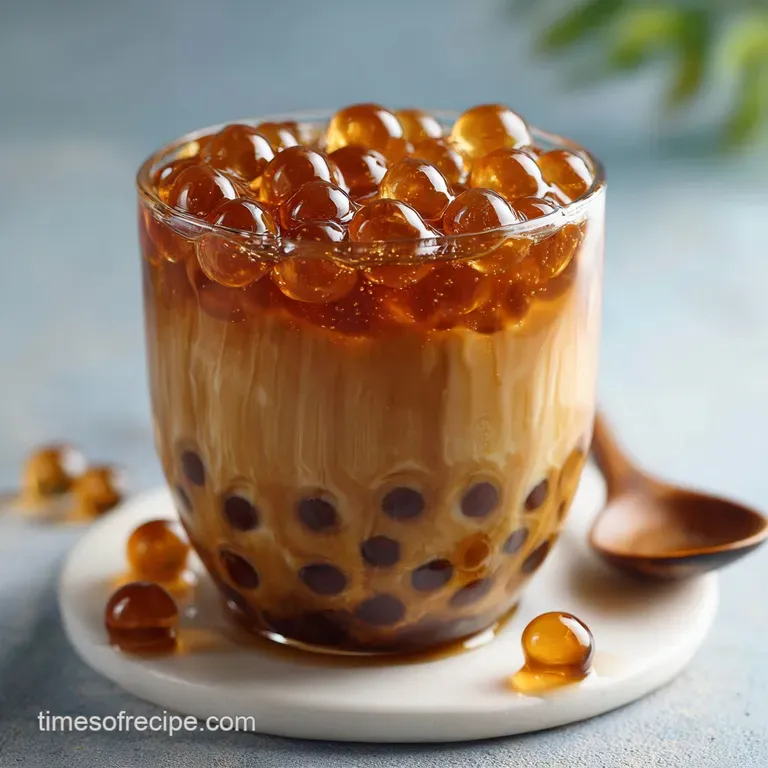
- Time: Active 25 mins, Passive 20 mins, Total 45 mins
- Flavor/Texture Hook: Velvety chew with a deep caramelized finish
- Perfect for: Weekend projects or impressive dessert topping
- The Secrets to a Perfect Boba Tea Pearls Recipe
- Why Homemade Beats Store Squeeze
- Physics of Iconic QQ Bounce
- Stats for Your Kitchen Success
- Elements for Translucent Sugar Gems
- Tools Behind the Boba Magic
- Transforming Starch into Golden Jewels
- Rescuing Dough from Kitchen Mishaps
- Adding Flourish to Every Sip
- Keeping Pearls Fresh for Cravings
- Elegant Ways to Serve Creations
- Myths Regarding Tapioca Pearls
- Boba Tea Pearls Recipe FAQs
- 📝 Recipe Card
The Secrets to a Perfect Boba Tea Pearls Recipe
I still remember the first time I tried to make boba at home. I thought it was just "stir and go," but I ended up with a literal puddle of brown sludge that looked nothing like those elegant pearls from the shop.
It was a mess, honestly, but that failure taught me the most important lesson in starch chemistry: heat is your only friend. When you finally get that first successful batch, the way the pearls sizzle as they hit the dark sugar syrup is pure kitchen magic.
Now, whenever I hear that satisfying "thwack" of a wide straw piercing a sealed cup, I smile because I know the secret. Making this boba tea pearls recipe is about the contrast between the velvety, soft exterior and the firm, bouncy "QQ" center.
It’s a sensory experience that starts with the scent of toasted sugar and ends with a texture that is just plain fun to eat. We're going to make something much better than those chalky, vacuum sealed bags from the store.
Why Homemade Beats Store Squeeze
store-bought pearls often rely on preservatives and artificial thickeners to survive the shelf life. When you make them yourself, you control the purity of the starch and the richness of the sugar.
You'll notice the difference the moment you bite down; the texture is more nuanced, moving from a tender outside to a resilient core.
- Thermal Gelatinization: Pre cooking a portion of the starch in boiling water creates a "tangzhong like" binder that makes the dough pliable rather than crumbly.
- Sugar Infusion: Slow simmering the cooked pearls in a concentrated syrup allows the sweetness to penetrate the center, preventing a bland flavor profile.
- Hydration Control: Hand kneading ensures the starch is fully saturated, which prevents the pearls from disintegrating or becoming "mushy" during the long boil.
- Freshness Impact: Homemade pearls have a higher moisture content, resulting in a superior "shatter proof" chew that stays soft longer than processed alternatives.
| Method | Prep Time | Texture Result | Best Use |
|---|---|---|---|
| Fast Method | 10 mins | Soft, lacks "bounce" | Quick snacks, smoothies |
| Classic Method | 45 mins | Firm, iconic "QQ" chew | Traditional milk tea, lattes |
| store-bought | 5 mins | Often rubbery or grainy | Emergency cravings only |
Choosing the classic method ensures that your pearls don't just sit at the bottom of the glass like lead weights. Instead, they dance in the syrup, providing that elegant contrast to the creamy tea.
It's a small time investment for a massive leap in quality that will make your kitchen feel like a high end dessert boutique.
Physics of Iconic QQ Bounce
The secret to this boba tea pearls recipe lies in starch retrogradation. When tapioca starch is heated with 60ml water, the molecules swell and burst, creating a sticky matrix that traps the remaining dry starch granules in a flexible, resilient web.
Why boil the water?
If the water isn't at a rolling boil when it hits the starch, the molecules won't gelatinize. You'll end up with a non newtonian fluid a runny mess instead of a workable, elastic dough that holds its shape.
How QQ texture develops?
The "QQ" (the Taiwanese term for bouncy) comes from the specific long chain carbohydrates in tapioca. Unlike wheat flour, these starches become translucent and rubbery when cooked, providing a unique resistance to the bite.
Stats for Your Kitchen Success
| Component | Science Role | Pro Secret |
|---|---|---|
| 100g Tapioca Starch | Primary structure | Always use fresh starch; old bags absorb moisture poorly. |
| 60ml Water | Hydration agent | Use filtered water to ensure the sugar notes remain clean. |
| 45g Dark Brown Sugar | Flavor & Color | Muscovado sugar adds a deeper, smoky molasses undertone. |
Every gram matters when you're working with starch. This isn't like a soup where you can just eyeball the liquids. Think of it more like the precision required for my Cinnamon Rolls recipe; the ratio of hydration to dry matter determines the final structural integrity of the dough.
Elements for Translucent Sugar Gems
For the Boba Dough
- 100g Tapioca Starch: This must be tapioca starch (or flour), not cassava flour or cornstarch. Why this? It provides the specific elastic bounce unique to bubble tea.
- 60ml Water: Boiling hot is non negotiable. Why this? Cold water creates a slurry; boiling water creates a dough.
- 45g Dark Brown Sugar: Provides the base color and a hint of caramel.
- 10g Tapioca starch: Keep this aside for dusting.
For the Sugar Syrup
- 100g Dark Brown Sugar: For the final glaze. Why this? It creates the iconic "tiger stripe" look on the glass.
- 120ml Water: To dissolve the sugar into a thick, velvety syrup.
| Original Ingredient | Substitute | Why It Works |
|---|---|---|
| Dark Brown Sugar | Light Brown Sugar | Same sweetness, but lacks the deep molasses color. |
| Tapioca Starch | Arrowroot Powder | Similar bounce, but pearls may be slightly more fragile. |
| Water (for syrup) | Strong Black Tea | Adds a caffeinated, tannic depth to the pearl glaze. |
Using a quality sugar is the difference between a generic sweet taste and a complex, toasted caramel finish. If you enjoy making your own components, you might notice the syrup process is quite similar to the reduction used in an Orgeat Syrup Recipe, where temperature control is key to a silky result.
Tools Behind the Boba Magic
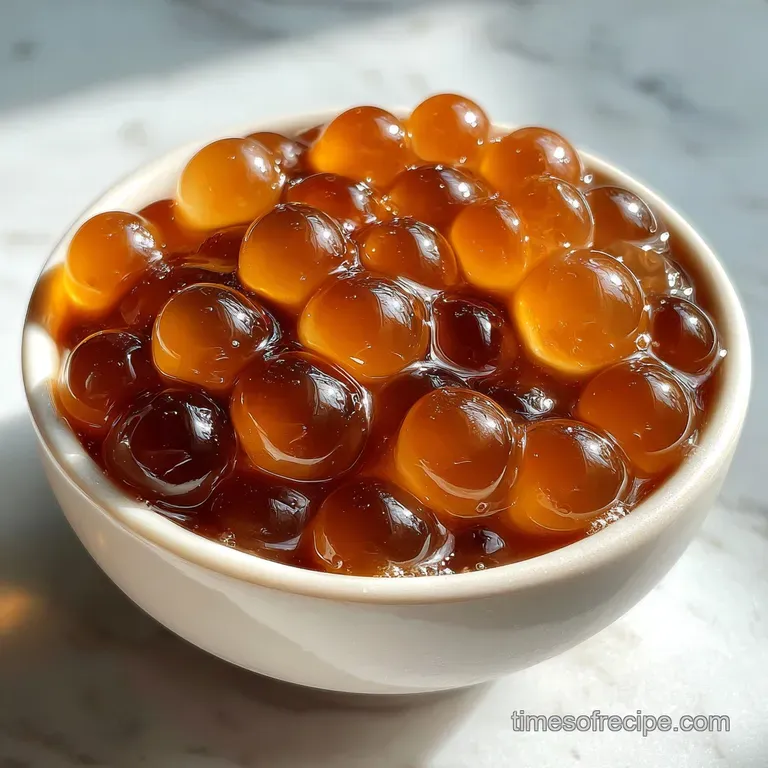
You don't need a lab, but a few specific items make the rolling process much less tedious. A small non stick saucepan is vital for the initial starch paste, as tapioca is incredibly sticky.
- Small Saucepan: For melting sugar and the initial starch gelatinization.
- Digital Scale: Essential for the 100g starch and 60ml water measurements.
- Bench Scraper: Useful for cutting the dough into uniform pieces.
- Large Pot: For the rolling boil during the cooking phase.
- Slotted Spoon: To rescue the pearls from the boiling water without the liquid.
Transforming Starch into Golden Jewels
Phase 1: Stable Dough
Combine 60ml water and 45g dark brown sugar in a saucepan over medium heat until the sugar dissolves and it reaches a rolling boil. Immediately turn the heat to low and add about one tablespoon of the 100g tapioca starch, whisking vigorously until a translucent paste forms.
Remove from heat and stir in the remaining starch.
Phase 2: Fast Shaping
Turn the shaggy mass onto a clean surface and knead until the dough is smooth and elastic. Note: If it's too sticky, add a pinch of starch; if too dry, add a few drops of hot water. Divide the dough into four sections and roll them into long, thin ropes.
Use a knife to cut tiny pieces, then roll them between your palms into spheres.
Phase 3: Perfect Cooking
Bring a large pot of water to a boil. Drop the pearls in and stir gently to prevent sticking. Cook for 20 minutes until the pearls are translucent and floating. Turn off the heat, cover the pot, and let them rest in the hot water for another 20 minutes.
Note: This resting period ensures the core is fully cooked and tender.
Phase 4: Finishing Glaze
Drain the pearls and rinse them under cold water to stop the cooking process. In a clean pan, combine 100g dark brown sugar and 120ml water for the syrup. Simmer until the syrup is thick and bubbly.
Add the cooked pearls to the syrup and cook for 2-3 minutes until the syrup coats each pearl in a velvety glaze.
Rescuing Dough from Kitchen Mishaps
Working with tapioca can be temperamental. If your dough feels like it's melting between your fingers, your water wasn't hot enough. If it's shattering like glass, you didn't work fast enough while it was warm.
Why liquid puddle dough?
This happens when the starch doesn't reach the "gel point." If your water drops below 100°C before hitting the starch, it won't hydrate. You can sometimes save this by microwaving the mixture for 10 seconds to force the gelatinization.
Why hard center pearls?
This is almost always due to skipping the "resting" phase. Even if the outside looks clear, the center needs that extra 20 minutes of residual heat to soften completely.
| Problem | Root Cause | Solution |
|---|---|---|
| Pearls Clumping | No stirring | Stir constantly for the first 2 minutes of boiling. |
| Grey/Opaque Center | Undercooked | Increase the resting time in hot water by 10 mins. |
| Slimy Texture | Overcooked | Rinse immediately in an ice bath after draining. |
Common Mistakes Checklist
- ✓ Ensure the sugar water mix is at a violent boil before adding starch.
- ✓ Keep the dough covered with a damp cloth while rolling pearls to prevent drying.
- ✓ Never crowd the boiling pot; pearls need room to dance and expand.
- ✓ Don't skip the cold water rinse it's vital for the "snap" in the texture.
- ✓ Use the pearls within 4 hours for the most stunning results.
Adding Flourish to Every Sip
This recipe is designed for 4 servings, but it scales beautifully if you're hosting a party. Just remember that the rolling process takes time, so enlist some "helpers" if you're doubling the batch.
- Scaling Up: Double all ingredients but reduce the total cooking water in the pot slightly to maintain a high temperature. Work in two batches for the rolling process so the dough doesn't dry out.
- Scaling Down: For a single serving, use 25g starch and 15ml water. Use a very small saucepan to prevent the water from evaporating before it hits the starch.
- Baking Application: If you're using these pearls as a topping for cakes, cook them slightly longer in the syrup to ensure they stay soft against the cold frosting.
Colorful or Flavored Boba?
You can replace the water with beet juice for pink pearls or matcha tea for green ones. Just ensure the liquid is boiling hot before mixing.
sugar-free Boba Version?
You can use Allulose for the syrup, but the dough requires real sugar or a very specific keto friendly syrup to maintain the structural "glue." Pure stevia won't provide the same binding properties.
Keeping Pearls Fresh for Cravings
Chef's Tip: Never store cooked boba in the fridge. The starch undergoes "retrogradation," which is just a fancy way of saying they turn into hard, gritty little rocks.
Storage: Keep cooked pearls in their sugar syrup at room temperature for up to 4 hours. After that, the texture begins to degrade. If you have leftovers, they are best used as a warm topping for oatmeal or pancakes the next morning.
Freezing: You can freeze the raw, rolled pearls! Toss them in a bit of extra starch so they don't stick, lay them flat on a tray to freeze, then bag them up. They’ll keep for 3 months.
To cook, just drop the frozen pearls directly into boiling water no thawing needed and add 5 minutes to the cook time.
Zero Waste: If you have leftover brown sugar syrup but no pearls, use it as a sweetener for your morning coffee or drizzle it over vanilla ice cream. It has a much richer profile than standard simple syrup.
Elegant Ways to Serve Creations
The most stunning way to present these is the "Tiger Sugar" style. Take a glass and drizzle the warm brown sugar syrup along the inside walls. Rotate the glass so the syrup streaks down in messy, beautiful lines.
Classic Brown Sugar Milk
Add two generous spoonfuls of warm pearls to the bottom of your streaked glass. Fill with ice, then pour over cold whole milk or a creamy oat milk. The contrast between the hot pearls and the icy milk is incredible.
Fruit Tea Refresher
For something lighter, pair the pearls with a chilled passionfruit or jasmine green tea. The dark pearls provide a deep, earthy contrast to the bright, acidic notes of the fruit. It's a visual and textural masterpiece that proves you don't need a professional shop to enjoy a world class treat.
Myths Regarding Tapioca Pearls
Myth 1: Boba is made of plastic. Actually, it's just pure starch from the cassava root. The rubbery texture is a natural property of the starch when it's cooked and cooled quickly.
Myth 2: You must use black food coloring. The dark color in this recipe comes entirely from the dark brown sugar and the caramelization process. Authentic boba doesn't need dyes to look beautiful.
Myth 3: Soaking pearls longer makes them softer. Over soaking actually causes the starch to break down and become mushy. The goal is a 20 minute soak for the perfect balance of soft and firm.
Boba Tea Pearls Recipe FAQs
How are boba pearls made?
Tapioca starch is mixed with boiling sugar water to form an elastic dough. This dough is then rolled into small spheres and boiled for 20 minutes until translucent. They finish by simmering in a rich brown sugar syrup for flavor infusion.
What is the 30 30 method for tapioca pearls?
The 30/30 method refers to the dual stage cooking process. Cook the pearls in boiling water for 30 minutes (or until done), then turn off the heat and let them rest, covered, in the hot water for an additional 30 minutes to ensure the center fully softens.
What's the best liquid to cook pearls in?
Use plain, heavily boiling water for cooking the raw pearls. This achieves the necessary high temperature for starch gelatinization without introducing competing flavors. Save the flavorful syrup for post cooking infusion.
How to cook pearls for bubble tea?
Boil a large, unsalted pot of water vigorously, then drop in the rolled pearls. Cook for approximately 20 minutes until they float and become mostly translucent, then cover and let them rest off-heat for another 20 minutes.
Can I make boba pearls ahead of time and store them?
No, fresh is best, but raw pearls can be frozen for later. Cooked pearls degrade quickly; never store them in the refrigerator as they become hard. They are optimal within 4 hours of being glazed in syrup.
Is it true I must use only commercial tapioca starch?
No, this is a common misconception, though tapioca starch is ideal. You can substitute with arrowroot powder in a pinch, but the resulting pearls will likely have a slightly more fragile texture.
Why do my homemade pearls dissolve into a thick sludge instead of forming a dough?
Your water was likely not at a full, rolling boil when you added the starch. The rapid heat shock is necessary to immediately activate the starch molecules, similar to how you manage temperature in a complex sauce like a foundational Au Jus Recipe for perfect emulsification.
Boba Tea Pearls Recipe
Ingredients:
Instructions:
Nutrition Facts:
| Calories | 236 kcal |
|---|---|
| Protein | 0.1 g |
| Fat | 0 g |
| Carbs | 60 g |
| Fiber | 0.1 g |
| Sugar | 35.5 g |
| Sodium | 10 mg |
