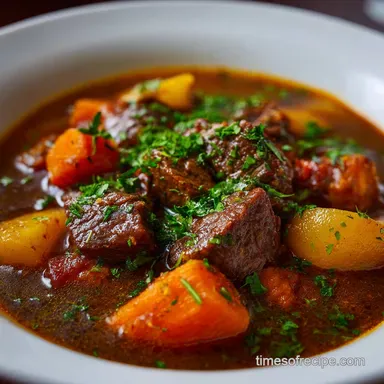
Slow-Simmered Classic Beef Stew with Root Vegetables

- Time: 20 min active + 150 min cooking
- Flavor & Texture: Savory, earthy, and rich
- Perfect for: A cozy Sunday family dinner
Classic Beef Stew with Root Vegetables
The scent of browned beef and aromatic thyme wafts through the air well before the pot reaches a simmer. It is a rich, hearty fragrance that hints at succulent meat and perfectly textured vegetables.
You'll find a dense, deep-brown sauce that coats every morsel of beef. Rather than a light soup, this is a robust, cozy dish that offers pure comfort in every spoonful.
Preparing this traditional beef and root vegetable stew is primarily a lesson in patience. Although it simmers for several hours, the active prep is brief, allowing you to unwind while the Dutch oven works its magic.
Recipe Specs
The goal here is a balance of bold beef flavors and the natural sweetness of root vegetables. Using a Dutch oven is the move because it holds heat evenly and prevents the bottom from scorching during the long braise.
The beef reaches a safe internal temperature of 145°F/63°C when it is just starting to break down, but we push it slightly further for that signature "fall-apart" feel.
Ingredients and Swaps
The beef choice is the most important part. I prefer chuck because it has the right amount of connective tissue to melt into a silky sauce.
What Each Ingredient Does
| Ingredient | What It Does | Best Swap |
|---|---|---|
| Beef Chuck | Provides structure and richness | Beef brisket (trimmed) |
| Grape Juice | Adds acidity to tenderize meat | Apple cider (unsweetened) |
| Tomato Paste | Deepens color and adds umami | Extra beef broth + pinch of sugar |
| Yukon Gold | Thickens the stew naturally | Russet potatoes (more starchy) |
The Shopping List
- 2 lbs beef chuck, trimmed of excess fat and cut into 1-inch cubes
- 2 tbsp all-purpose flour
- 1 tsp kosher salt
- 1/2 tsp cracked black pepper
- 2 tbsp extra virgin olive oil
- 1 large yellow onion, diced
- 3 cloves garlic, minced
- 2 tbsp tomato paste
- 4 cups low-sodium beef broth
- 1 cup unsweetened grape juice
- 2 bay leaves
- 1 tsp dried thyme
- 3 large carrots, cut into thick rounds
- 2 large parsnips, peeled and sliced
- 1 lb Yukon Gold potatoes, cut into 1-inch chunks
- 1 cup frozen peas
Essential Gear
A 6-quart Dutch oven is the ideal tool for this dish. Its heavy lid traps the steam necessary to tenderize the beef. A sturdy, heavy-bottomed pot with a tight-fitting lid is a suitable alternative, though you will need to monitor the temperature more carefully.
Using a wide wooden spoon helps you scrape the bottom of the pot, ensuring every flavorful browned bit of beef is incorporated into the sauce.
Bringing It Together
Phase 1: Searing the Protein
Use paper towels to pat the beef cubes completely dry. Note: Excess moisture leads to steaming rather than browning. In a bowl, toss the beef with 2 tbsp all-purpose flour, 1 tsp kosher salt, and 1/2 tsp cracked black pepper until evenly coated.
Warm 2 tbsp extra virgin olive oil in a 6-quart Dutch oven over medium-high heat. To avoid overcrowding, sear the beef in batches until a dark golden crust forms on all sides. Move the meat to a plate and set aside.

Phase 2: Building the Flavor Base
Turn the heat down to medium. In that same pot, sauté 1 diced yellow onion until translucent.
Add 3 cloves minced garlic and 2 tbsp tomato paste, stirring for 2 minutes until the paste becomes a deep brick red.
Phase 3: The Slow Simmer
Deglaze the pot with 1 cup unsweetened grape juice, using a wooden spoon to scrape up any browned bits from the bottom.
Pour in 4 cups low-sodium beef broth and add 2 bay leaves and 1 tsp dried thyme. Return the beef to the pot. Bring the mixture to a gentle boil, then cover and simmer on low for 90 minutes.

Phase 4: Integrating the Vegetables
Stir in 3 large cut carrots, 2 sliced parsnips, and 1 lb cut Yukon Gold potatoes. Cover again and simmer for another 45 to 60 minutes until the beef is fall-apart tender and the root vegetables are fork-tender.
Mix in 1 cup frozen peas during the last 5 minutes of cooking. Remove the bay leaves before serving.

What Can Go Wrong
The most common issue is the consistency of the liquid. You want a lush gravy, not a thin soup. If it feels too watery, you can simmer it with the lid off for the last 30 minutes.
Another hurdle is the beef texture. If the meat is still chewy after the first 90 minutes, it just needs more time. Don't rush the braise, or you'll end up with "rubber" beef.
Too Thin
If the gravy doesn't have enough body, the flour coating on the beef might have been too light. You can whisk a small amount of cornstarch with cold water and stir it in at the end.
Beef Still Tough
Tough meat usually means the collagen hasn't broken down yet. Keep it on low heat for another 30 minutes.
Mushy Vegetables
Adding carrots and potatoes too early is the culprit here. They will dissolve into the sauce if they simmer for the full two hours.
| Problem | Root Cause | Solution |
|---|---|---|
| Watery Sauce | Too much liquid or low heat | Simmer without lid for 30 mins |
| Chewy Meat | Undercooked connective tissue | Simmer on low for 30-60 mins more |
| Bland Flavor | Lack of salt or browning | Add salt or sear beef darker next time |
Variations and Substitutions
If you want a bit more brightness, I like adding a teaspoon of lemon juice or a splash of apple cider vinegar right before serving. It cuts through the richness of the beef.
For a low-carb version, you can swap the potatoes and parsnips for cauliflower florets and turnips. Just be aware that cauliflower cooks faster, so add it during the final 20 minutes of simmering.
If you prefer a slow cooker version, sear the meat and sauté the onions and garlic first. Then, throw everything except the peas into the crockpot on low for 7 to 8 hours.
Storing Leftovers
This stew actually tastes better the next day as the flavors meld. It stays fresh for up to 4 days if you keep it in a sealed container in the fridge.
It freezes remarkably well. Place it in freezer-safe containers and store for up to 3 months. Thaw it in the fridge overnight before reheating. When reheating cooked leftovers, check with a food thermometer that the centre reaches 165°F (74°C); the appliance temperature and time alone do not confirm this.
To reheat without overcooking the veggies, use a stovetop over medium-low heat until it reaches 165°F/74°C in the center. If the sauce has become too thick in the fridge, add a splash of beef broth to loosen it up.
Pairing Ideas

This dish is a meal on its own, but some sides make it feel like a feast. I highly recommend serving it with Homemade Dinner Rolls to soak up every drop of the gravy.
A crisp green salad with a sharp vinaigrette provides a great contrast to the heavy, earthy tones of the root vegetables. If you want something simpler, a scoop of buttery mashed potatoes or a slice of toasted sourdough is the way to go.
Why the Steps Matter
The Hard Sear: Browning the beef creates a crust that adds deep, savory notes. Without this, the meat tastes boiled rather than braised.
Acidity in the Liquid: The grape juice adds mild acidity and sweetness to the sauce, while the long, slow simmer is what breaks down the connective tissue in the chuck beef. This transforms a tough cut of meat into something that melts in your mouth.
Staggered Veggies: Root vegetables have different densities. Adding them later ensures the carrots and potatoes are tender but not disintegrated.
Frequently Asked Questions
Can this beef stew be made in a slow cooker?
Yes, a slow cooker works well. Sear the meat and sauté the onions and garlic first, then cook everything except the peas on low for 7 to 8 hours.
Which vegetables are used in this traditional recipe?
It features carrots, parsnips, and Yukon Gold potatoes. These root vegetables are added toward the end of the cooking process to ensure they remain tender without falling apart.
How to prepare this traditional beef stew?
Sear flour-coated beef cubes in olive oil. Sauté onions and garlic with tomato paste, then simmer the meat in beef broth and grape juice before adding the root vegetables and peas.
Is there a low-carb version of this stew?
Yes, by swapping the potatoes and parsnips for cauliflower and turnips. Note that cauliflower cooks faster, so add it during the final 20 minutes of simmering.
Classic Beef Stew with Root Vegetables