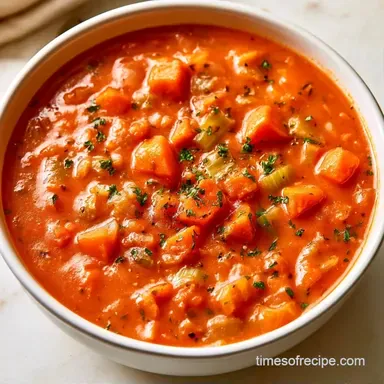
Hearty Tomato Vegetable Soup
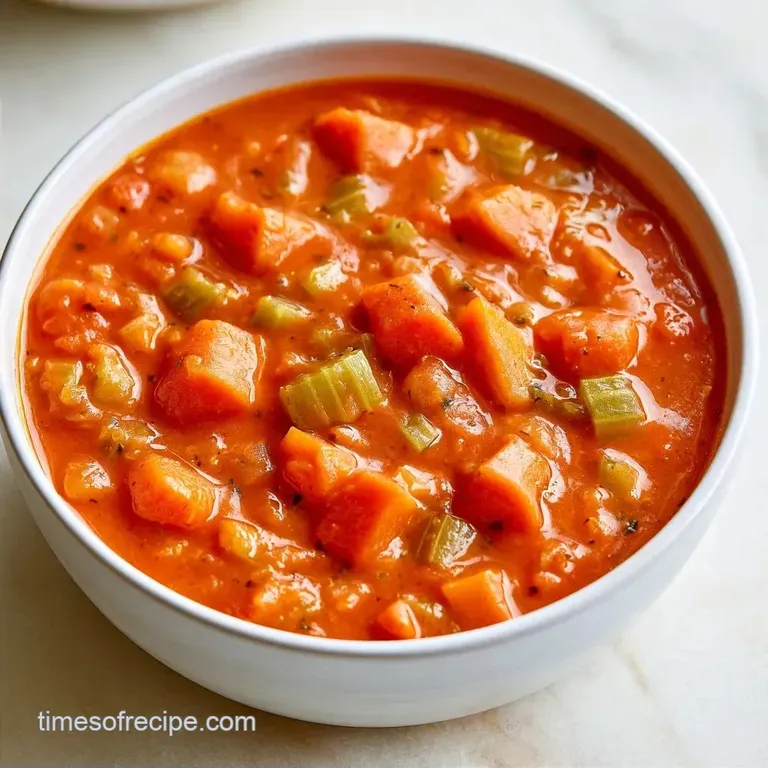
- Time: 15 min active + 40 min cook
- Flavor/Texture Hook: Bold, savory, and velvety smooth
- Perfect for: Rainy weeknights or easy meal prep
The smell of carrots and onions hitting hot olive oil is probably my favorite kitchen scent. It's that immediate signal that something comforting is happening on the stove. I used to make a version that was basically just canned broth and a few chopped veggies, but it always felt thin and a bit sad.
Then I started treating the vegetables like a proper base, browning them properly before adding liquid. The difference is huge. You get this deep, savory foundation that makes a Tomato Vegetable Soup feel like a hug in a bowl rather than just a side dish.
We're going for a result that's thick and satisfying without needing a mountain of cream. By using a single potato and some well browned tomato paste, we get a natural thickness that carries the flavor of the fresh tomatoes. It's a quick win for anyone who wants a homemade meal without spending six hours at the stove.
Why Most Recipes Get This Wrong
Many people just dump everything in a pot and boil it. That's where you get that "boiled vegetable" taste that lacks depth. The key is the sauté. When you brown the aromatics and the paste, you create layers of flavor that a simple boil can't touch.
Tomato Paste Sauté: Cooking the paste until it hits a mahogany color removes the metallic edge and adds a nutty richness.
The Potato Trick: A diced potato releases starches during the simmer, which naturally thickens the Tomato Vegetable Soup without adding flour or heavy cream.
| Method | Time | Texture | Best For |
|---|---|---|---|
| Stovetop | 55 mins | Smooth & Consistent | Weeknight dinner |
| oven roasted | 90 mins | Charred & Deep | Sunday brunch |
I've found that the stovetop method is usually the way to go for a Tuesday night. You have total control over the heat, and you can taste as you go. If you have more time, roasting the tomatoes and garlic first adds a smoky note, but for this version, the Dutch oven does all the heavy lifting.
The Building Blocks of Flavor
Before diving in, let's break down the purpose of each ingredient. Everything in the pot serves a specific function. If you're missing a key item, don't stress knowing what an ingredient does makes it much easier to find a suitable alternative.
| Component | Purpose | Substitute Notes |
|---|---|---|
| Fresh Tomatoes | Main body & acidity | Canned crushed: Works well, but less fresh aroma |
| Tomato Paste | Depth & color | Tomato puree: Use more, but it won't brown as deeply |
| Potato | Natural thickener | Cauliflower: Low carb, but less creamy texture |
| Lemon Juice | Brightness | Balsamic vinegar: Adds a sweeter, tangier punch |
When choosing your tomatoes, pick the ones with a strong, fragrant aroma. If they are out of season and taste bland, adding a pinch of sugar can offset that flatness. I typically use a combination of Roma and vine ripened tomatoes to achieve the right balance of body and liquid.
Quick Recipe Specifications
This recipe is designed for a standard family meal. It fills a 5 quart Dutch oven comfortably and leaves you with enough for a few lunches the next day.
The timing is tight. You've got 15 minutes of chopping and prep, and then 40 minutes on the heat. Total time is 55 minutes from the moment you pull out the cutting board to the moment you pour the first bowl.
One thing to remember is the carryover heat. The soup stays hot for a long time in a heavy pot, so you can let it sit for 5-10 minutes after blending to let the flavors settle.
The Essential Kitchen Tools
You don't need professional gear, but certain tools simplify the process for this Tomato Vegetable Soup.
A Dutch oven is highly recommended. Its thick base stops the tomato paste from burning and maintains a consistent simmer. A heavy bottomed stockpot is a great alternative if you don't own one.
Next, an immersion blender is a game changer for soup makers. Pureeing directly in the pot avoids the danger of pouring scalding liquid into a standard blender. If you use a blender instead, work in small portions and keep the lid ajar to release steam.
Lastly, use a sharp chef's knife for the mirepoix. Cutting the celery and carrots to uniform sizes ensures they cook evenly, preventing a mix of overcooked and undercooked pieces.
Bringing the Soup Together
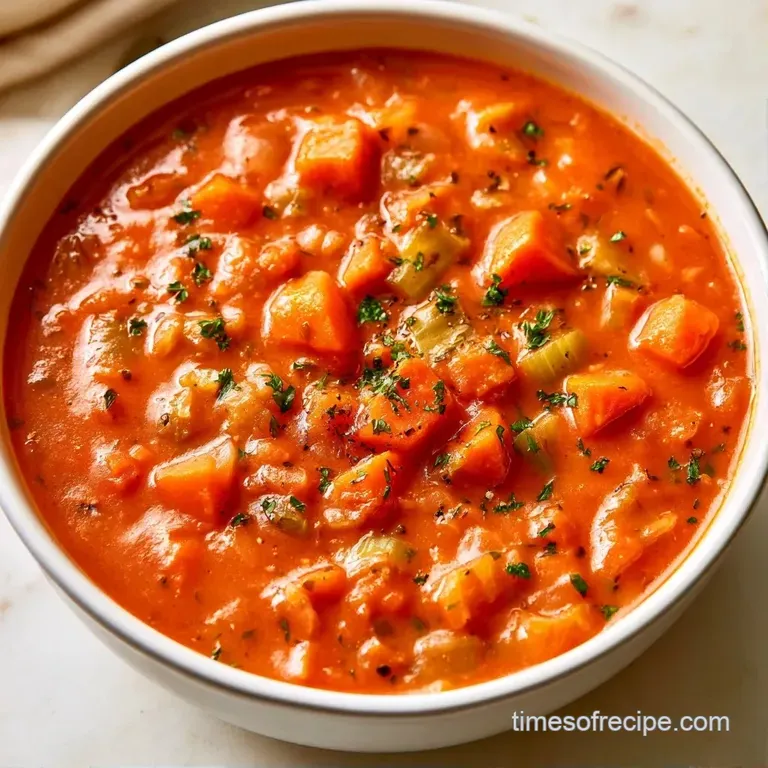
Let's get started. Be sure to chop your vegetables before you switch on the stove, so you aren't rushing while the oil gets too hot.
Place 2 tbsp extra virgin olive oil in a Dutch oven and set the heat to medium. Toss in the diced onion, carrots, and celery. Sauté for 6-8 minutes until the vegetables are translucent and beginning to brown.
Note: Be patient here; the browning is what develops the sweetness.
Stir in 4 cloves of minced garlic and 3 tbsp tomato paste. Cook for 2 minutes until the paste turns a deep mahogany color and smells nutty.
Mix in 2 lbs of roughly chopped fresh tomatoes, 1 diced medium potato, 1 tsp dried Italian seasoning, 1 tsp granulated sugar, 1 tsp kosher salt, and ½ tsp cracked black pepper. Stir well to ensure everything is coated in that rich paste.
Pour in 4 cups of vegetable broth. Bring the liquid to a boil, then quickly drop the temperature to low. Put the lid on and simmer for 20-25 minutes until the carrots and potatoes are fork tender.
Remove the pot from the heat. Use an immersion blender to process the Tomato Vegetable Soup until smooth. Note: If you prefer a rustic feel, leave a few potato chunks.
Stir in 1 tbsp fresh lemon juice to brighten the flavor. Taste it; if it feels a bit flat, add another pinch of salt or a drop more lemon.
Pro Tip: For a richer color, try substituting a splash of the broth in step 2 with a dark red wine. It adds a sophisticated bitterness that balances the sugar.
Solving Common Soup Problems
Even easy recipes can occasionally be tricky. Usually, it is simply a matter of adjusting the seasonings at the finish.
Fixing a Thin Consistency
If your Tomato Vegetable Soup is too watery rather than creamy, the potatoes likely didn't break down enough or the tomatoes were too liquid. The easiest solution is to simmer the soup uncovered for an additional 10 minutes to reduce the liquid and concentrate the taste.
If you are short on time, blend in one extra tablespoon of tomato paste.
Reducing Bitter Tones
Certain brands of broth or tomato paste can sometimes leave a bitter aftertaste. This is why the sugar and lemon juice are essential. A small amount of extra sugar can neutralize that bitterness, while the lemon juice cuts through the richness. Add these in half teaspoon increments to ensure you don't overdo it.
Correcting Over Acidity
If the soup tastes metallic or overly sharp, you likely have too much acid from the tomatoes. You can balance this by stirring in a small knob of unsalted butter or a splash of heavy cream. The fat coats the palate and mellows the acidic hit, making the Tomato Vegetable Soup taste smoother.
Dealing with Lumps
If your immersion blender isn't capturing everything, avoid over blending and overheating the soup. Instead, pass the soup through a fine mesh strainer. It requires a bit more effort, but it guarantees a professional, smooth texture.
Storage and Freezer Tips
The flavors deepen overnight, making the soup even more delicious. The potato starch blends in well over time. Store it in an airtight glass jar for up to 4 days in the refrigerator. Warm it up on the stove using medium low heat.
If the consistency is too thick after chilling, add a bit of water or broth to thin it out.
To freeze, ensure the soup is entirely cooled. Transfer it to freezer friendly bags or plastic tubs, leaving an inch of room at the top to accommodate expansion during freezing. It will remain fresh for approximately 3 months.
When reheating from the freezer, let it thaw in the refrigerator overnight to keep the vegetables intact. Warm it slowly over the stove, stirring every so often to prevent the bottom from burning.
To minimize waste, save your tomato bits and carrot or celery ends. Keep these in a freezer bag with any other vegetable peelings. When the bag is at capacity, simmer them in water for several hours to create a complimentary home-made veg stock for another pot of Tomato Vegetable Soup.
What to Serve With It
A soup this bold needs a partner that can hold its own. I always go for something with a crunch to contrast the smooth texture of the soup.
A classic grilled cheese is the obvious choice, but try using a sharp cheddar and a slice of sourdough. The tang of the bread matches the lemon in the soup. If you're looking for something lighter, a crusty baguette toasted with garlic butter is a winner.
For a more complete meal, this pairs well with a protein on the side. I've found that Marry Me Salmon works surprisingly well here because the creaminess of the salmon sauce complements the acidity of the tomato.
If you want to keep it vegetarian, a side of roasted Brussels sprouts with a drizzle of honey provides a bitter sweet balance that rounds out the meal.
Trying Different Flavor Twists
Once you've got the base down, you can start playing with the profile. The Tomato Vegetable Soup is a great canvas for different cuisines.
The Spicy Kick: Add a diced jalapeño to the sauté with the onions, or stir in a teaspoon of smoked paprika. The smokiness gives it a depth that reminds me of a Spanish gazpacho, but warm.
The Creamy Version: If you want something truly indulgent, stir in ¼ cup of heavy cream or mascarpone cheese at the very end. It transforms the soup into a rich, bisque like experience.
The Pantry Swap: If you don't have fresh tomatoes, you can use a Homemade Ketchup recipe as a base for some of the acidity and sweetness, though you'll want to reduce the added sugar in the main recipe.
The Pasta Add in: To make it a heartier meal, stir in some small pasta like ditalini or orzo during the last 10 minutes of simmering. Just be careful, as the pasta will soak up the broth, so you might need an extra cup of vegetable broth to keep it from becoming a stew.
Kitchen Truths
There are a few things people tell you about soup that just aren't true. For one, searing your vegetables doesn't "seal in" the nutrients or the flavor. The nutrients are still there; the searing just creates new flavor compounds through browning. It's about taste, not about locking things in.
Another myth is that you have to simmer soup for hours to get a "deep" taste. If you use a high-quality tomato paste and sauté it correctly, you can get that same richness in 40 minutes.
The long simmer is great for bones or tough cuts of meat, but for a Tomato Vegetable Soup, it can actually overcook the fresh flavors of the vegetables.
Finally, some say you shouldn't add acid like lemon juice until the end. While it's true that some flavors evaporate, adding it at the end ensures the brightness stays sharp and doesn't get muted by the heat.
According to USDA guidance, the safe internal temperature for reheating soups is 165°F to ensure any bacteria are eliminated. Always heat your soup until it reaches a bubbling boil before serving.
Right then, you've got everything you need. This Tomato Vegetable Soup is a reliable, comforting meal that doesn't demand your whole afternoon. Just remember to brown that paste and don't skip the lemon juice. Enjoy!
Recipe FAQs
What vegetables work best here?
Use a mix of diced onion, carrots, and celery.
Tip: Sauté these for 6 8 minutes until golden to build a flavor base.
Which ingredients are needed for this soup?
You need olive oil, onion, carrots, celery, garlic, fresh tomatoes, tomato paste, vegetable broth, potato, Italian seasoning, sugar, salt, pepper, and lemon juice.
Tip: Ensure the tomatoes are roughly chopped before adding them to the Dutch oven.
Could tomato juice replace the fresh tomatoes?
Actually, no. Fresh tomatoes provide a structural body and brightness that processed juice lacks.
Tip: If using canned, choose crushed tomatoes to mimic this texture.
How do I achieve a velvety texture?
Use an immersion blender to process the soup until smooth once the vegetables are fork tender.
Tip: If you enjoyed mastering this blending technique here, see how the same principle works in our silky cheese sauce.
Is it true that sugar is necessary for tomato soup?
This one's false: Sugar is optional and only used to balance the natural acidity of the tomatoes.
Tip: Start with a half teaspoon and taste before adding the full amount.
Why include a potato in the recipe?
The potato releases starch that naturally thickens the soup during the simmering process.
Tip: Peel and dice the potato small so it cooks through in 20 25 minutes.
Where to store the leftovers?
Keep the soup in a glass container in the refrigerator.
Tip: Reheat on the stove over medium low heat and add water if it thickened.
Best way to brighten the final flavor?
Stir in a tablespoon of fresh lemon juice or balsamic vinegar after removing the pot from heat.
Tip: Add the acid at the very end to keep the flavor sharp.
Tomato Vegetable Soup